
Last updated on October 8, 2026 by Krysti
I’ll be honest: I didn’t expect the Fuji Five Lakes to become one of my favorite places in Japan – but after three visits, I’m still finding reasons to come back.
When I planned my first trip to Mount Fuji, I assumed it was going to be just another overhyped tourist destination.
I figured I’d get a nice view of the mountain, take a few photos, and move on.
But I couldn’t have been more wrong.
What I thought would be a quick stop turned into a place I kept returning to – first on a guided tour, and later on road trips with my family.
Somewhere along the way, the Fuji Five Lakes stopped feeling like a quick photo-op and became a destination I genuinely wanted to explore.
There’s just something about this region that makes you want to slow down and see where the road takes you.
From quiet lakeshores and winding mountain roads to traditional villages and little roadside gems, there’s always something new to discover around every corner.
And that’s exactly why I love exploring the region, especially by car.
With your own wheels, you can get away from the busiest spots, stop whenever something catches your eye, and uncover some of the quieter corners most people miss.
So, instead of creating a guide that has you racing from one attraction to the next, I’ve designed this Fuji Five Lakes itinerary as a relaxed, flexible road trip.
Rather than trying to cram every possible attraction into three days, this route gives you room to actually breathe, enjoy the scenery, and hopefully find a few favorite spots of your own.
📝 Please Note: The Fuji Five Lakes region (also known as Fujigoko) is comprised of five scenic lakes surrounding Mount Fuji. However, this itinerary only focuses on three of them – Lake Yamanaka, Lake Kawaguchiko, and Lake Saiko. While you could try to squeeze in all five, I recommend taking your time and soaking in the atmosphere of these three lakes rather than trying to see it all at once.
*Please note: This post contains affiliate links to trusted partners. If you make a purchase using these links, I will earn a commission at no extra cost to you. Thank you for your support!
Headed to the Fuji Five Lakes Soon?
Here are a few quick recommendations to help you plan your trip:
🚅 Getting There:
– Highway Bus (A budget-friendly way to get from Tokyo to Kawaguchiko)
– Fuji Excursion (A limited express train from Shinjuku to Kawaguchiko)
🚙 Getting Around:
– Rental Cars (The easiest way to explore Fujigoko)
🛏️ Hotels:
– La Vista Fuji Kawaguchiko (Beautiful hotel with open-air baths and Fuji views)
What to Know Before Your Fuji Five Lakes Road Trip
Since this itinerary is designed as a road trip, there are a few practical details you’ll want to sort out before you hit the road. Driving around Fujigoko is fairly straightforward, but a little preparation will make your trip much smoother – especially if you’re hoping to catch those famous Mount Fuji views.
Where to Rent a Car
If you’re traveling from Tokyo, you can rent a car in the city and drive down to the Fuji Five Lakes region.
Or, you can take a highway bus or limited express train to Kawaguchiko Station and rent a car there.
When I road-tripped with my family (both times), we actually flew into Haneda Airport, rented a car right there, and drove down to Fujigoko.
Not only was this faster and easier for us, but it also meant we could drive straight to our first destination instead of stopping in Kawaguchiko.
That said, if you’re coming from further away (or prefer to avoid Tokyo traffic), it may make more sense for you to rent a car in Kawaguchiko.
Regardless, I do recommend comparing prices and pickup locations before your trip, as rental rates can vary quite a bit.
Driver’s License Requirements
Before renting a car in Japan, you’ll want to make sure you have the correct driving documents specific to your home country.
Depending on where you live, you’ll likely need either an International Driving Permit (IDP) or a Japanese translation of your driver’s license.
For travelers from the United States, Canada, Australia, Singapore, and most European countries, an IDP is typically required.
You can check the current license requirements for your country online here.
Driving Around Fujigoko
While driving around the Fuji Five Lakes is fairly straightforward, the region (and its attractions) are quite spread out.
As a result, drive times can vary depending on traffic, the time of year, and where you’re headed.
To help plan your route and estimate drive times, I recommend using Google Maps; it’s the easiest option, and it’s very foreigner-friendly.
Just be aware that some roads here can be quite small and winding, especially if you venture farther off the beaten path.
Planning Around the Weather
Although I’ve laid out a detailed Fuji itinerary below, I encourage you to remain flexible throughout your trip.
Weather and visibility can have a huge impact on your experience, and there’s no guarantee that Mount Fuji will be visible at every location you visit.
If one stop is completely clouded over, you may find that another has a much clearer view.
So, don’t be afraid to switch things around, skip a stop, or spend more time somewhere when the conditions are right.
💡 Pro Tip: Before heading out for the day, check the live cameras around the Fuji Five Lakes to see where Mount Fuji is currently visible. This will help you decide which areas to prioritize and which to save for better weather.
Fuji Five Lakes Itinerary: An Overview
Before we dive into the full itinerary, here’s a quick look at how to spend 3 days exploring the Fuji Five Lakes region. Designed as a road trip for first-time visitors, this itinerary combines iconic Mt. Fuji views, scenic lakes, traditional villages, and some of the area’s most memorable attractions – all at a relaxed pace.
Day 1: Fujiyoshida & Scenic Fuji Views
- 🚗 Travel from Tokyo to the Fuji Five Lakes
- 🏮 Wander Fujiyoshida’s historic streets
- 🗻 Ride the Mt. Fuji Panoramic Ropeway
- 🌿 Check into your hotel and unwind
Day 2: Classic Fuji Landscapes & Cultural Sights
- ⛩️ Visit Chureito Pagoda at Arakurayama Sengen Park
- 🌸 Enjoy the scenic shores of Lake Kawaguchiko
- 🌾 Step into old Japan at Saiko Iyashi-no-Sato Nemba
- 🌊 Take in the views at Lake Saiko
Day 3: Slow Morning & Eastern Lakes
- ☕ Enjoy a lazy morning at your hotel
- 🏞️ Explore the traditional village of Oshino Hakkai
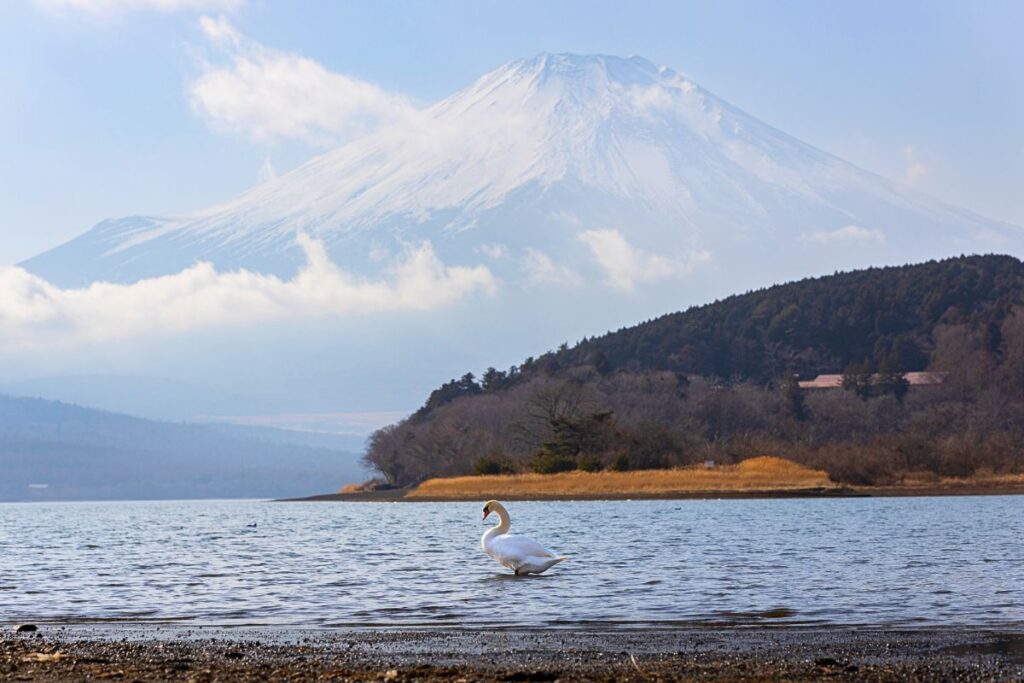
- 🦢 Meet the famous Fuji swans at Lake Yamanaka
- 🚗 Head back to Tokyo
Fuji Five Lakes Map
To help you plan your trip, I’ve also included a map overview of all the places mentioned in this Fujigoko itinerary.
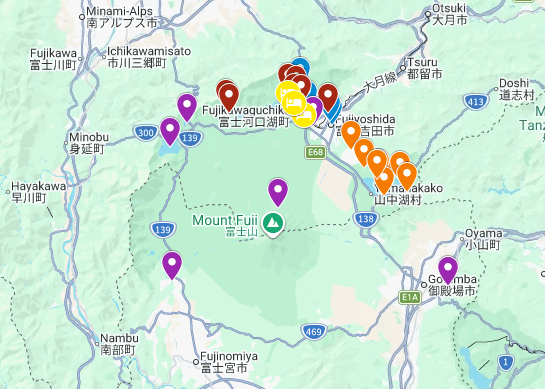
➡️ Click here to view an interactive version of this map!
Fuji Five Lakes Itinerary: Explained
That said, let’s jump right in and discuss in detail the perfect 3 day itinerary for the Fuji Five Lakes. I’ve included plenty of options for you to consider, along with some alternative stops around the region. Since you’ll have a car, you can easily pick and choose what interests you the most and adjust this itinerary to fit your own pace!
Day 1: Fujiyoshida & Sky-High Fuji Views
On day one in the Fuji Five Lakes, you’ll make the trip from Tokyo to Fujiyoshida and explore some of the area’s most iconic sights. The journey takes roughly 2–3 hours depending on your mode of transportation, so I recommend leaving Tokyo early if you can. From there, you’ll have the rest of the day to wander the city, take in the views from above, and settle into your hotel for the evening.
Late Morning: Wander the Streets of Fujiyoshida

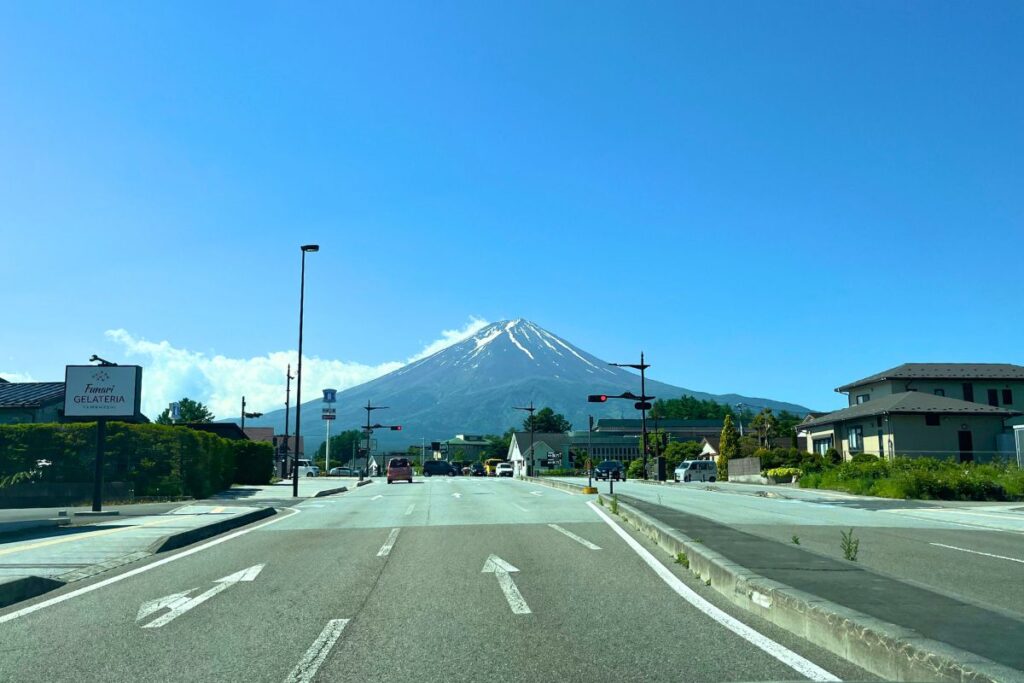
Your first stop is Fujiyoshida, a charming city at the base of Mount Fuji known for its historic streets, local shops, and, of course, some incredible views of Fuji-san.
Start your visit along Honcho Street, one of the city’s most recognizable areas and home to that famous street-level view of Mount Fuji.
From there, you can take some time to wander the surrounding neighborhood and explore the small shops, cafes, and restaurants tucked along the streets.
It’s a great spot to grab a bite to eat or do some souvenir shopping before continuing on to your next stop.
Why It’s Worth It: You get the best of both worlds here – a chance to see one of the area’s most iconic Mount Fuji views while also exploring the quieter streets and local atmosphere of Fujiyoshida.
💡 Pro Tip: To snap a picture-perfect shot of Fuji, you’ll need to cross into the main intersection of Honcho Street. It can be a bit hectic and crowded at times – at least it was when I visited – but crossing officers are on hand to help manage the flow of traffic and keep things moving safely.
Early Afternoon: Ride the Mt. Fuji Panoramic Ropeway
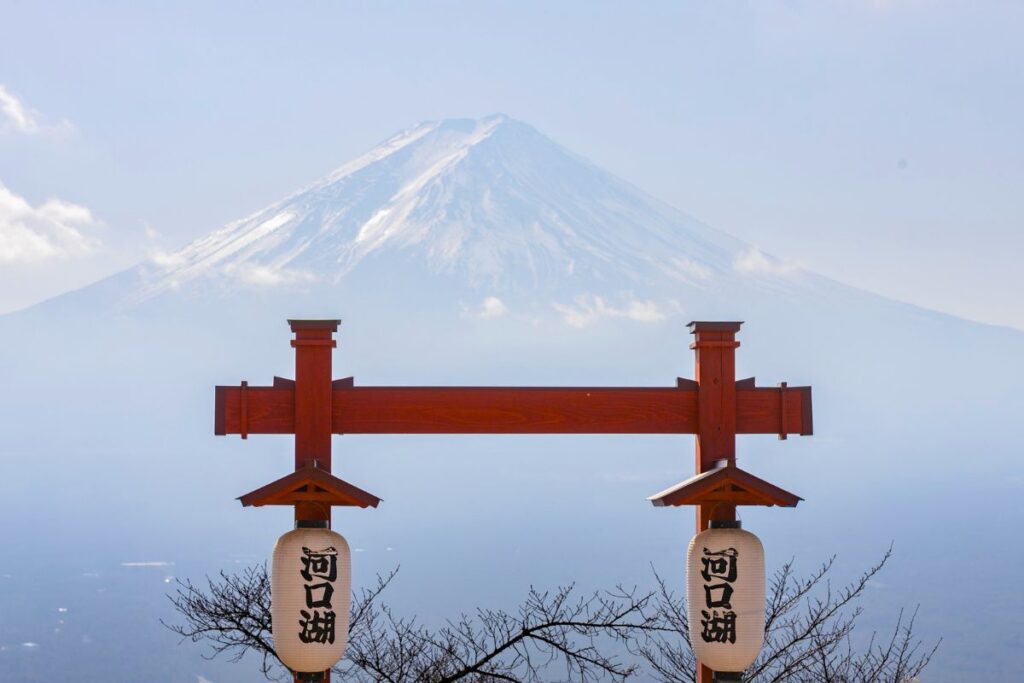
Next, make your way to the Mt. Fuji Panoramic Ropeway for views overlooking Lake Kawaguchiko and Mount Fuji.
The ropeway carries you about 400 meters from the eastern shore of the lake up Mount Tenjo, where you’ll find a small observation deck with sweeping views of the surrounding area.
I was kind of surprised to find that the deck itself is fairly compact, with only a few activities – but it is a nice place to slow down and just enjoy the views.
There are actually a few cute photo spots set up where you can take pictures, including the famous swing set with Mount Fuji in the background.
If you want to spend a little more time exploring the area, there are also hiking trails around the observation deck.
You can hike back down the mountain instead of taking the ropeway, or continue farther up toward a small shrine and additional trails.
I didn’t do either hike myself, but they’re worth considering if you’re looking for a little more adventure.
Why It’s Worth It: The ropeway offers a completely different perspective of the area, with sweeping vistas of Lake Kawaguchiko and Mount Fuji from high above.
📝 Side Note: The ropeway is very weather-dependent and may close during high winds or other unsafe conditions. Even if it remains open, poor weather can mean limited views at the top. For that reason, I recommend purchasing your tickets on site rather than booking in advance. You can check the operating status of the ropeway online before you visit.
Late Afternoon: Relax & Unwind at Your Hotel
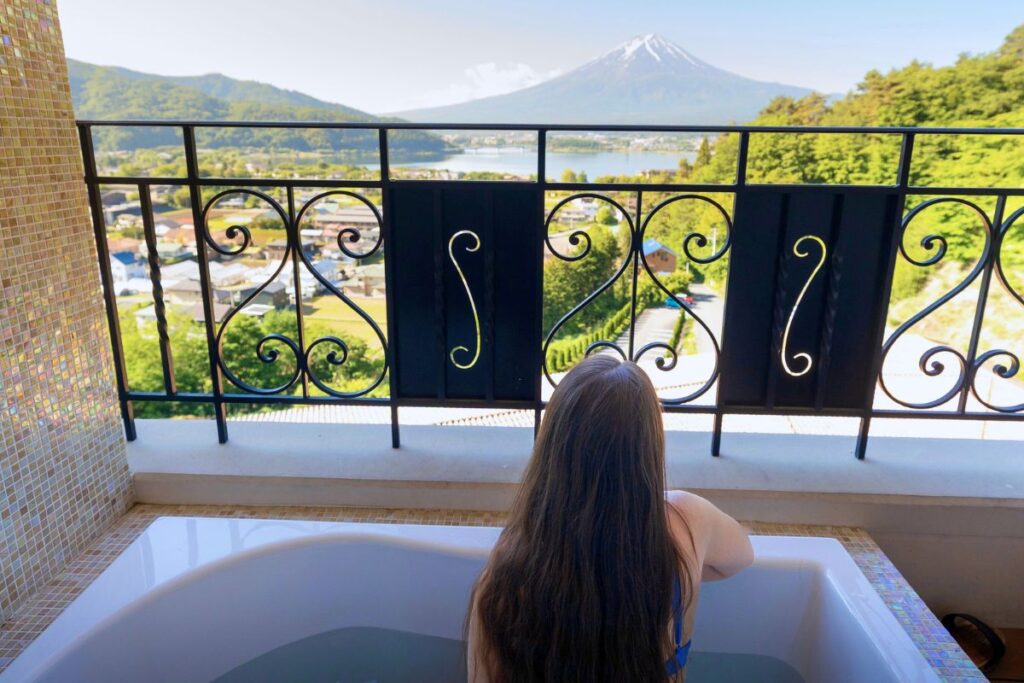
Once you’ve had your fill of sightseeing, it’s time to head to your hotel for a bit of rest and relaxation.
After all, part of the fun is staying somewhere with a beautiful view and actually taking the time to enjoy it.
When I traveled to Fujigoko with my mom, we stayed at La Vista Fuji Kawaguchiko, which offers incredible vistas overlooking Lake Kawaguchiko.
While we were there, we made a point of setting aside plenty of time to just enjoy the hotel itself – especially because it offered private open-air baths with views of Mount Fuji!
There are plenty of other hotels and ryokans around the Fuji Five Lakes that offer a similar experience.
So, I definitely recommend giving yourself some time to actually enjoy your accommodation instead of treating it as just another place to sleep.
🌟 Looking for a place to stay? Check out my Kawaguchiko accommodation guide for a breakdown of the best areas and hotel options. (COMING SOON!!)
Day 2: Classic Fuji Landscapes & Cultural Sights
On day two, I recommend starting bright and early! Your first stop is Arakurayama Sengen Park, which is one of the most popular spots in the Fuji Five Lakes region – meaning it gets very crowded, very quickly. From there, you’ll make your way around Lake Kawaguchiko before continuing on to some of the cultural and scenic highlights of Lake Saiko.
Early Morning: Visit Arakurayama Sengen Park
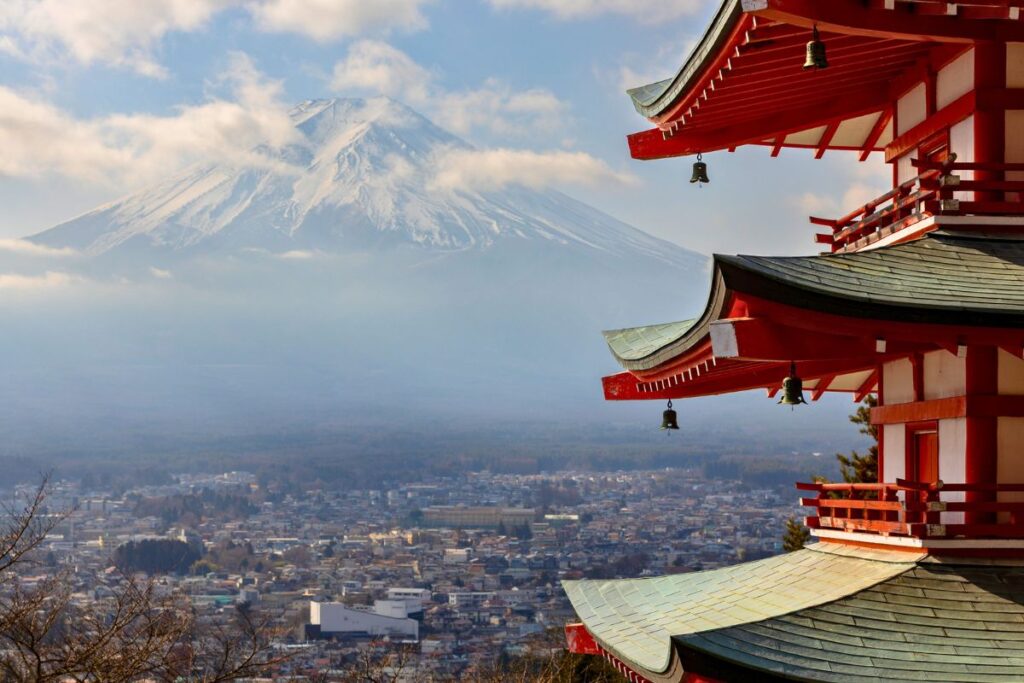
Arakurayama Sengen Park is home to arguably one of the most iconic views of Mount Fuji.
I mean, I’ve visited it twice now and would still love to go back – it’s simply hard to beat!
That said, reaching the summit does take a bit of effort.
The park is built along a mountainside, so you’ll need to climb approximately 398 steps to access the main observation deck.
Which, I know, sounds like a lot, but it’s doable – and honestly, the climb itself is part of the experience.
As you make your way up, you’ll come across several other stunning lookout points, giving you plenty of opportunities to stop and enjoy the scenery.
And once you reach the top, you’ll find the main highlight waiting for you: the iconic Chureito Pagoda overlooking Fuji-san.
While you’re here, be sure to slow down, appreciate your surroundings, and simply enjoy the experience!
Why It’s Worth It: There are plenty of beautiful Fuji viewpoints, but few feel quite as rewarding as this one – with Mount Fuji framed by the iconic Chureito Pagoda.
💡Pro Tip: Don’t miss the nearby Arakura Fuji Sengen Shrine. Located at the base of the mountain, this historic shrine dates back to the 8th century!
Mid-Morning: Admire the Views From Lake Kawaguchiko

Lake Kawaguchiko is the most famous of the Fuji Five Lakes, and, luckily, there are plenty of places around the shoreline where you can stop and take in the scenery.
Since you’ll have a car, you can easily choose a few different spots depending on what catches your eye. Some options to consider include:
- Oishi Park: The most popular park around the lake, especially when the seasonal flowers are in bloom. You’ll get beautiful views across the lake toward Mount Fuji, plus plenty of space to wander around and enjoy the scenery.
- Nagasaki Park: A smaller, quieter lakeside park with a beautiful view of Mount Fuji across the water. It’s not a major attraction, but it makes for a lovely little stop as you make your way around the lake.
- Yagizaki Park: Another scenic park along the southern shore of the lake, known for its seasonal flowers and open views of Mount Fuji. Unlike some of the other viewpoints around Kawaguchiko, the lake and Fuji-san are in opposite directions here, so you’ll need to look both ways to enjoy the scenery.
- Kawaguchiko Ohashi Bridge: For something a little different, drive across the bridge for a unique perspective of Lake Kawaguchiko and Mount Fuji. The bridge itself is also a convenient way to connect the northern and southern sides of the lake.
That said, I’ve visited the lake several times now, and one of my favorite things to do is simply drive along the shoreline and stop whenever a view catches my eye.
Sometimes the most spontaneous stops end up giving you the best views!
Why It’s Worth It: With so many viewpoints along the shoreline, Lake Kawaguchiko is easy to explore at your own pace – whether you’re looking for scenic vistas, quiet parks, or a quick photo stop.
Early Afternoon: Discover Saiko Iyashi-no-Sato Nenba

Nestled just inland from Lake Saiko, Saiko Iyashi-no-Sato Nenba is a reconstructed Japanese village known for its thatched-roof homes and beautiful views of Mount Fuji.
It also happens to be a great spot to experience a bit of Japanese culture.
Here, you’ll find a handful of souvenir shops, local restaurants, and craft workshops that offer a closer look at the region’s traditional arts and crafts.
You can try your hand at everything from incense-making to pottery painting and even metal engraving.
Beyond the activities, the village itself is also a nice place to simply wander and take in the scenery.
When I visited, I was pleasantly surprised by how calm and relaxed it felt, especially compared to some of the other destinations on our itinerary.
Maybe I just got lucky, but there weren’t many other people around when I was there, which made for a nice change of pace.
Why It’s Worth It: With so much of the day focused on Mount Fuji, this is a great opportunity to experience a little more of the region’s traditional culture.
Late Afternoon: Take in the Scenery at Nenba Beach
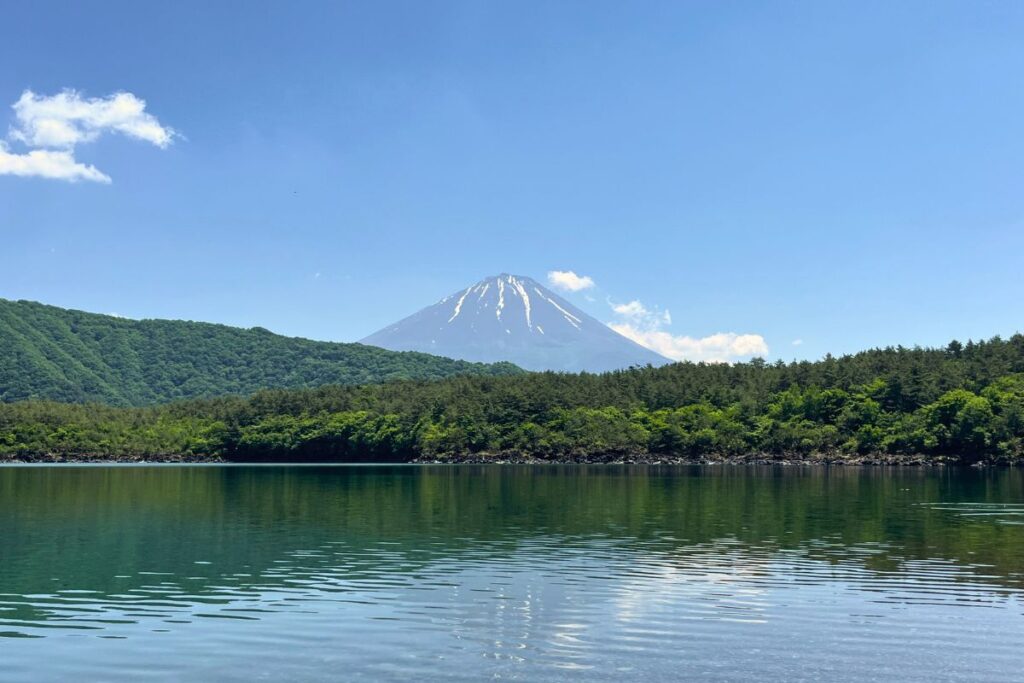
I’ll be honest, Nenba Beach (aka Saiko Nenba-hama) wasn’t on my radar at all.
I just happened to stumble across it while driving around – and it turned out to be one of the highlights of my trip.
Tucked along the shores of Lake Saiko, Nenba Beach offers great views of Mount Fuji and, surprisingly, a peaceful atmosphere with very few visitors around.
In fact, it’s the only waterfront location on Lake Saiko with full views of Mount Fuji.
You’d think a spot like that would draw a crowd, but surprisingly, many visitors seem to overlook it – just like I almost did!
And since you’re already driving along Lake Saiko, it’s an easy stop to add to your itinerary.
Why It’s Worth It: If you want to explore beyond the main attractions, this little spot offers a quieter look at Fujigoko.
Day 3: Slow Morning & Eastern Lakes
Day three is intentionally a little slower, giving you some time to enjoy your morning before heading out for a few final stops. You’ll visit Oshino Hakkai and Lake Yamanaka before making the drive back to Tokyo, with plenty of flexibility depending on when you want to leave.
Morning: Enjoy a Relaxed Start at Your Hotel
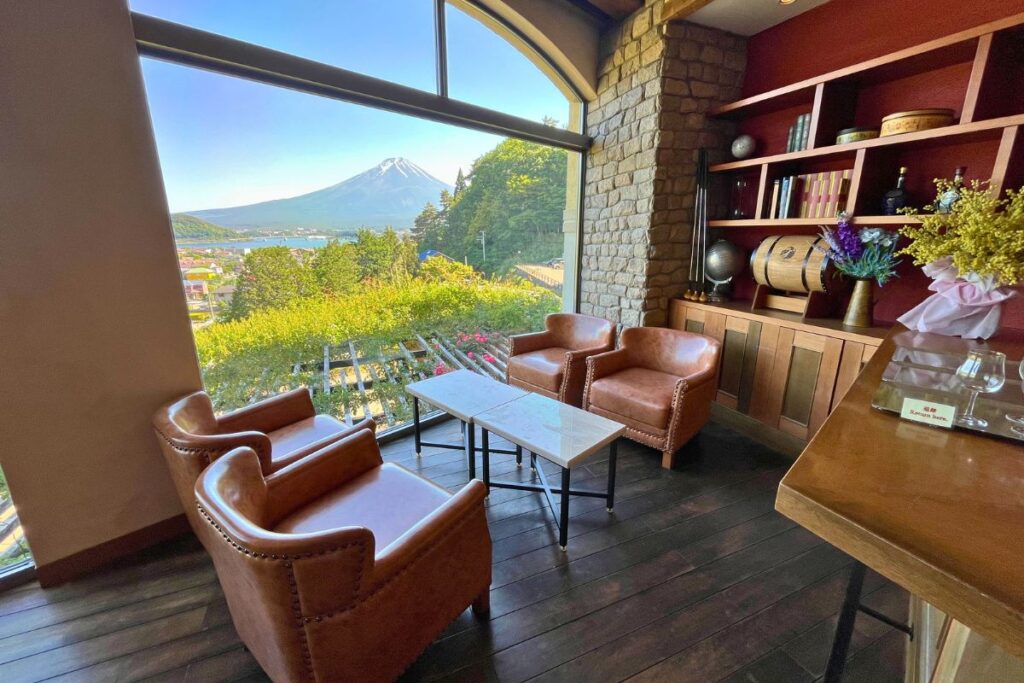
After two busy days of exploring the Fuji Five Lakes, take advantage of a slower morning and enjoy some time at your hotel.
Sleep in, grab a leisurely breakfast, or simply take some time to relax and enjoy the views before heading out for the day.
There’s no need to rush – you still have a couple of scenic stops ahead before making your way back to Tokyo.
Lunch: Explore Oshino Hakkai
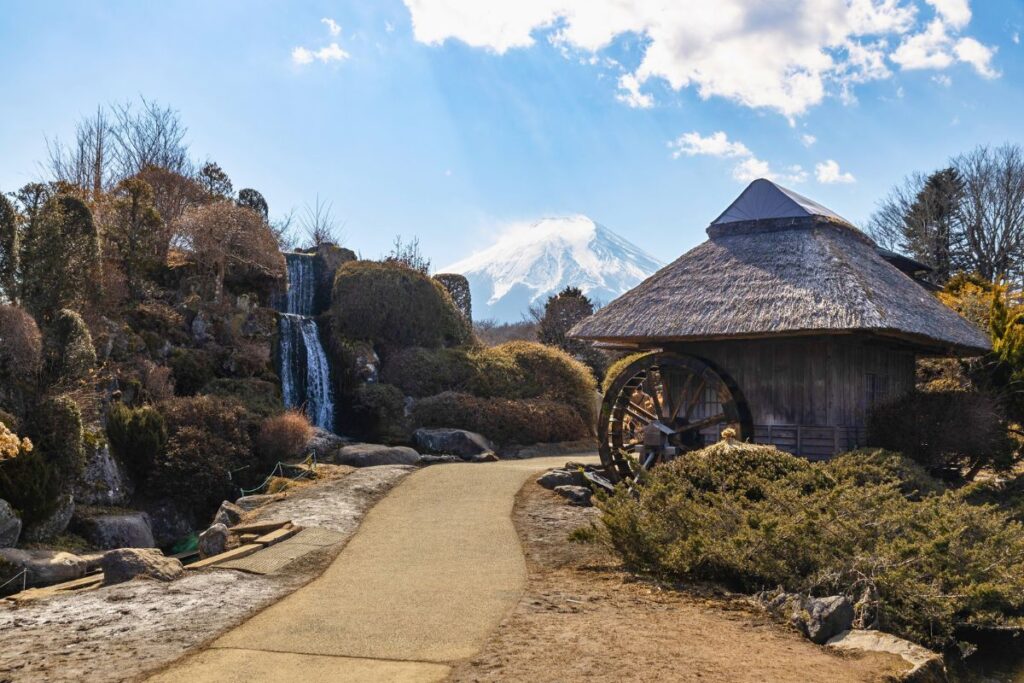
When you are ready to head out, make your way over to Oshino Hakkai for lunch and a little more exploring.
This small village, which happens to be a designated Natural Monument of Japan, is best known for its eight crystal-clear ponds.
Fed by underground springs from Mount Fuji, these ponds are scattered throughout the village, creating a scenic setting with beautiful views of Fuji-san.
Take some time to wander between the ponds, visit the small shops, and browse the food stalls.
You’ll find plenty of local snacks and simple lunch options here, from grilled skewers to freshly made sweets and other Japanese treats.
Why It’s Worth It: Oshino Hakkai is an easy place to combine scenic views, local food, and a little sightseeing all in one stop.
💡 Pro Tip: For the best views of Mount Fuji, I recommend visiting the Hannoki Bayashi Museum. It was my favorite spot in the entire village!
Early Afternoon: Meet the Swans at Lake Yamanaka
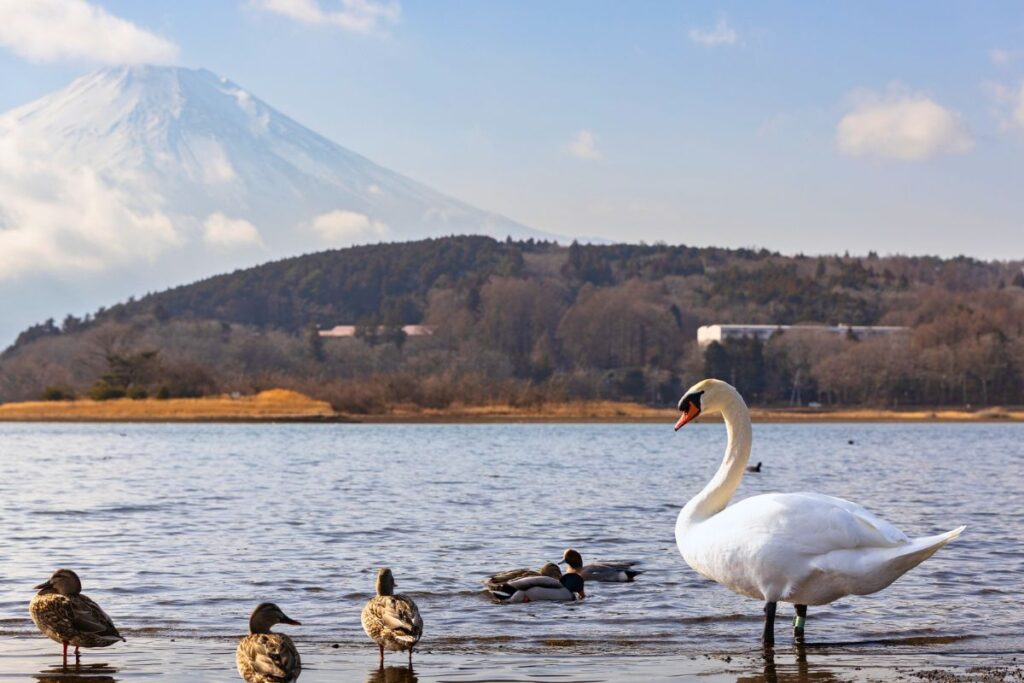
The final stop on your itinerary is Lake Yamanaka, the largest of the Fuji Five Lakes.
While the area is best known for its resident swans (which live here year-round!), there’s plenty more to do and see here.
From lakeside parks and viewpoints to flower fields and cafes, you’ll find a variety of scenic spots to explore.
A few places to add to your route include:
- Hirano Beach: A scenic lakeside destination with beautiful views of Mount Fuji and plenty of opportunities to spot the local swans. It’s actually one of my favorite spots around Lake Yamanaka, so much so that I’ve visited twice now – and the swans were there both times!
- Panorama-dai: A small observation point with sweeping views overlooking Lake Yamanaka and Mount Fuji. It’s a great option if you’re looking for a higher vantage point and a different perspective of the lake.
- Nagaike Water Park: A scenic lakeside parking area with beautiful views of Lake Yamanaka and Fuji-san. The swans can also be spotted here from time to time!
- Asahigaoka Lakeside Park: Another beautiful park along the lake with views of Mount Fuji across the water. It’s especially beautiful here in the fall, when the park’s surrounding trees put on a colorful display.
- Hana no Miyako Park: A spacious 300,000-square-meter park that combines seasonal flowers with views of Mount Fuji. Flowers bloom throughout spring, summer, and fall, with sunflowers, tulips, and poppies among the highlights.
- The Park Cafe: A cozy lakeside cafe offering coffee, snacks, and beautiful views of Mount Fuji across the lake. It’s a lovely spot to slow down and enjoy the scenery.
Why It’s Worth It: After a few busy days of sightseeing, Lake Yamanaka is the perfect place to slow down and relax before heading back to Tokyo.
Alternative 2-Day Fuji Five Lakes Itinerary
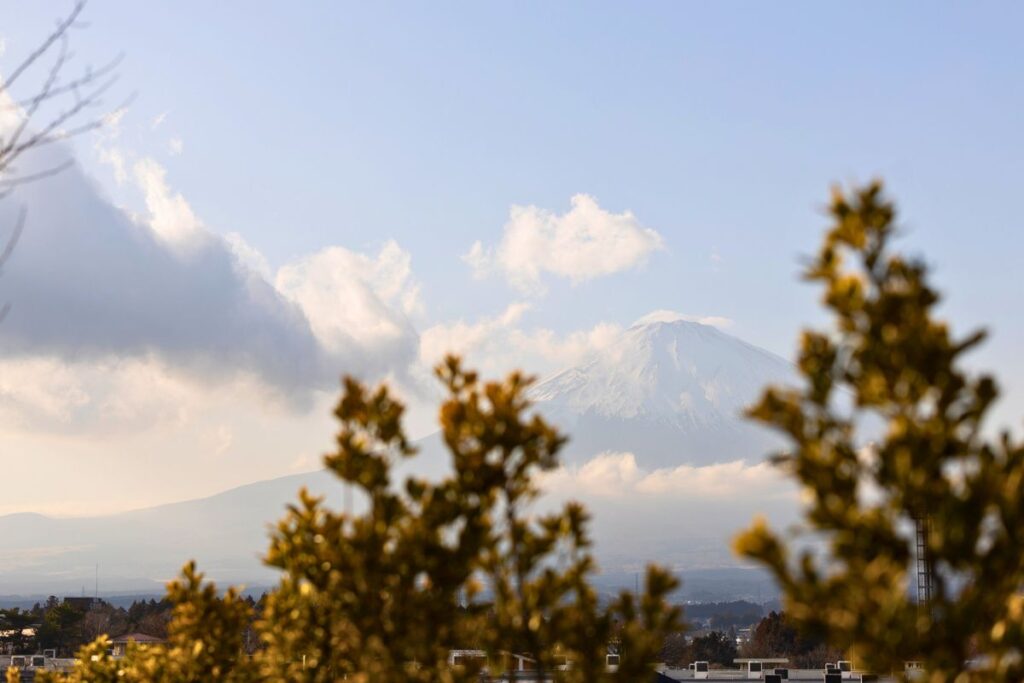
Short on time? You can still explore many of the region’s highlights in two days. You’ll just have to move at a slightly faster pace.
This is what I would recommend:
- Day 1: Arakurayama Sengen Park → Fujiyoshida → Mt. Fuji Panoramic Ropeway
- Day 2: Lake Kawaguchiko → Oshino Hakkai → Lake Yamanaka
Since you’re working with one less day, I’d skip Lake Saiko and its surrounding stops.
This gives you a more manageable route while still letting you see plenty of beautiful scenery – you’ll just have less time to slow down and explore off the beaten path.
⏱️ Only have one day? Rather than driving yourself, I actually recommend joining a guided Fuji tour. It’s easier logistically, saves you from dealing with parking, and lets you see several of the area’s highlights in a single day.
Other Things to Do Around the Fuji Five Lakes Region
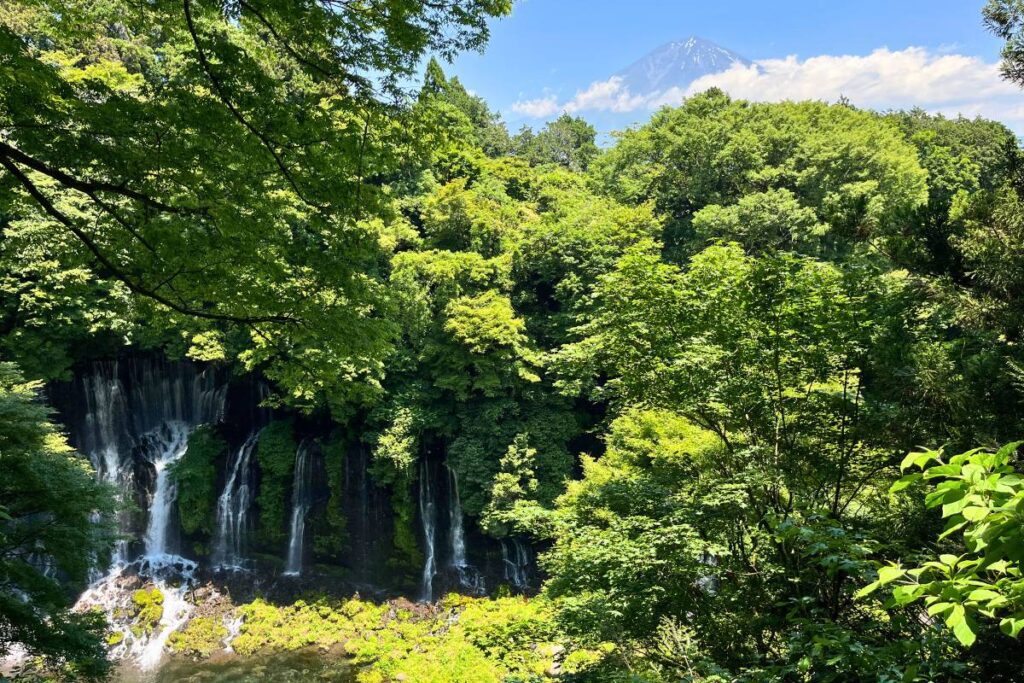
The Fuji Five Lakes region has plenty more to see and do beyond the stops included in this itinerary. If you have extra time – or want to swap out some of my recommendations – here are a few other places worth considering:
- Shiraito Falls: One of the most beautiful waterfalls near Mount Fuji, Shiraito Falls is known for its wide curtain of cascading water surrounded by lush greenery. And on a clear day, you can actually see Mount Fuji from here!
- Lake Shōji: The smallest of the Fuji Five Lakes, Lake Shōji is a quieter alternative to the more popular lakes nearby. Its peaceful shoreline and beautiful views of Mount Fuji make it a lovely place to slow down and enjoy the scenery.
- Lake Motosu: Famous for its Mount Fuji views, which are actually featured on older ¥1,000 bills, Lake Motosu offers a more rugged, undeveloped look at Fujigoko. It’s a great option if you want to get away from some of the region’s more touristy areas.
- Gotemba Premium Outlets: If you want to mix some shopping into your trip, Gotemba Premium Outlets is one of the region’s most popular stops. The outdoor shopping center is home to hundreds of stores, as well as stunning views of Mount Fuji.
- Fuji 5th Station: Located partway up Mount Fuji, Fuji 5th Station offers beautiful views and access to the Yoshida Trail, one of the mountain’s most popular hiking spots. While it’s technically open year-round, the station is typically only accessible from mid-April to early December due to winter weather conditions.
- Fuji-Q Highland: One of Japan’s most popular amusement parks, Fuji-Q Highland is known for its thrilling roller coasters and impressive views of Mount Fuji. It’s a great option if you want to add a little excitement to your Fuji Five Lakes trip.
Best Time to Visit the Fuji Five Lakes
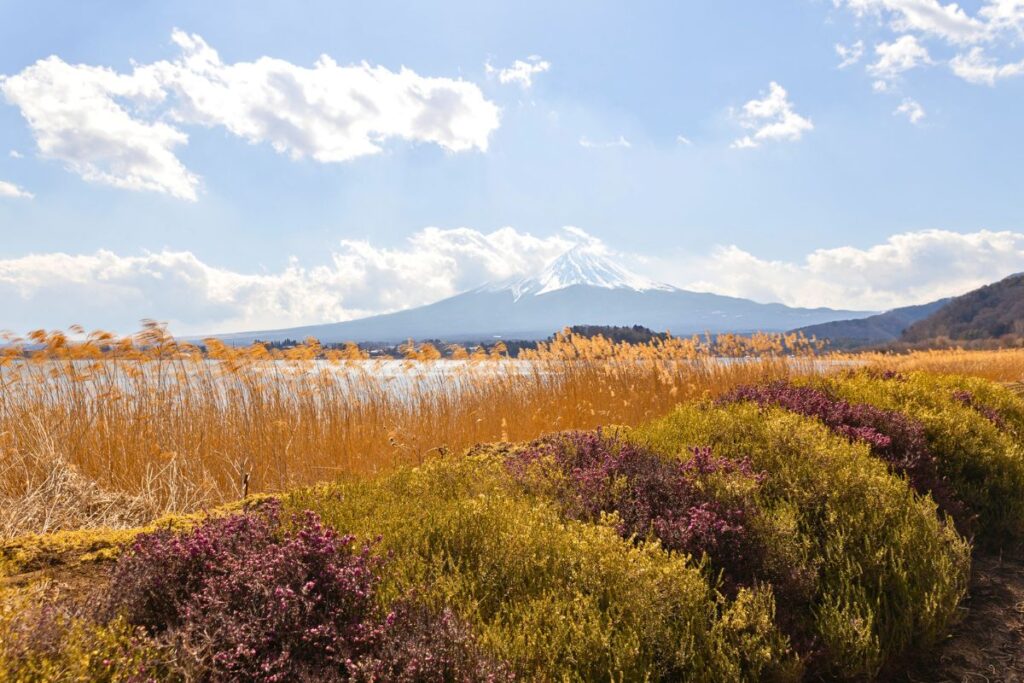
Truth be told, there really isn’t one “best” time to visit the Fuji Five Lakes – each season offers something a little different. Here’s what you can expect throughout the year:
Spring: One of the biggest draws during spring is cherry blossom season, which adds a beautiful pop of color to the scenery around the Fuji Five Lakes. Just keep in mind that this is a popular time to visit, so some of the region’s more famous spots can get quite busy.
Summer: If you’re hoping to hike Mount Fuji, summer is the time to visit. Climbing season typically runs from early July through early September, although this can vary by trail. Just be aware, the warmer months tend to bring more rain and clouds, so Fuji may be less visible.
Fall: If you love autumn foliage, fall is a beautiful time to visit the Fuji Five Lakes. The changing leaves make the already gorgeous scenery even more spectacular, although popular spots can get very busy during peak season.
Winter: The colder months bring crisp air, beautiful snowy scenery, and some of the best visibility of Mount Fuji. Crowds also tend to be lighter, making it a peaceful time to explore the Fuji Five Lakes.
🌟 Are views of Mt. Fuji a priority? While winter generally offers some of the best visibility, conditions can vary throughout the year. I break down what you can expect month by month in my guide to the best views of Mount Fuji.
A Note on Japanese Holidays
Japan has a few major holiday periods that can significantly impact travel. These include Golden Week (late April to early May), Obon (mid-August), and the New Year holiday. During these periods, domestic travel peaks, prices can increase significantly, and some local businesses may temporarily close. If possible, I recommend avoiding travel during these holiday periods – especially if you’re hoping for a more relaxed experience.
Where to Stay in the Fuji Five Lakes

For this itinerary, I recommend staying around Lake Kawaguchiko. It’s one of the most convenient areas to use as a base, with plenty of hotels and ryokans to choose from – plus easy access to many of the stops included in this itinerary. That said, here are some of the best areas to stay around Kawaguchiko:
- Northern Shore: A great choice if beautiful Mount Fuji views are at the top of your list. The northern shore is home to some of the region’s most scenic spots with plenty of accommodations overlooking the water.
- Southern Shore: A quieter alternative to the northern shore, the southern side of Lake Kawaguchiko offers a more relaxed atmosphere and beautiful views of Mount Fuji. There are also plenty of accommodations along the lake to choose from.
- Kawaguchiko Station: Ideal for those who prioritize convenience, the area around Kawaguchiko Station puts you close to plenty of restaurants, cafes, and shops. You’ll also find a wide range of accommodations suited to all budgets and travel styles.
🌟 Still not sure where to stay? I break down the best areas in Kawaguchiko, plus some of my favorite hotels and ryokans, in my complete guide: Where to Stay in Kawaguchiko. (COMING SOON!!)
What to Eat in Fujigoko
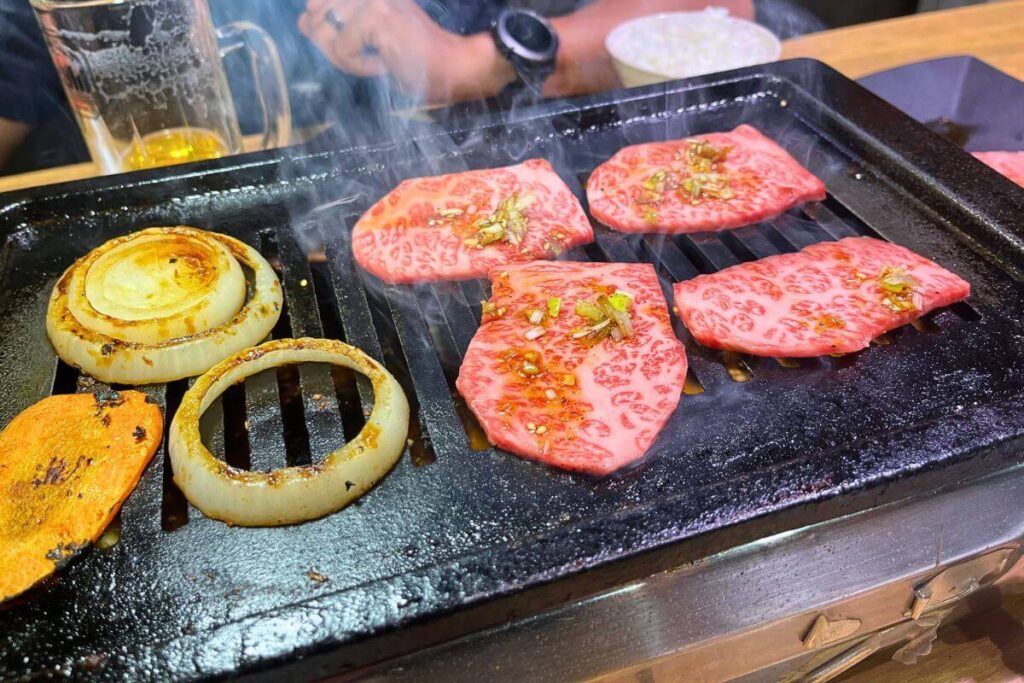
Beyond its incredible scenery, the Fuji Five Lakes region is also home to some delicious local specialties. From hearty Hōtō noodles to locally produced wagyu, here are a few dishes worth trying!
- Hōtō Noodles: One of Yamanashi’s most famous regional dishes, Hōtō is a hearty miso-based stew made with thick, flat noodles and vegetables. It’s especially comforting on a chilly day.
- Yoshida Udon: A local specialty from Fujiyoshida, Yoshida udon is known for its thick, chewy noodles and simple toppings. You’ll find it at small, casual restaurants throughout the city.
- Koshu Wagyu: Yamanashi’s own variety of wagyu, Koshu Wagyu is known for its rich flavor and tender texture. It’s a great option if you’re looking to splurge on a special meal.
- Kappa Meshi: A local specialty associated with Lake Yamanaka, Kappa Meshi is a simple rice dish topped with grated cucumber and other ingredients. The dish gets its name from the legendary kappa said to inhabit the lake.
- Fujizakura Heights Beer: Brewed in the Fuji Five Lakes region, Fujizakura Heights Beer is a local craft beer made with Mount Fuji spring water. It’s a fun one to try if you’re looking for a local drink to enjoy with your meal.
Frequently Asked Questions About Visiting the Fuji Five Lakes Area
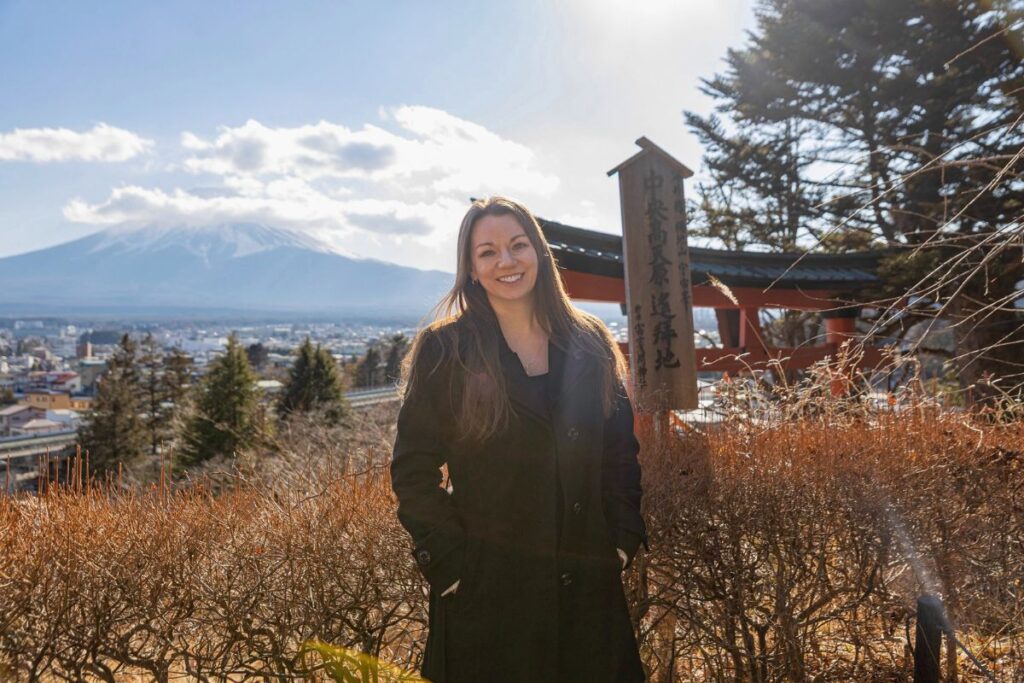
Here are my thoughts on some commonly asked questions about planning a trip to Fujigoko.
Are the Fuji Five Lakes Worth Visiting?
Absolutely! The Fuji Five Lakes region is packed with incredible scenery, charming towns, and plenty of things to see and do. Whether you’re looking for beautiful Mount Fuji views, outdoor adventures, or quieter spots away from the crowds, there’s something here for every type of traveler.
What are the Five Lakes Around Mount Fuji?
The Fuji Five Lakes are comprised of Lake Kawaguchiko (aka Kawaguchi), Lake Saiko, Lake Shōji, Lake Motosu, and Lake Yamanaka. Known as Fujigoko in Japanese, the region is part of the UNESCO World Heritage Site, “Fujisan, sacred place and source of artistic inspiration.”
How Many Days Do You Need for the Fuji Five Lakes?
Three days is ideal for a first-time trip to the Fuji Five Lakes, giving you enough time to see many of the region’s highlights without feeling too rushed. That said, if you want to explore all five lakes in more depth, I’d recommend spending 4-5 days in the area.
Can You Visit the Fuji Five Lakes Without a Car?
Yes, it’s possible to visit Fujigoko without a car – but it’s more difficult. While public buses are available throughout the Fuji Five Lakes region, destinations are limited and travel times are long. Taxis can also be hard to come by, making it more difficult to visit some of the quieter, more remote spots. If you want to make the most of your time and explore the region at your own pace, I highly recommend renting a car.
What Should I Do If I Encounter Bad Weather in Fujigoko?
Don’t let a cloudy or rainy day ruin your trip! Weather around Mount Fuji can definitely be unpredictable, so I recommend keeping a few backup plans in mind and staying flexible with your itinerary. Outdoor destinations like Shiraito Falls, cultural attractions like Saiko Iyashi-no-Sato Nenba, and shopping at Gotemba Premium Outlets are all great alternatives when Fuji isn’t visible. You can also switch locations throughout the day – sometimes the weather clears up when you least expect it!
Fuji Five Lakes vs Hakone: Which is Better?
It really depends on what you’re looking for! Both the Fuji Five Lakes and Hakone are fun destinations, but they offer very different experiences. Hakone has tons of activities to choose from (including a volcanic crater!), while the Fuji Five Lakes Region is all about the views – and there are a lot of them! Personally, I prefer the scenery, vibe, and atmosphere of Fujigoko, but it all comes down to your priorities and travel style.
Final Thoughts: Fuji Five Lakes Itinerary
The Fuji Five Lakes is easily one of my favorite places in Japan, and after three trips, I still find myself wanting to go back.
Between the incredible views of Mount Fuji, beautiful lakes, charming towns, and quieter spots tucked away from the crowds, there’s so much to explore.
And while you could easily spend a week here, three days is a great starting point for seeing some of the region’s highlights without feeling too rushed.
That said, don’t be afraid to switch things up!
The weather around Mount Fuji can be unpredictable, and some of my favorite spots have been the ones I stumbled across along the way.
Leave yourself a little room to wander, stop when something catches your eye, and enjoy the journey.
Planning a Fuji Five Lakes road trip? Which destination are you most excited to visit? Let me know in the comments below!
Love this Fuji Five Lakes itinerary? Pin it now for later!



KRYSTI ATKINSON
Krysti is a travel writer currently based in Okinawa, Japan. Over the past 3+ years, she has explored Japan extensively while traveling throughout Asia – from iconic cities to quiet, off-the-beaten-path destinations. Through Wanderful Horizons, Krysti shares detailed itineraries, practical travel tips, and firsthand recommendations to help travelers plan unforgettable adventures.
