Last updated on September 30, 2026 by Krysti
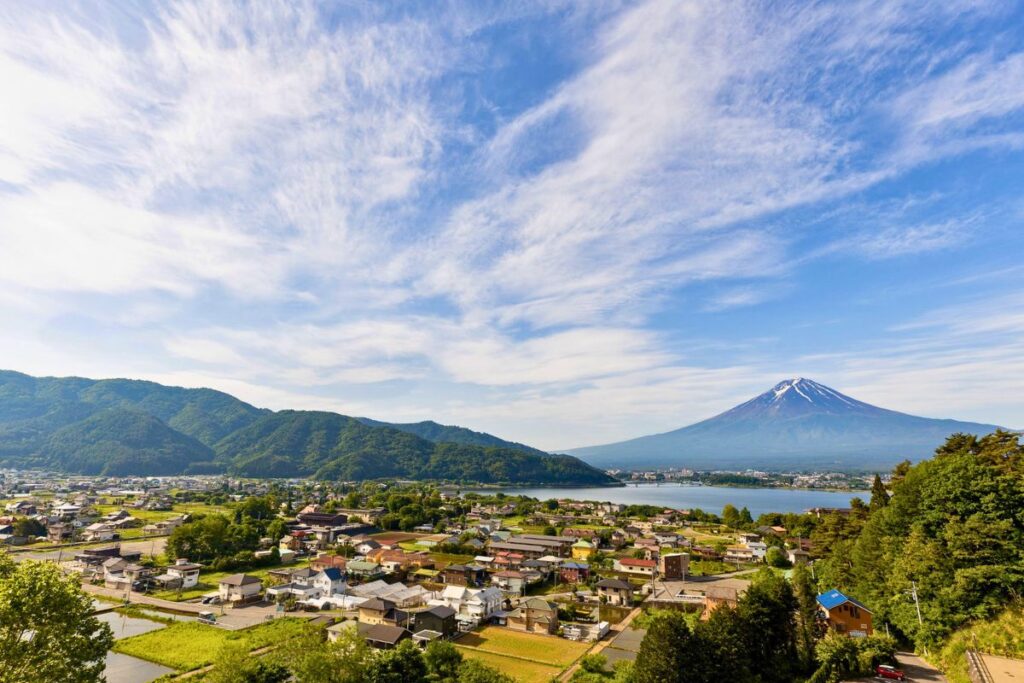
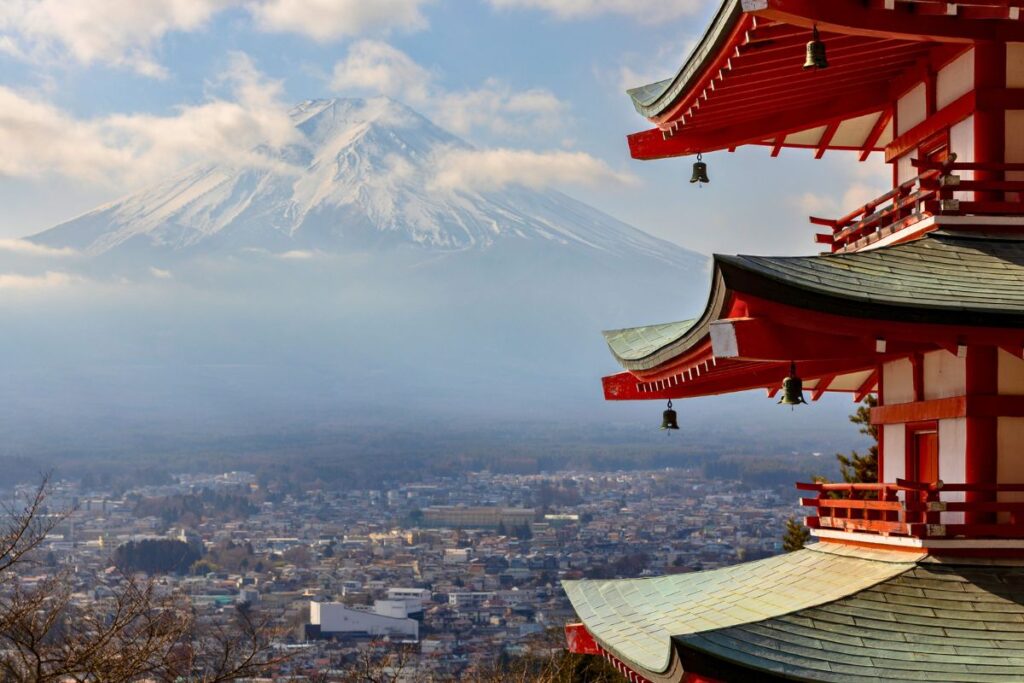
After three trips to the Fuji Five Lakes, I’ve learned one thing: there’s no shortage of incredible viewpoints here. But some views of Mount Fuji are definitely more memorable than others.
What I love most about Fujigoko – aka the Fuji Five Lakes – is that you can see Mount Fuji from so many different perspectives.
Whether it’s a peaceful lakeside setting, a famous photo spot, a panoramic overlook, or a quieter corner of the region, no two spots feel quite the same.
Of course, with so many viewpoints to choose from, it’s hard to know which to prioritize.
That’s where this guide comes in!
After exploring the region several times myself, I’ve had the chance to experience many of these locations firsthand.
And some have absolutely become instant favorites, while others were nice to see but didn’t quite leave the same impression.
So, I’ve narrowed this list down to the spots that I think are actually worth seeking out – whether you’re looking for that classic Mount Fuji photo or simply want to enjoy the scenery without the crowds.
Below, you’ll find 9 of the best places to see Mount Fuji in and around Fujigoko, along with what makes each one special and a few practical tips to help you plan your visit.
*Please note: This post contains affiliate links to trusted partners. If you make a purchase using these links, I will earn a commission at no extra cost to you. Thank you for your support!
Best Time to See Mount Fuji

While it is possible to see Mount Fuji any time of the year, your best chance for success is during the winter months – specifically November to February.
This is when, statistically speaking, you’re most likely to enjoy clear skies and cloud-free views of Fuji-san.
It’s also when the mountain fully showcases her famous snow-capped summit – making for those classic, picture-perfect vistas.
That said, I have visited Mt. Fuji in June, which is supposed to be one of the worst months in terms of visibility, and I still had incredible views!
So, you really never know – in the end, it just seems to come down to timing and luck.
With that in mind, I’ve included a quick breakdown of Mt. Fuji’s visibility month-by-month, so you can try to plan your visit strategically:
🌤️ Partial Visibility: 29% Chance
🌤️ Partial Visibility: 14% Chance
🌤️ Partial Visibility: 23% Chance
🌤️ Partial Visibility: 30% Chance
🌤️ Partial Visibility: 32% Chance
🌤️ Partial Visibility: 30% Chance
🌤️ Partial Visibility: 13% Chance
🌤️ Partial Visibility: 26% Chance
🌤️ Partial Visibility: 37% Chance
🌤️ Partial Visibility: 26% Chance
🌤️ Partial Visibility: 30% Chance
🌤️ Partial Visibility: 23% Chance
Please Note: All statistics are based on data collected by Fuji City in 2025.
Hiking Mount Fuji
If you’re interested in hiking to the summit of Mt. Fuji, you’ll need to time your visit carefully. Due to safety concerns, climbing is only permitted for a short period of time each year. While exact opening and closing dates vary by trail, hiking is typically only allowed from early July through early September. Outside of this window, conditions at the summit can be extremely harsh, and climbing becomes risky due to snow, ice, and strong winds.
Map of the Best Mount Fuji Views
To help you plan your trip, I’ve also included a map overview of the best places to see Mt. Fuji!
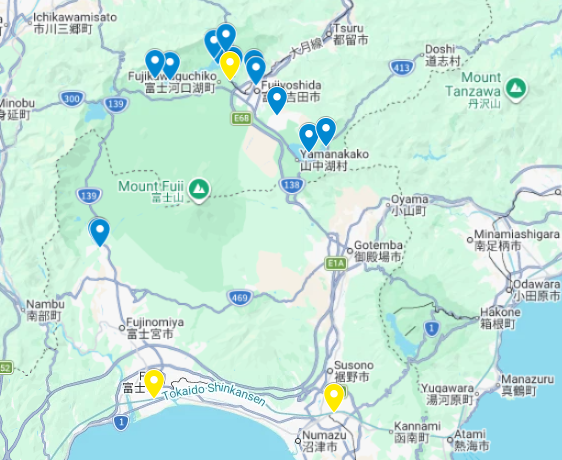
➡️ Click here to view an interactive version of this map!
9 Best Views of Mount Fuji
Now, without further ado, here are the best viewpoints of Mt. Fuji – listed in no particular order!
Arakurayama Sengen Park
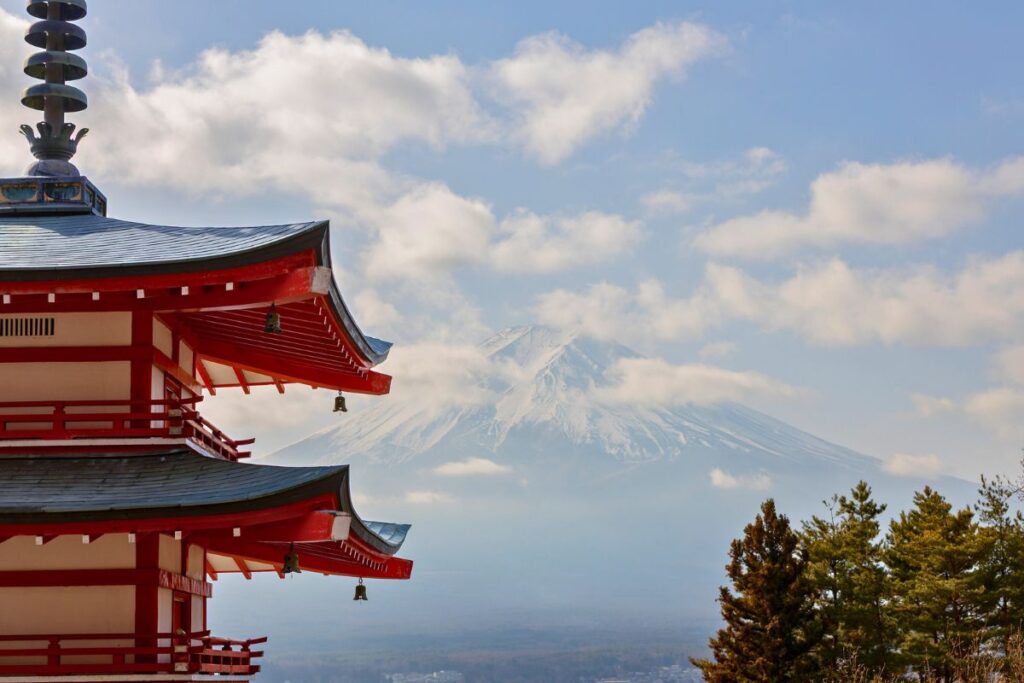
As one of the most popular and photographed views of Mount Fuji, Arakurayama Sengen Park is a must-visit!
I mean, you’ve got the snow-capped volcano, the bright red Chureito Pagoda, and in the spring, you can even see cherry blossoms.
Honestly, there’s nothing else quite like it!
Just be aware: you’ll need to put in some effort to reach the pagoda – and you’ll likely need to exercise some patience once you get there.
Not only is it a bit of a hike (398 steps, to be exact), but the observation deck at the top tends to get quite crowded, especially in the afternoons.
💡 Pro Tip: For the best views of Mt. Fuji, visit in the early morning. I’ve done both morning and afternoon trips, and the difference was noticeable – the morning was less crowded, the lighting was better, and the overall experience was much more enjoyable.
Honcho Street in Fujiyoshida

I must admit, Honcho Street is a bit chaotic, but the view is undeniably beautiful – and quite unique compared to the others on our list.
With Mount Fuji framed by the bustling city street, this spot captures a side of Japan that feels both authentic and alive.
Of course, getting the perfect shot here is also part of the experience.
This iconic view is actually captured from the middle of the street, which means you’ll need to cross into the roadway.
When I visited, it was quite busy, with crowds gathering around the designated intersection and traffic officers working to keep everyone moving safely.
You’ll need to be patient, pay attention to their instructions, and be prepared to move along once you’ve captured your photo.
That said, the view is absolutely worth the little bit of chaos – and it’s definitely one you’ll remember.
💡 Pro Tip: Hikawa Clock Shop is a useful landmark to look for when locating this famous viewpoint of Fuji-san.
Mt. Fuji Panoramic Ropeway
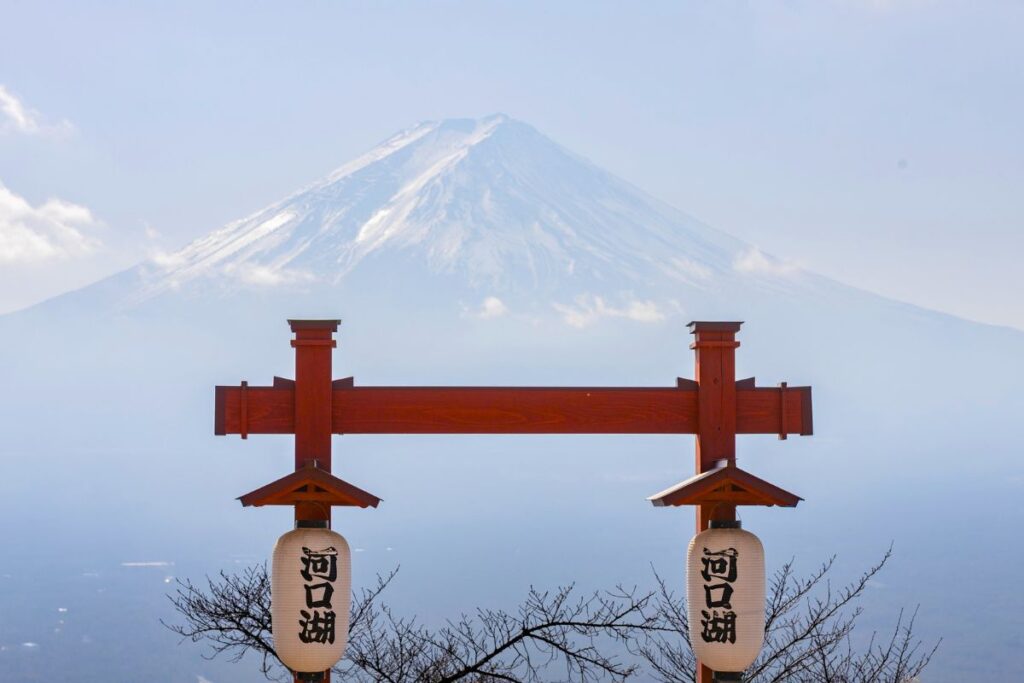
If you’re looking for expansive views of Mount Fuji, the Mt. Fuji Panoramic Ropeway offers one of the best vantage points around Lake Kawaguchiko.
From the observation deck on Mount Tenjo, you can take in sweeping vistas of Lake Kawaguchiko in one direction and Mount Fuji in the other.
Being elevated above the surrounding landscape also makes Fuji-san feel surprisingly close, giving you a completely different perspective than what you’ll get from the lakeshore.
That said, the size of the observation deck did surprise me – it felt quite small.
Then again, you don’t really need a huge amount of space to enjoy views like these!
📝 Side Note: The Mt. Fuji Panoramic Ropeway is very weather-dependent! During bad weather or high winds, it may close down for safety reasons. So, be sure to check the operating status before your visit!
Oishi Park, Lake Kawaguchiko

Lake Kawaguchiko is full of amazing scenery, but the best spot for clear views of Mount Fuji is, undoubtedly, Oishi Park!
Located along the northern shore of the lake, the park is known for its vibrant seasonal flowers, which create a beautiful foreground with Fuji-san rising behind them.
I especially love how open the landscape feels here, with the lush greenery, lake, and mountain all coming together in one view.
The scenery changes here throughout the year too, as different flowers come into bloom, so there’s always something new to see depending on when you visit.
💡 Pro Tip: Oishi Park can get quite crowded, especially during peak flower seasons. If you want a more relaxed experience, try visiting during the week and earlier in the morning.
Hirano Beach, Lake Yamanaka
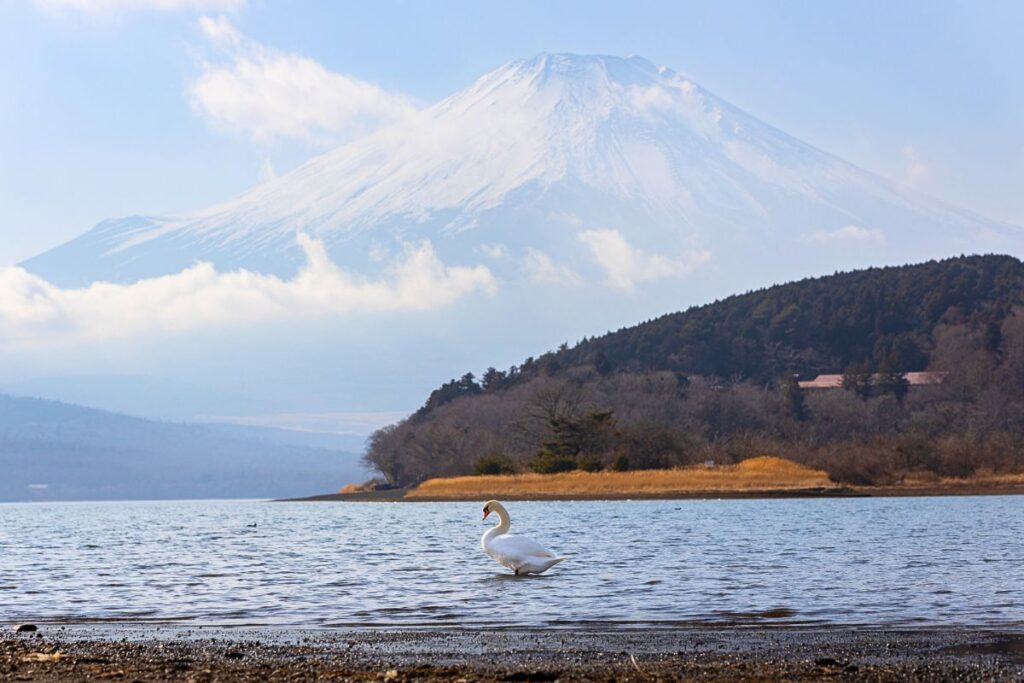
Of all the viewpoints around Lake Yamanaka, Hirano Beach is easily one of my favorites.
In fact, I’ve actually been here twice now!
On my first visit, I admittedly had awful visibility and couldn’t see Fuji-san at all.
So, I made it a point to come back a second time and was rewarded with incredible views – of Mount Fuji, the lake, and its resident swans!
The swans were actually there during both of my visits, making them a pretty memorable part of the scenery.
They’re often swimming right along the shoreline, which makes for some especially fun photos – if they cooperate enough for you to capture them alongside Mt. Fuji.
💡 Pro Tip: If you have some extra time, consider walking or biking along the lakeshore. There’s a designated path with additional viewpoints of Mount Fuji, so you can explore beyond the main beach area.
Nenba Beach, Lake Saiko
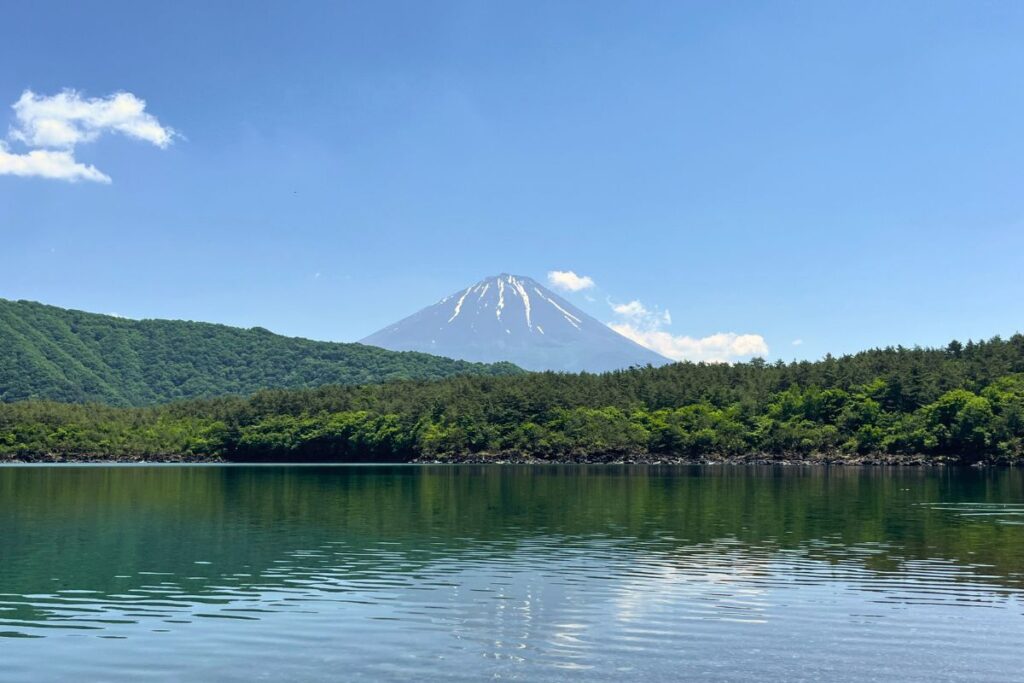
If you’re looking for a beautiful view of Mount Fuji without the crowds, Nenba Beach is one of the best spots around Lake Saiko.
What I love about this viewpoint is how unobstructed the scenery feels.
With the open shoreline of Lake Saiko in the foreground and Fuji-san rising behind it, you get a beautiful, classic Fuji landscape without a lot of distractions.
It’s also a great example of how the different lakes around Fujigoko offer completely different perspectives of Mount Fuji.
The scenery here feels much more natural and understated than some of the more developed viewpoints around Lake Kawaguchiko.
And, as I discovered during my own visit, you may have the place almost entirely to yourself – making it an especially nice spot to slow down and enjoy the scenery.
Oshino Hakkai
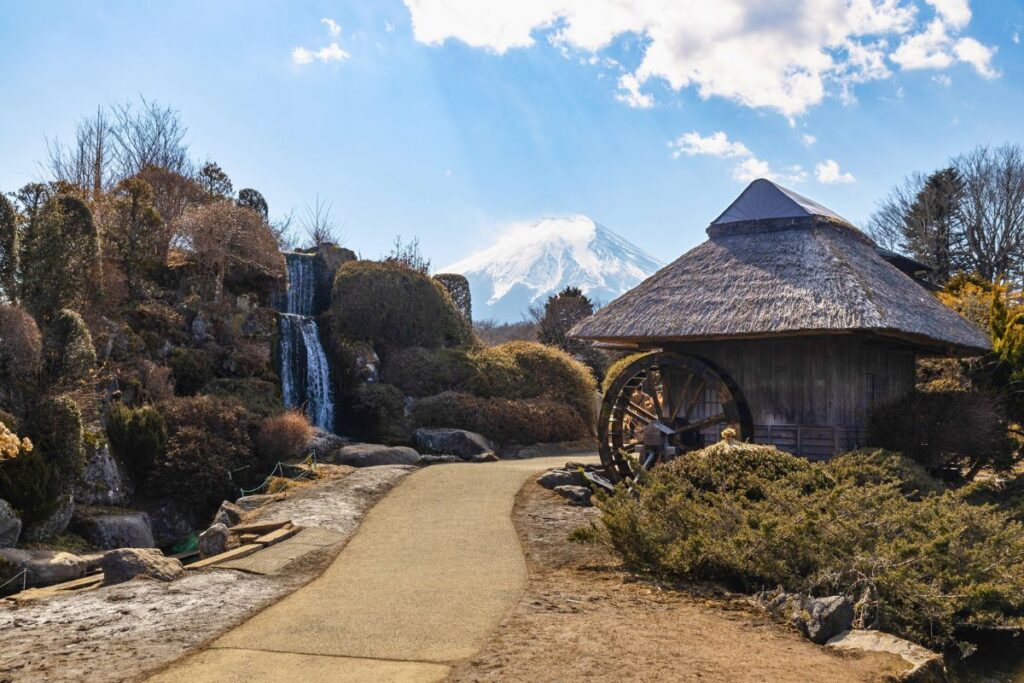
A designated Natural Monument of Japan, Oshino Hakkai is a charming village known for its crystal-clear ponds and beautiful views of Mount Fuji.
The ponds here are fed by underground rivers flowing down the mountain, while traditional thatched-roof homes frame Fuji-san to create a distinctly Japanese backdrop.
This combo, I think, is what makes Oshino Hakkai so special – not only do you get great views of Mt. Fuji, you get to explore a traditional village, too.
You’ll also find plenty of small shops and street food vendors throughout the area, making it an easy place to spend a little extra time wandering around.
💡 Pro Tip: For an elevated view of Mount Fuji and the village, be sure to visit the Hannoki Bayashi Museum. You’ll have to pay a small entrance fee, but it’s well worth it!
La Vista Fujikawaguchiko Hotel
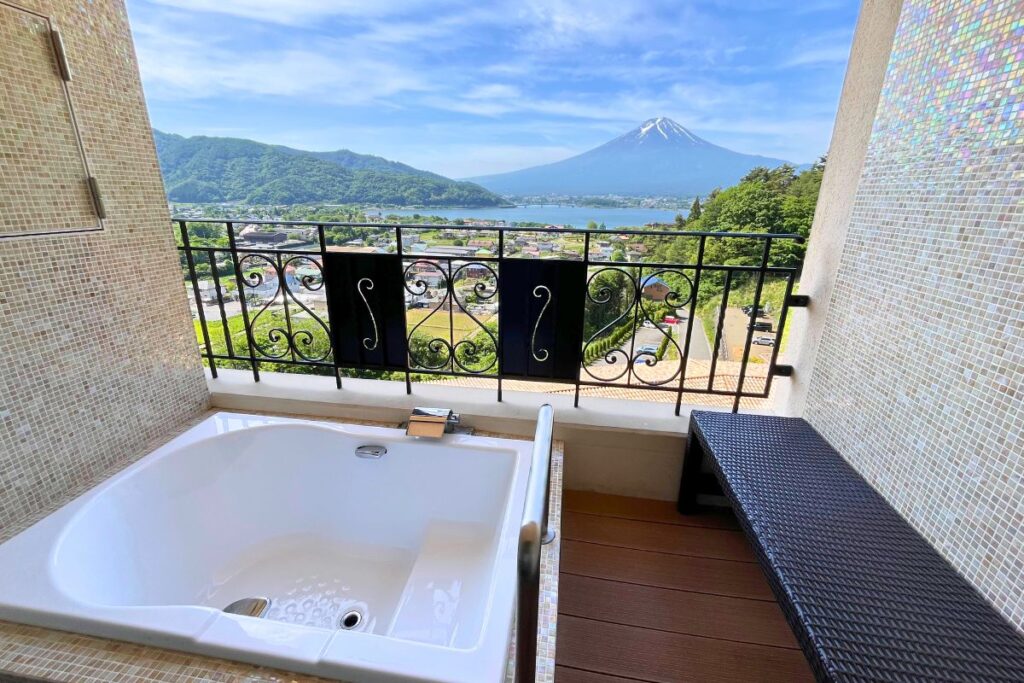
Although it’s not a tourist attraction per se, I had to include La Vista Fujikawaguchiko on this list because, honestly, the views here are absolutely incredible!
I actually stayed here when my mom came to visit me in Japan.
I wanted to give her an extra special experience during her trip – and it ended up being one of the highlights of her entire visit.
And honestly, it’s easy to see why!
Overlooking Lake Kawaguchi, La Vista offers stunning, panoramic vistas of Mount Fuji and the surrounding area.
You can take in these views from the hotel grounds as well as the comforts of your room – many of which offer private balconies with open-air baths.
Just be sure to book a room facing the mountain, so you can get the full experience!
🌟 Looking for more information on La Vista Fujikawaguchiko? Be sure to check out my full hotel review and guide!
Bonus: Shiraito Falls
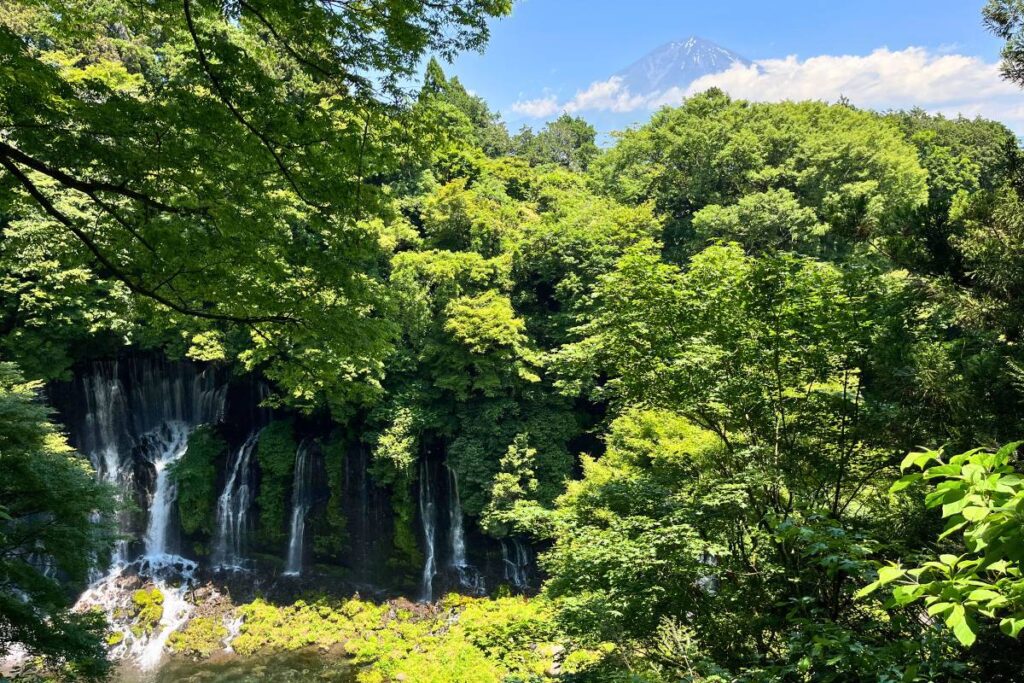
While Shiraito Falls isn’t technically in Fujigoko, it’s only about a 25-minute drive from the area – and is well worth the detour!
In my opinion, the falls here are absolutely stunning, even more so in person.
I mean, you’ve got the waterfalls, the lush greenery, and Mt. Fuji peeking out in the background – it really is quite a sight to see!
For the best vantage point, you’ll need to climb up to the observation deck overlooking the falls.
This is where you’ll catch a glimpse of Fuji-san, provided the weather cooperates.
But even if it doesn’t, the area is still fun to explore.
In fact, there’s another waterfall nearby – Otodome Falls. Although it doesn’t offer views of Fuji-san, it’s still a nice spot to check out.
6 Things to Keep in Mind When Visiting Mount Fuji

Before you finalize your trip to Mt. Fuji, here are some key pointers to keep in mind!
Visibility Isn’t Guaranteed
After several trips to the Fuji Five Lakes region, I’ve learned firsthand that visibility is never guaranteed.
Mt. Fuji is a very weather-dependent destination, and even clear forecasts don’t always mean you’ll get a clear view.
Clouds, mist, and even sudden rain can roll in quickly and obscure Fuji-san without notice.
That said, patience can go a long way here.
Clouds often come and go, so if you wait long enough, you just might catch a glimpse of perfect visibility.
Weather Varies By Location
Fujigoko is a large area, and weather conditions can vary quite a bit from one lake to another.
During my first road trip through the region, I visited Lake Yamanaka and Lake Kawaguchiko on the same day.
While the views at Lake Yamanaka were awful, I had near-perfect visibility at Lake Kawaguchiko.
So, take this as your sign to be flexible – and change locations, if need be. You just might find a better view elsewhere!
💡 Pro Tip: Before heading out, check the live cameras around the Fuji Five Lakes to see where Fuji-san is currently visible. This can be especially helpful on days when the weather is changing throughout the region.
It’s Helpful to Have a Back-Up Plan
Speaking of flexibility, it’s important to have a backup plan, just in case you do get hit with bad weather.
Unfortunately, it happens – sometimes visibility isn’t great, no matter where you go.
So, what can you do instead? Focus on experiences that don’t depend on Mt. Fuji.
For example, you can go visit the waterfalls, explore the traditional villages, hang out with the swans, or go cafe hopping.
Thankfully, there is quite a bit to do in the area, so you should be able to keep yourself entertained.
Early Starts Are Best
When it comes to Mount Fuji, it’s best to arrive as early as possible.
Not only will you avoid the worst of the crowds, but you’ll also increase your chances of actually seeing Fuji-san.
Generally speaking, most tour buses and day trippers don’t arrive until late morning.
So, if you can get there early enough, you’ll have the chance to enjoy some of the top spots in relative peace and quiet.
But even more importantly, early morning is typically the best time to see Fuji-san.
Skies tend to be the clearest in the morning, offering better visibility and a higher chance of catching a full view of the mountain.
So if you’re aiming for the best views – without the crowds – set that alarm and start your day early!
Overnight Stays Improve Your Odds
An alternative to arriving early is to simply stay the night. That’s what I did on my second trip – and I highly recommend it!
This allows you to wake up with the sunrise and catch views of Mount Fuji before anyone else arrives!
It’s truly a peaceful and almost magical way to take in the landscape.
Plus, spending the night gives you more time to explore the area – which is definitely a bonus!!
🌟 Not sure where to stay? Check out my guide on where to stay in Kawaguchiko for the best areas, hotels, and ryokans for your trip!
Fuji-San Is More Than Just a Photo Op
No matter where you go to admire the views, it’s important to remember that Mount Fuji is much more than just another tourist attraction.
It’s a deeply significant landmark that holds great cultural and spiritual value for many people in Japan.
In fact, the summit of the mountain lies within the grounds of a 1,200-year-old Shinto shrine and is considered to be highly sacred.
So, while the photos are stunning, yes – Mount Fuji is also incredibly meaningful to the local community and, as such, should be treated with reverence and respect.
As you explore the area, be sure to follow posted guidelines, stick to designated pathways, and never leave any trash behind.
Small actions like these not only show respect, but also help preserve the area’s natural beauty for generations to come.
How to Get to Mount Fuji From Tokyo
Now that you know what to expect when visiting Mount Fuji, let’s talk about how to actually get there!
Mount Fuji by Tour
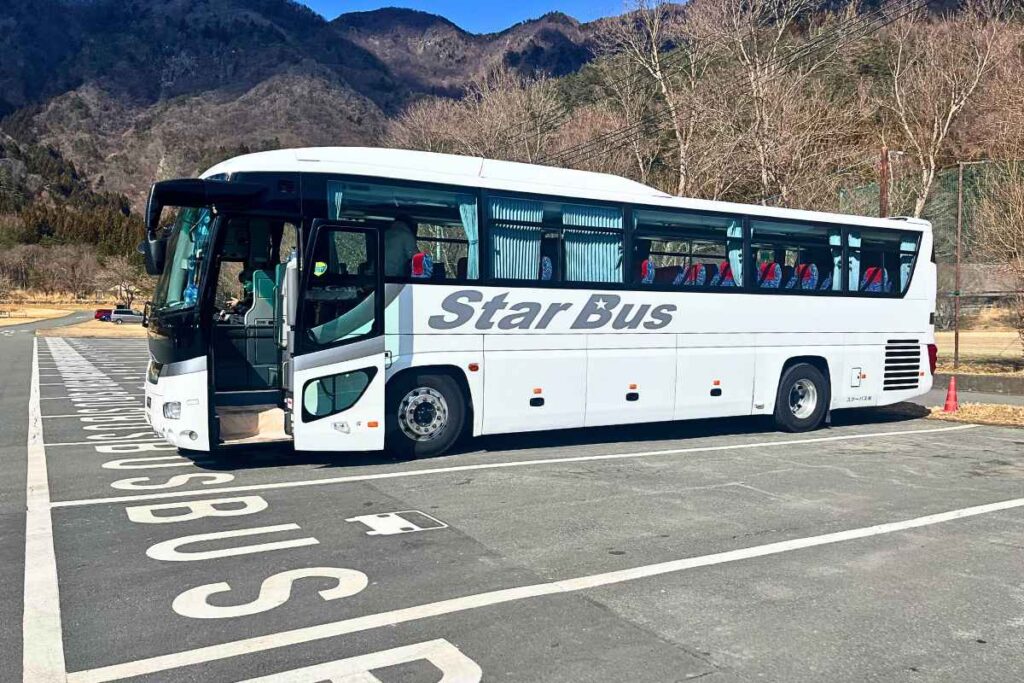
If you only have time to spend one day in Mt. Fuji, then I recommend joining a guided tour.
It’s definitely the easiest option in terms of transportation – and you’ll be able to visit several destinations in one go!
There are a variety of tours that depart from Tokyo, with plenty of options depending on what you want to see and how you want to spend your day.
I actually traveled by tour on my first visit to Mt. Fuji and, surprisingly, I really enjoyed it!
While I generally prefer traveling independently, the tour was a great introduction to the area – and I loved not having to worry about all of the logistics.
🌟 Planning to join a Mt. Fuji tour? Be sure to check out my complete guide on Mt. Fuji tours from Tokyo – here, you’ll find my firsthand experience, tips for choosing a tour, as well as current tour options.
Mount Fuji by Public Transit
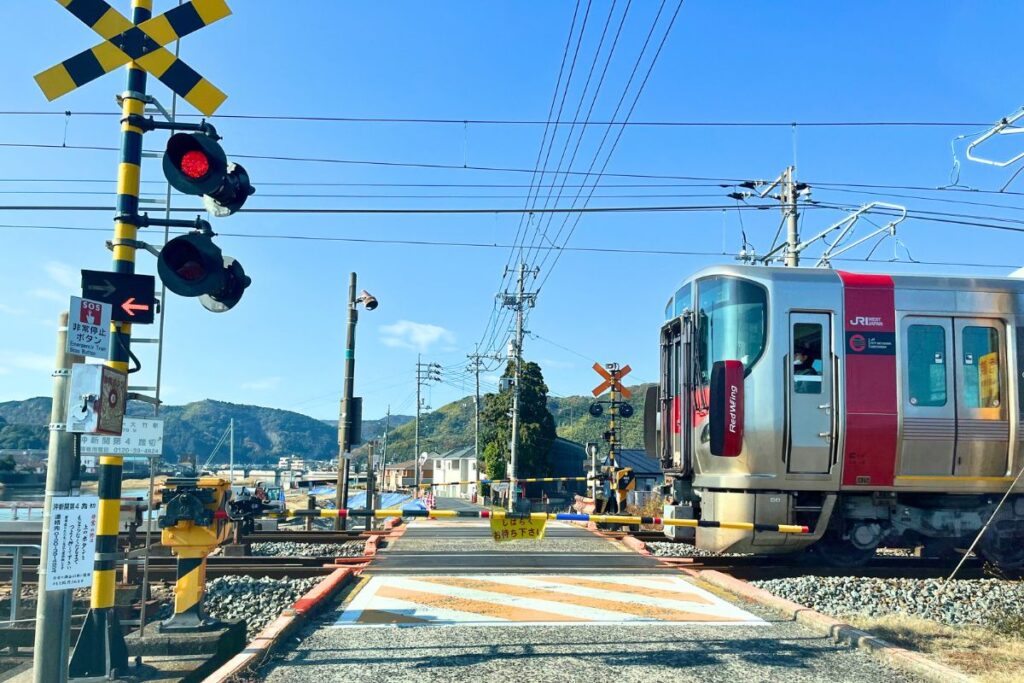
If budget is your main concern, then consider utilizing public transportation to get to Mt. Fuji.
The main train station in the area is Kawaguchiko Station, so that’s where I recommend traveling to.
From there, you can explore the surrounding area utilizing local public transit.
Below, I’ve provided a brief breakdown of the various ways you can travel from Tokyo to Mt. Fuji and Kawaguchiko Station:
- 🚌 Highway Bus: The most affordable option, you can easily take a highway bus from Tokyo to Kawaguchiko Station. Travel time is 2-3 hours, depending on traffic, with one-way fares starting at just $15.
- 🚆 Limited Express Train: Offering faster transit times, the Fuji Excursion takes you directly from Shinjuku Station to Kawaguchiko Station. Travel time for this is about 2 hours and costs around $30 one-way.
- 🚄 Shinkansen: While it’s possible to take the bullet train from Tokyo to the Fuji Five Lakes, I wouldn’t recommend it – unless you already have a JR Pass. Shin-Fuji and Mishima are the nearest Shinkansen stations, but both require a bus transfer to reach Fujigoko. The journey to Kawaguchiko takes around 3–4 hours and costs roughly $30–40 one-way, plus local bus fare.
Once you arrive in Kawaguchiko, you can use the local bus network to reach many of the region’s most popular spots, including most of those mentioned in this guide.
Just keep in mind that traveling between destinations by bus can take a bit longer – but it’s definitely doable and very budget-friendly!
Mount Fuji by Car
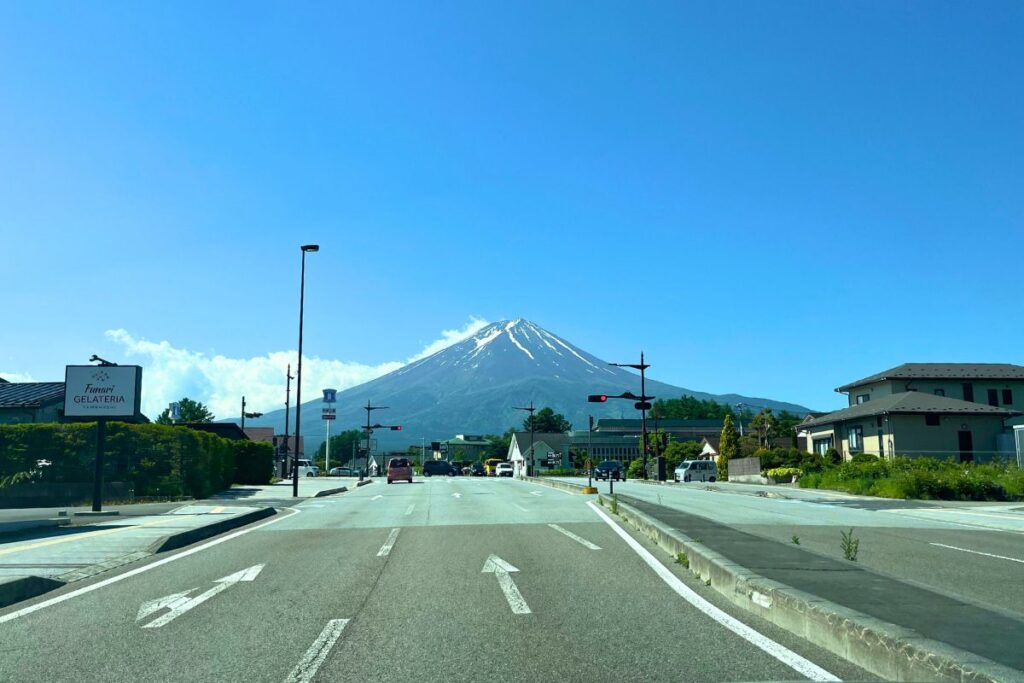
If at all possible, I highly recommend renting a car and spending a few days exploring the area around Mt. Fuji.
This is what I did on my second and third visits, and I really enjoyed it.
You’ll have much more freedom and flexibility when it comes to your itinerary! And you’ll be able to visit spots that aren’t quite as touristy, like Shiraito Falls!
Alternatively, you can also hire a private driver if you don’t feel comfortable driving around on your own. Many of them offer flexible and customizable itineraries!
🌟 Planning to explore Fuji by car? Check out my Fuji Five Lakes road trip itinerary for ideas on where to go and how to make the most of your time in the region.
Driving in Japan
Before you rent a car in Japan, make sure you look into the Japanese license requirements specific to your home country. Depending upon where you reside, you might need to obtain an International Driver’s Permit, a translated copy of your home country’s driver’s license, or, in some specific cases, a Japanese driver’s license.
For those traveling from the United States, Canada, Australia, Singapore, and most European countries, an International Driver’s Permit is required. You can obtain this from an authorized automobile association in your home country.
Frequently Asked Questions About Planning a Trip to Mount Fuji

Here are my thoughts on some commonly asked questions about visiting Mt. Fuji in Japan.
Is Mount Fuji Worth Visiting?
Yes, Mount Fuji is absolutely worth visiting! The views and the natural landscape are truly breathtaking. But beyond that, the region is full of unique and exciting experiences. From peaceful lakes and scenic hiking trails to cultural sites and wildlife encounters, there’s so much to explore! And the best part? If you’re willing to venture a bit off the beaten path, you’ll discover a quieter, more authentic side of Japan that most tourists miss!
What Is the Best Time of Day to See Mount Fuji?
Generally speaking, the best time to see Mt. Fuji is early in the morning. This is when the skies are most likely to be clear, offering unobscured views of the mountain. If you can get there early enough – or better yet, spend the night nearby – you may even be able to catch the sunrise over Fuji-san, which is truly a sight to behold!
Can You See Mount Fuji From Tokyo?
Yes, it’s definitely possible to see Mt. Fuji from Tokyo – especially on a clear day! In fact, there are several places around the city where you can glimpse some pretty amazing views! A few of the more popular spots include: Tokyo Tower, Tokyo SkyTree, Tokyo Metropolitan Government Building, Shibuya Sky, and Roppongi Hills Mori Tower. Just keep in mind, the mountain lies about 100 kilometers away, so views can really be obscured depending on the season and the weather.
Is It Possible to See Mount Fuji From the Shinkansen?
Yes, it’s actually possible to see Mount Fuji from the bullet train if you’re traveling on the Tokaido Shinkansen between Tokyo and Osaka. When coming from Tokyo, the mountain appears on the right side of the train – and when coming from Osaka, it appears on the left side of the train. The best views can be seen around Shin-Fuji Station, so be sure to keep an eye out when you pass by!
Can Mount Fuji Be a Day Trip From Kyoto or Osaka?
While it’s technically possible to do a day trip to Mount Fuji from Kyoto or Osaka, it’s not something I would recommend. Simply put, Mount Fuji, and especially the Fuji Five Lakes region, is too far away. By bullet train, it takes about 5 to 5.5 hours to reach Kawaguchiko Station. And it’s just as long when driving. It may be possible to visit Hakone, another popular spot for views of Mount Fuji. However, the travel time is quite long (about 3 to 3.5 hours each way), so you’d still be very rushed and wouldn’t be able to see much. If you’re coming from Kyoto or Osaka, I’d recommend spending a night near Mount Fuji, so you have more time to explore the area.
Final Thoughts: The Best Views of Mount Fuji
With so many incredible viewpoints around Mt. Fuji, narrowing this list down wasn’t easy!
After visiting Fujigoko several times, these are some of the places I’ve enjoyed most – and hopefully they’ve given you some inspiration for your own trip.
Whether you’re looking for a classic lakeside view, a photo-worthy town, or something a little more off the beaten path, there’s no shortage of beautiful places to see Fuji-san.
Just keep in mind that the mountain doesn’t always cooperate!
Give yourself some flexibility, check the weather, and be patient. You never know when the clouds might finally clear and reveal that picture-perfect view.
Planning to check out these Mount Fuji views for yourself? What destination are you most excited to visit? Let me know in the comments below!
Love this post about the best views of Mount Fuji? Pin it now for later!



KRYSTI ATKINSON
Krysti is a travel writer currently based in Okinawa, Japan. Over the past 3+ years, she has explored Japan extensively while traveling throughout Asia – from iconic cities to quiet, off-the-beaten-path destinations. Through Wanderful Horizons, Krysti shares detailed itineraries, practical travel tips, and firsthand recommendations to help travelers plan unforgettable adventures.