

Planning to visit Kyoto’s newest teamLab experience? Here’s everything you need to know before you go!
Since opening in October 2025, teamLab Biovortex in Kyoto has generated a lot of online buzz.
From stunning social media clips to bold claims that it’s the largest – and best – teamLab museum in Japan, the hype has been pretty hard to ignore.
So, naturally, I just had to check it out for myself.
I mean, I’ve been to several teamLab experiences across Japan, so I needed to know how this one would compare. And I must say – it did not disappoint!
With more than 50 interactive exhibits on display, teamLab Kyoto is not just the largest, but also the most immersive digital art museum in Japan.
Each room offers something unique and exciting to explore, with digital landscapes that shift and art that moves, responds, and evolves around you.
Whether it’s your first time visiting a teamLab museum or you’re a seasoned fan (like me), there’s always something new to discover.
And with this guide, you’ll be well prepared to experience it all!
Below, I’ll walk you through everything you need to know – from tickets and installations to insider tips – so you can make the most of your visit to teamLab Biovortex in Kyoto!
*Please note: This post contains affiliate links to trusted partners. If you make a purchase using these links, I will earn a commission at no extra cost to you. Thank you for your support!
What is teamLab Biovortex?
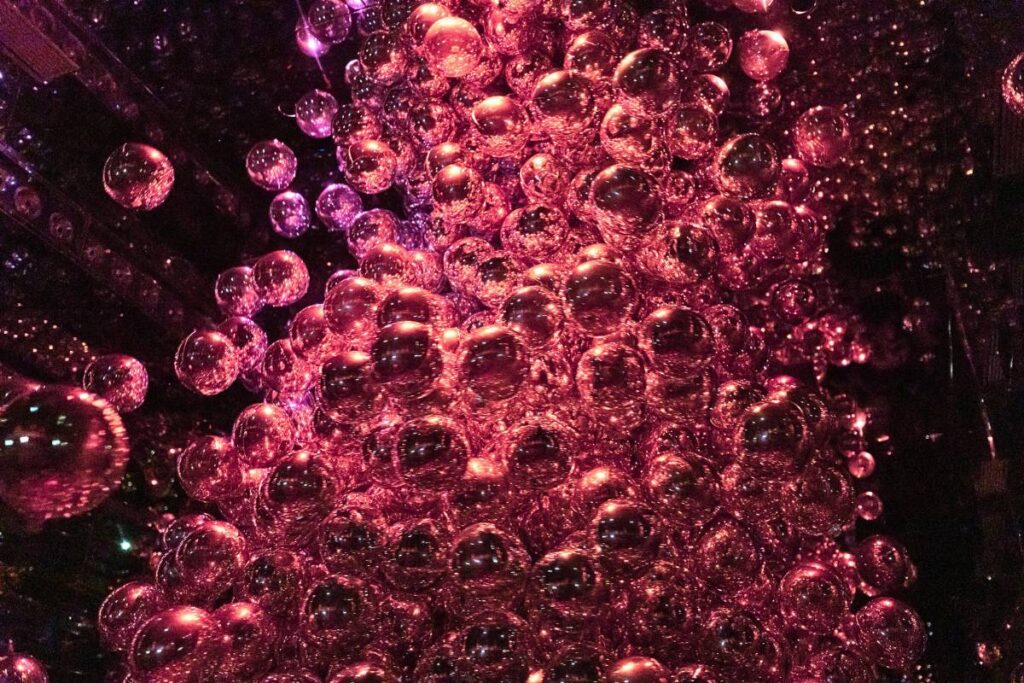
Morphing Continuum Installation
In short, teamLab Biovortex is an interactive digital art museum that uses a mesmerizing mix of light, sound, color, and technology to create fully immersive experiences.
Unlike a traditional museum, where you simply observe, here your presence and actions shape the art itself.
Where you walk, what you touch, and how you move creates a reaction – lights flicker, colors change, digital displays transform, and the very landscape shifts below your feet.
A few installations are even more hands-on and physically active, allowing visitors the opportunity to jump, climb, and slide their way through space.
With over 50 interactive works of art on display, there’s no shortage of experiences to explore here.
Quick Facts: teamLab Biovortex in Kyoto
Address: 21-5 Higashikujo Higashiiwamotocho, Minami Ward, Kyoto
Museum Hours: The park is open 7 days a week from 9:00 AM to 9:00 PM, with last entry allowed at 7:30 PM.
Recommended Length of Stay: Plan for 3 hours at a minimum. However, 4-5 hours is more realistic if you want to fully immerse yourself in the exhibits.
Please Note: Opening hours are subject to change, and occasional closures may occur. For the most up-to-date schedule, be sure to visit the museum’s official website or check ticket availability via Klook.
Where is Kyoto’s teamLab Museum Located?

teamLab Biovortex is conveniently located right in the center of Kyoto – next to Kyoto Station.
It’s about an 8-minute walk from the train station or just a 3-minute ride by bus or car.
The closest bus stop to the museum is Kawaramachi Hachijo, which is accessible from Kyoto Station via City Bus 16 or 84.
Pro Tip: Be sure to arrive a little early! Lines can form, especially on weekends, so you may need to wait a bit before entering. On the flip side, if there’s no line, staff may let you in early – which was the case for us!
Admissions to teamLab Biovortex

Crows Are Chased Installation
Tickets for teamLab Biovortex can be purchased either online or on-site at the museum.
That said, I highly recommend purchasing your tickets in advance, if at all possible.
Since the museum is still new, tickets sell out often – especially on weekends. Plus, on-site prices tend to be slightly higher.
Ticket Options
There are two types of tickets available for visitors:
- Flexible Pass: Allows for entry at any time on a selected date. This option is convenient but is quite a bit more expensive than the Timed Entrance Pass.
- Timed Entrance Pass: Requires entry at a specific date and time, as indicated on your ticket. Prices for this vary depending on the day and time. Generally speaking, weekends and holidays are more expensive, while weekday evenings tend to be a bit cheaper.
If you opt for a Timed Entrance Pass, I recommend visiting first thing in the morning or later in the evening, as these time slots tend to be less crowded.
➡️ Ready to lock in your preferred date for teamLab Kyoto? 🌌 Check rates and availability here!
Inside teamLab Biovortex Kyoto: An Overview of the Installations
As shared above, teamLab Biovorex features more than 50 exhibits spread out across four floors.
While I won’t go through every single installation (that would be a large undertaking for this post!), I will provide an outline of what to expect on each level of the museum.
I’ll also highlight a few of my favorite experiences, as well as the most popular ones!
Underground

Forest of Resonating Lamps Installation
The first floor you’ll encounter, the Underground, is home to the largest collection of installations at Kyoto’s teamLab museum.
Many of these displays play on light, color, and digital projection to create mesmerizing and immersive experiences.
A few of the most popular installations that you’ll find here include:
- Morphing Continuum: A brand new experience for teamLab in Japan, this installation features hundreds of glowing spheres that come together to create an almost vortex-like structure. You can immerse yourself in the madness and get lost in the swirling, ever-changing display.
- Infinite Crystal World: Similar to installations found at other teamLab locations, this fan-favorite features thousands of hanging crystals. They form a kaleidoscope maze of sorts, one composed of constantly shifting colors.
- Forest of Resonating Lamps: First displayed at teamLab Borderless in its original Odiba location, this installation is home to hundreds of hanging lanterns that change in color and brightness as you approach them. Just keep in mind, you’re not allowed to actually touch them directly.
- Crows Are Chased: A personal favorite of mine, this light projection installation blurs the lines between the digital world and the real world. As you stand surrounded by flashing colors, flying images, and powerful sounds, you become lost in the dynamic environment laid out before you.
Sculpture & Painting
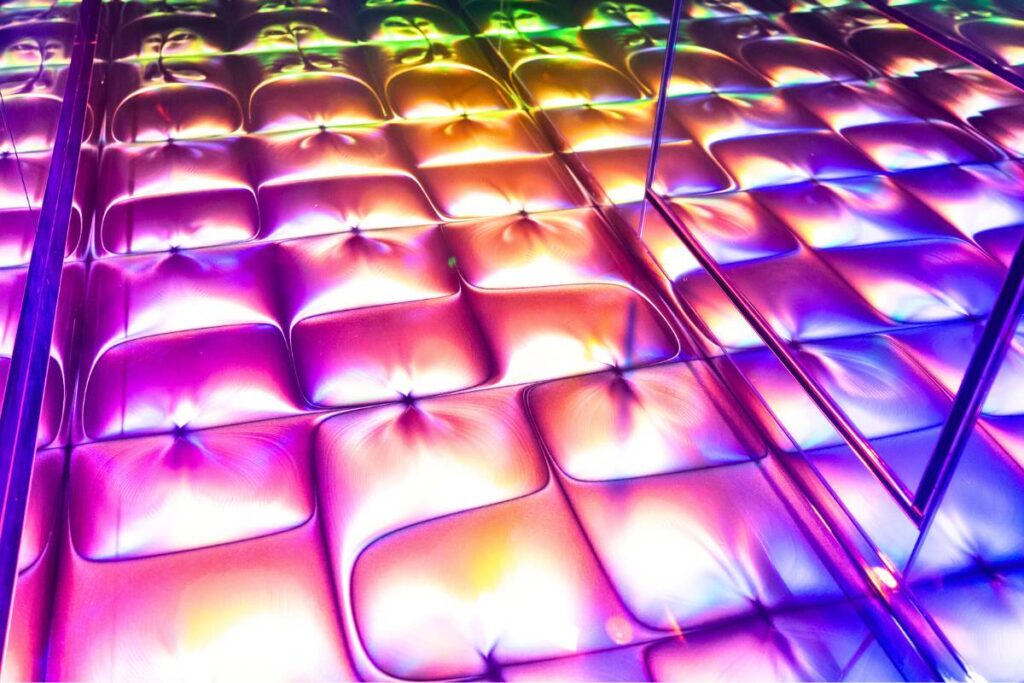
Transient Abstract & Return Installation
The second floor, Sculpture & Painting, is the smallest, with only two exhibits on display.
That said, these installations are some of the most immersive and unique experiences in the museum.
Here’s a quick overview of them both:
- Massless Amorphous Sculpture: Home to a drifting sea of bubbles, this installation is honestly unlike anything I’ve ever seen at a teamLab museum. As you move through the space, the bubbles float and surround you, creating an otherworldly atmosphere. Please note, masks are required (and provided) for this exhibit, and you’ll likely end up covered in bubbles – but don’t worry! The staff will use a leaf blower to get them off before you move on!
- Transient Abstract Life & Return: Featuring bizarre, gold-like liquid, this installation offers two experiences. You can either observe the shimmering liquid from afar or you can don a pair of provided rain boots and walk right through it, creating unique swirling patterns as you go.
Megaliths

Megaliths Installation
On the third floor, Megaliths, you’ll discover a variety of light installations, many of which feature physical props and displays.
These works of art create a striking interplay between the tangible and intangible, the immersive and the observable.
A few of the most notable installations that you’ll find here include:
- Megaliths: True to its name, this installation features several large, rock-like structures that are illuminated with shifting lights. You can walk amongst them, taking in their otherworldly landscape, one where light and shadow constantly change around you.
- Sea of Solidified Light: Encompassing countless crystals, all brightly illuminated, this installation is quite beautiful to behold. While it’s not really interactive in any way, it is a great spot for photos!
- Resonating Microcosms: Similar to the one found at teamLab Planets, this installation features a large collection of egg-shaped structures that respond to interaction. As you touch them, they sway and shift, changing in color and brightness.
- Living Crystallized Light: In this water installation, you walk over a shallow reflective surface that mirrors a vibrant, iridescent light show. As you move, your perspective shifts, and so too does the landscape beneath your feet.
Athletics Forest
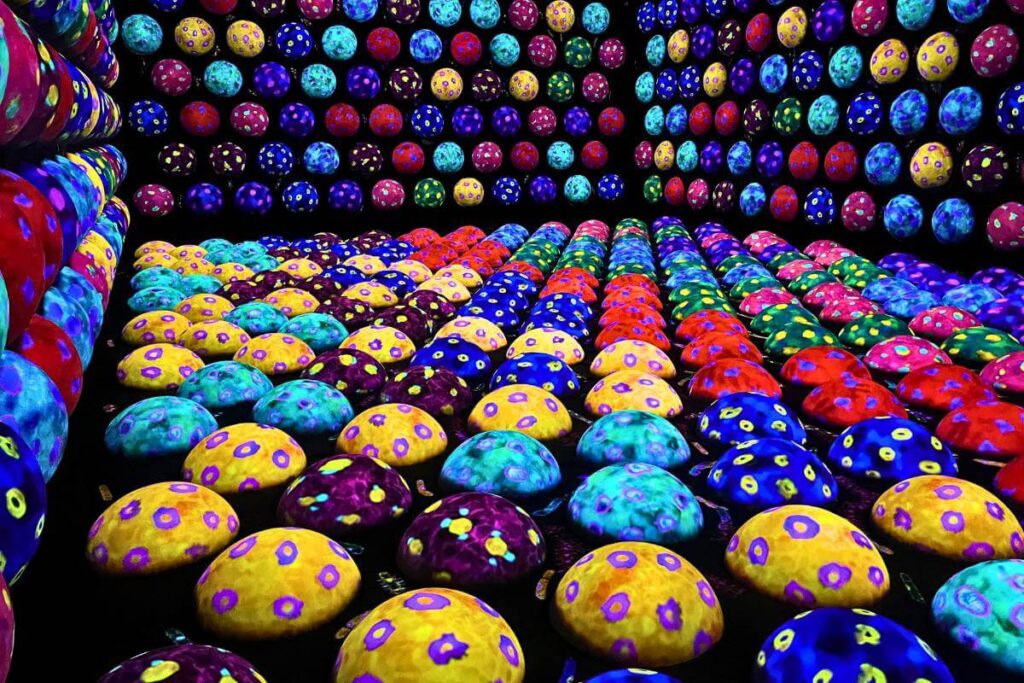
Rapidly Rotating Bouncing Spheres Installation
The last and final floor is the Athletics Forest, which is definitely more of a physical-fun zone.
Here, you’ll find several kid-friendly installations that invite the visitor to play, jump, climb, and create.
It’s energetic, colorful, and a great space for families – or anyone really who enjoys more playful, hands-on experiences.
While there are lots of exhibits to explore here, these are a few of the most popular:
- Rapidly Rotating Bouncing Spheres: Also found at teamLab Forest Fukuoka, this installation is filled with colorful bouncing spheres. You can hop your way across the room, watching as the spheres shift and change in response to your touch.
- Aerial Climbing: Featuring an elevated playground, this installation takes the idea of an obstacle course to a whole new level. As you move along the route, the bars beneath your feet shift, continually changing the path ahead. Your movements will also trigger changes in light and sound, making the experience even more dynamic.
- Multi Jumping Universe: Consisting of two extra-long trampolines, this installation not only encourages play, but it also depicts the life cycle of a star. As you jump along, you’ll trigger digital projections and sounds that evolve with your movements, illustrating everything from a star’s formation to its explosive finale.
- Sketch Ocean: A teamLab classic, this installation invites participants to draw their own sea creatures. You can then digitally scan them and watch them come to life on the surrounding walls. There’s even an opportunity to create merch using your very own artwork. Just head to the Sketch Factory before you depart to pick up your personalized souvenirs!
Please Note: Proper footwear is required to explore the installations in the Athletics Forest. High heels, sandals, and other unsturdy footwear are not allowed. If needed, the facility offers rental shoes, although quantities are limited.
My Honest Review of teamLab Biovortex in Kyoto
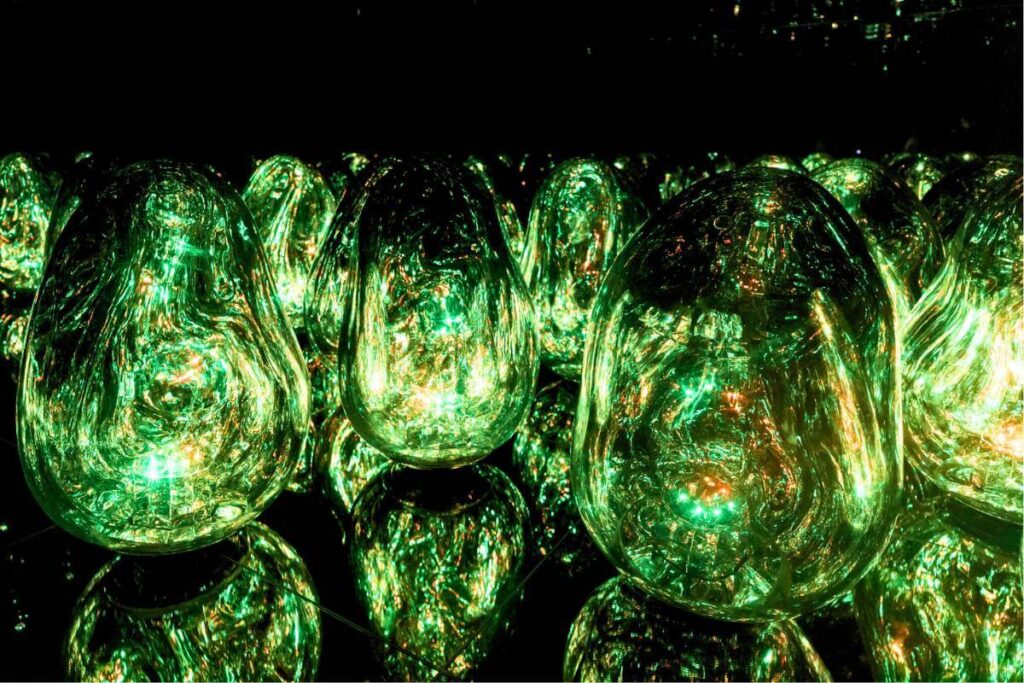
Resonating Microcosms Installation
I genuinely enjoyed my time at teamLab Biovortex and can’t recommend it enough!
Even though I’ve been to other teamLab museums in Japan, this one still felt really unique and exciting.
Not only is it massive, but there are lots of new exhibits and immersive experiences to discover.
And, sure, there were a few repeat installations like the Infinite Crystal World and the Bouncing Spheres – but I liked those rooms to begin with, so I was happy to see them again.
That said, I do have a couple of observations that are worth noting:
- The Athletics Forest is definitely geared more towards kids. Adults can still participate and have fun, of course, but the majority of the activities are designed with younger visitors in mind. If you’re visiting without kids, you probably won’t spend as much time here – but there are 3 other floors to keep you entertained!
- The Massless Amorphous Sculpture was a bit overwhelming. The room is filled with soap bubbles, so the smell in there is overwhelmingly strong. I didn’t think it would bother me, but it definitely did. If you have allergies or are sensitive to smells, you may want to skip this installation altogether.
Despite those minor points, I still had a lot of fun and definitely think the museum is worth checking out – especially if you’ve never been to a teamLab facilitiy before.
But, even if you have, I think there are still plenty of fresh, new experiences that make it well worth the trip!
Tips for Visiting teamLab Biovortex in Kyoto
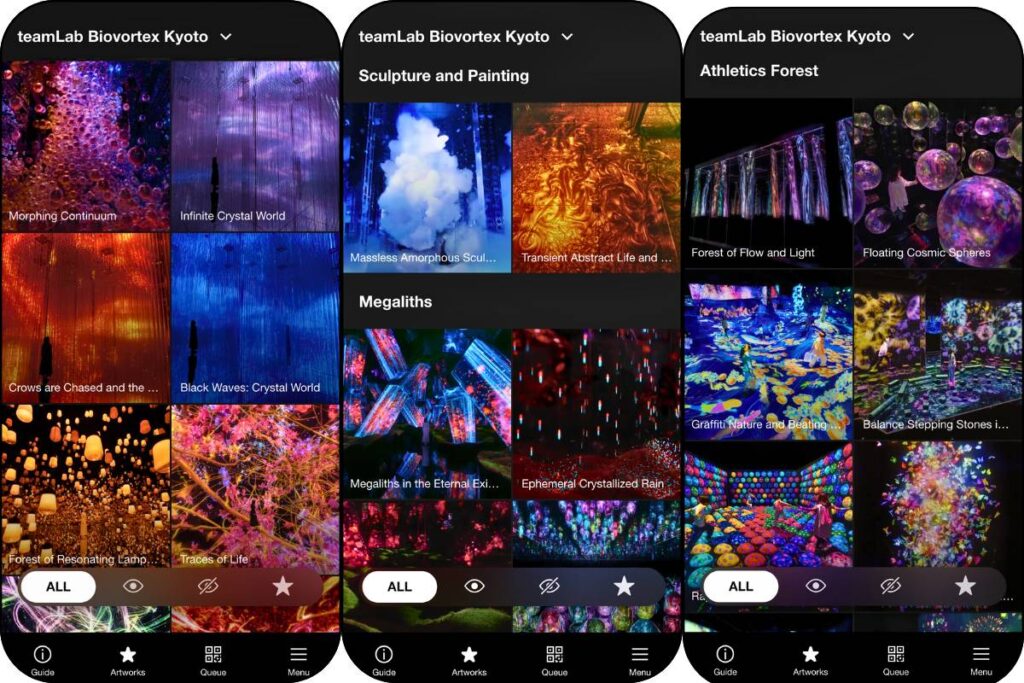
Screenshots from the teamLab app
To help you plan your visit, here are a few practical tips to keep in mind:
- Book Tickets in Advance: The museum sells out quickly, especially on weekends! So, be sure to purchase your tickets ahead of time.
- Be Strategic With the Timing of Your Visit: Visit during the week, either early in the morning or later in the day, to avoid crowds. Weekends and holidays tend to be the busiest.
- Arrive Early: Plan to arrive 20-30 minutes early to beat the lines – this is especially important if you book the first 9:00 AM time slot!
- Wear Comfortable Clothing (& Shoes!): You’ll be moving around a lot, and some exhibits (like those in the Athletics Forest) require sneakers. So, be sure to dress comfortably!
- Utilize On-Site Locker Facilities: There’s no need to carry around a bunch of stuff around the museum. Leave whatever isn’t essential in the on-site storage lockers.
- Download the Official teamLab App: The app includes a detailed breakdown of all of the exhibits, so you can plan out your visit in advance.
- Eat Before You Arrive: There are no cafes or restaurants on-site, only vending machines. So be sure to grab a meal beforehand!
🌟 Spending more time in Kyoto? Be sure to also check out my detailed Kyoto itinerary and in-depth guide on where to stay in Kyoto!
Frequently Asked Questions About Visiting Kyoto’s teamLab Museum

Infinite Crystal World Installation
Here are my thoughts on some commonly asked questions about visiting teamLab Kyoto!
Is teamLab Biovortex in Kyoto Worth Visiting?
Yes, teamLab Biovortex is absolutely worth visiting! The facility is massive, it’s mesmerizing, it’s immersive, and it’s definitely unique. Whether it’s your first time or your fifth time visiting a teamLab museum, I highly recommend checking it out!
How Much Time Should I Spend at Kyoto’s teamLab Biovortex Museum?
At a minimum, I recommend setting aside 3 hours to explore teamLab Biovortex. However, if it’s your first time visiting a teamLab museum, or you plan to fully immerse yourself in all of the installations, then 4-5 hours is probably more realistic. Keep in mind, some of the installations have limited capacity, so you may need to wait in line from time to time.
Can I Re-Enter After Leaving teamLab Biovortex in Kyoto?
No, unfortunately, you cannot reenter the facility once you leave. So, definitely be sure to set aside enough time to see it all! And consider grabbing food before you arrive, so you don’t get too hungry while inside.
Are There Any Height or Age Restrictions for teamLab Biovortex?
There are no general age or height requirements to enter teamLab Biovortex. In fact, children under the age of 4 are granted free entry. That said, all children (elementary-aged and below) must be accompanied by an adult. One adult is requried for every three children. High school students are allowed to enter on their own.
Is teamLab Biovortex Accessible for Wheelchairs or Strollers?
Unfortunately, strollers are not allowed in the facility; they must be left behind in the luggage room. Wheelchairs, on the hand, are allowed. However, certain exhibits are inaccessible for safety reasons.
What Other teamLab Experiences Are There in Japan?
Japan is actually home to a number of teamLab museums. I’ve included a breakdown of the most popular ones below:
- teamLab Borderless (Tokyo): Japan’s first permanent location, teamLab Borderless offers an open concept experience, one where displays flow into each other and artwork drifts across space.
- teamLab Planets (Tokyo): Known for its very immersive installations, teamLab Planets utilizes water, lights, mirrors, and sound to create full-body experiences.
- teamLab Botanical Garden (Osaka): An open-air/garden-style exhibition, teamLab Botanical Gardens offers a unique blend of digital art and natural landscapes.
- teamLab Forest (Fukuoka): A compact yet playful venue, teamLab Forest is a family-friendly experience, one focused on interactive, nature-filled installations.
- teamLab Hidden Traces of Rice Terraces (Ibaraki): Built over former rice terraces, teamLab Hidden Traces utilizes water, light, and sound to transforms the surrounding nature into an immersive art experience.
- teamLab Future Park (Okinawa): With a focus on education and co-creation, teamLab Future Park offers a mix of interactive, playful, and family-friendly installations.
Final Thoughts: teamLab Biovortex in Kyoto
So there you have it – my complete guide and review of teamLab Biovortex. Hopefully this article is helpful in planning your own trip to Kyoto’s most immersive attraction.
No matter which installations you explore, you’re sure to have a wonderful time! After all, there’s nothing quite like the dazzling lights and unique landscapes of a teamLab museum.
Are you planning on visiting teamLab Biovortex Kyoto? Which exhibit are you most excited to experience? Let me know in the comments below!
Enjoy this post about Kyoto’s teamLab museum? Pin it now for later!




KRYSTI ATKINSON
Krysti is a travel writer currently based in Okinawa, Japan. Over the past 3+ years, she has explored Japan extensively while traveling throughout Asia – from iconic cities to quiet, off-the-beaten-path destinations. Through Wanderful Horizons, Krysti shares detailed itineraries, practical travel tips, and firsthand recommendations to help travelers plan unforgettable adventures.


