Last updated on November 21, 2026 by Krysti
Planning to visit Hakone Shrine? While its famous floating torii gate may steal the spotlight, there’s so much more to discover here!
Hakone Shrine was one of the places I knew I absolutely wanted to visit during my trip to Hakone – and I was so excited when I finally got to see it in person.
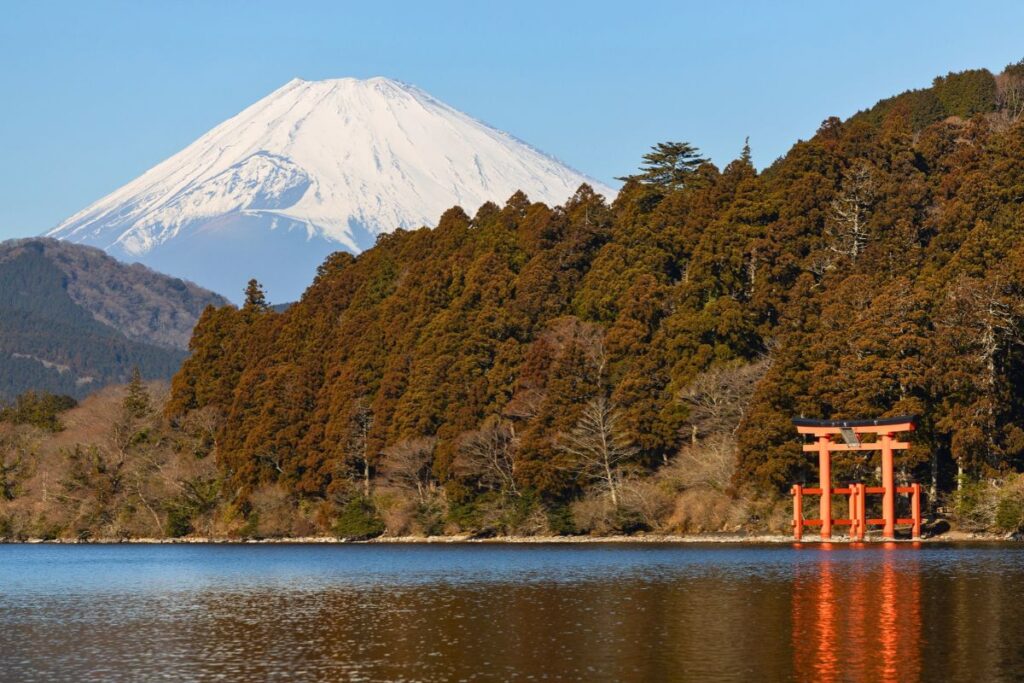
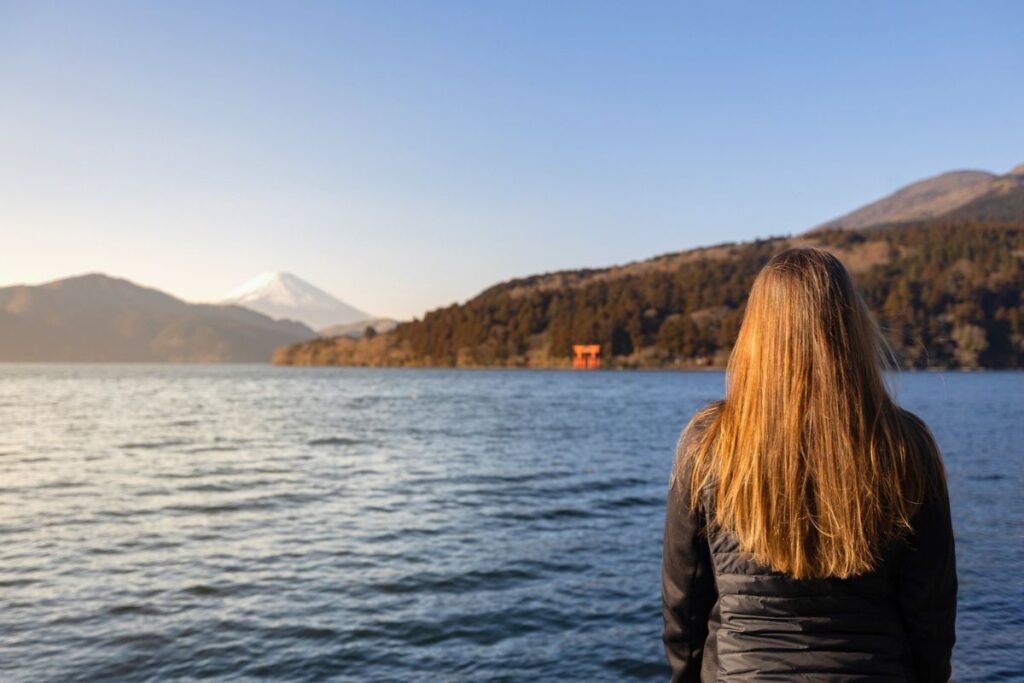
As expected, the iconic floating torii gate was every bit as beautiful as I’d imagined.
Even just glimpsing it from afar with Mount Fuji in the background was a sight to see!
But beyond that, what surprised me the most was the shrine’s beautiful grounds.
Tucked away along the shores of Lake Ashi, the shrine is nestled within a grove of ancient cedar trees, creating a scenic setting that feels worlds away from the nearby harbor.
While it does get crowded from time to time, it can still be remarkably calm and peaceful in the early morning hours.
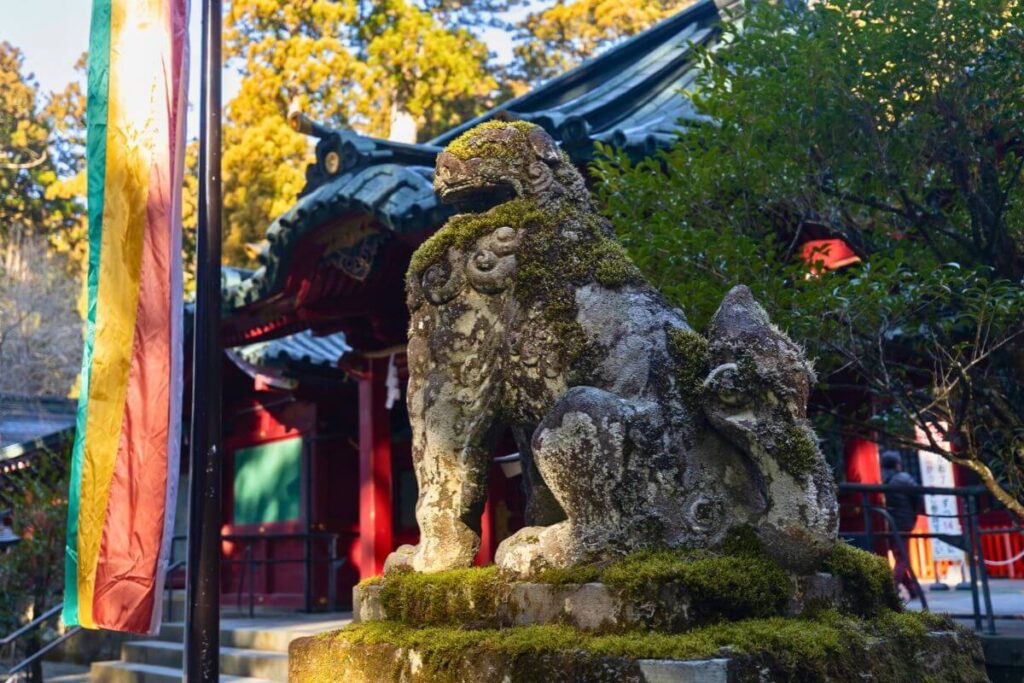
I especially enjoyed just wandering around, discovering all of the shrine’s little details, from the weathered komainu (lion-dog) statues to the beautifully carved water fountains.
There’s just something so lovely about the way it all blends into its natural surroundings, with traditional buildings and smaller shrines scattered throughout the forest.
It truly is a special place to explore and one that I cannot recommend enough – especially if you’re hoping to experience a bit of traditional Japanese culture.
To help you plan your own visit, I’ve put together this guide outlining everything you need to know.
From the shrine’s main highlights to how to get there, when to visit, and nearby attractions, here’s what you can expect from Hakone Shrine!
Please note: This post contains affiliate links to trusted partners. If you make a purchase using these links, I will earn a commission at no extra cost to you. Thank you for your support!
A Brief History of Hakone Shrine
According to local legend, the mountains of Hakone were considered sacred and believed to be home to powerful deities.
These beliefs formed the basis of Hakone’s ancient mountain worship, which eventually led to the founding of Hakone Shrine in 757.
Over the centuries, the shrine grew in importance, becoming known as the guardian of the Kanto region.
It attracted many prominent historical figures, including samurai and shoguns who visited to pray for good fortune and protection.
Today, Hakone Shrine remains an important place of worship, with visitors seeking good luck, the fulfillment of wishes, protection from misfortune, traffic safety, and help with matchmaking.
⛩️ Did you know? Hakone Shrine is closely associated with two other Shinto shrines in the area: Kuzuryu Shrine, dedicated to the nine-headed dragon deity of Lake Ashi, and Hakone Mototsumiya, located at the summit of Mount Komagatake.
Quick Facts: Hakone Shrine
Hakone Shrine Address: 80-1 Motohakone, Hakone, Ashigarashimo District, Kanagawa 250-0522
Closest Bus Stops: Hakone-jinja Bus Stop & Motohakone-ko Bus Stop
Opening Hours: While the shrine grounds and torii gate remain open 24/7, daily reception hours vary by facility: Amulets & Goshuin Stamps are available from 8:15 am – 5:00 pm; Prayer Reception is from 8:30 am – 4:00 pm; and the Treasure Hall is open for admission from 9:00 am – 4:00 pm.
Admission: Free, except for the Treasure Hall, which costs ¥500 for adults and ¥300 for elementary-aged children.
Recommended Length of Stay: Plan for around 60–90 minutes if you’d like to explore the shrine grounds and Treasure Hall. However, you may need to allot extra time for photos at the floating torii gate, depending on crowd levels.
Please Note: Opening hours are subject to change, and occasional closures may occur. For the most up-to-date schedule, be sure to visit the shrine’s official website.
What to Do at Hakone Shrine
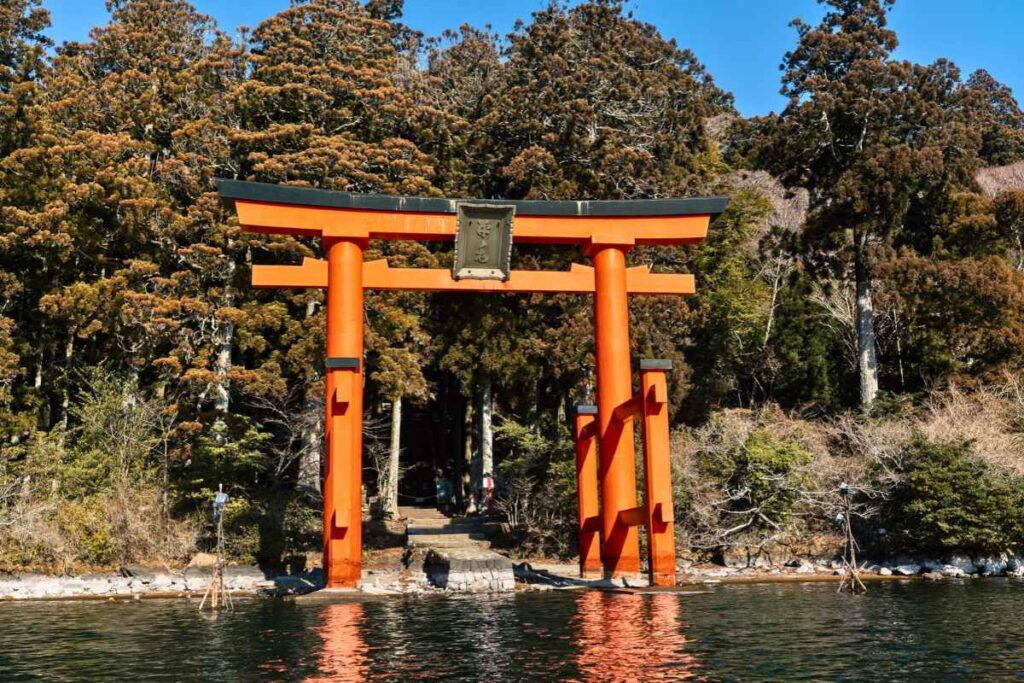
While the floating torii gate is undoubtedly one of Hakone Shrine’s biggest draws, there’s plenty more to discover here! From colorful shrine buildings to traditional statues, and even a Treasure Hall, here are some of the best things to do during your visit:
- Discover Peace Torii Gate: The main highlight at Hakone Shrine is, undoubtedly, its iconic torii gate, which floats just along the shore of Lake Ashi. Built in 1952, it was erected to commemorate the end of the Allied occupation of Japan following World War II. Unfortunately, the gate was closed for maintenance during my visit, so I couldn’t walk down to see it. Even so, it was still beautiful to glimpse from afar!
- Explore the Shrine’s Halls: The main shrine buildings are tucked away among the towering cedar trees, with several smaller structures scattered throughout the grounds. As you wander around, you’ll find a mix of traditional architecture, intricate details, and vibrant colors.
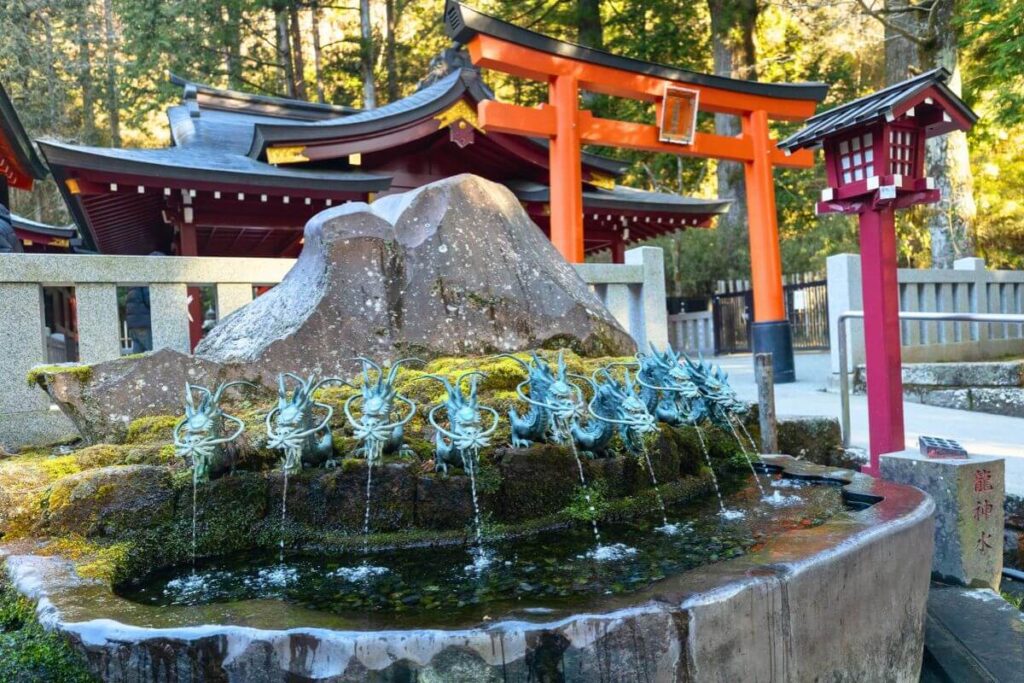
- Admire Traditional Statues & Water Fountains: Throughout the grounds, you’ll also find traditional statues and beautifully decorated water fountains. One of my favorites was the dragon fountain – I thought it was so cute!
- Make a Wish at the Ema Wall: Like many shrines in Japan, Hakone Shrine has ema – small wooden plaques where visitors can write their wishes or prayers. Here, you can take a moment to read some of the messages or write one of your own to leave behind.
- Visit the Treasure Hall: The Hakone Shrine Treasure Hall is home to a collection of historical artifacts and cultural treasures associated with the shrine. Unfortunately, I missed this during my visit. But if I ever go back, it’s a spot I’d definitely love to check out!
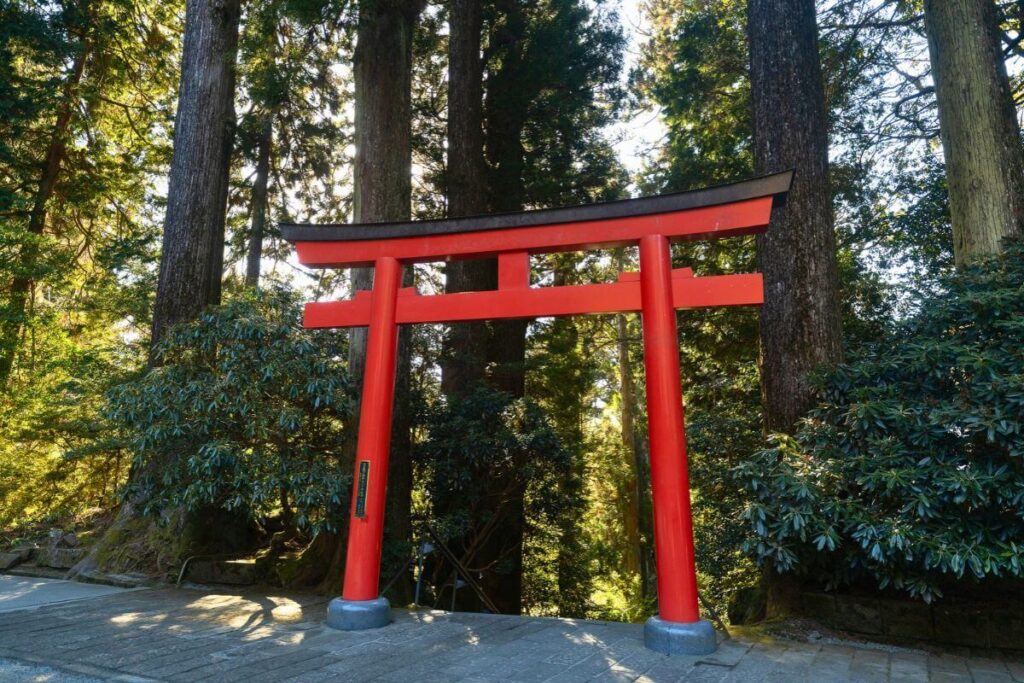
- Take in the Forested Setting: One of the things that makes Hakone Shrine so beautiful is its setting among towering cedar trees, some of which are said to be more than 800 years old. These ancient trees create a wonderfully peaceful atmosphere, with winding paths and scenic walkways that you can explore.
How to Get to Hakone Shrine
Hakone Shrine is conveniently located right along the shores of Lake Ashi, close to Motohakone Port. It’s fairly easy to reach by public transportation, with buses connecting the shrine to major hubs such as Hakone-Yumoto and Gora.
- 🚌 From Hakone-Yumoto: Take Bus K from Hakone-Yumoto Bus Stop to Hakone Jinja Bus Stop. The journey takes around 30–35 minutes, followed by a short 1–2 minute walk to the shrine.
- 🚆 From Gora: Take the Hakone Tozan Train from Gora Station to Kowakidani Station, then transfer to a local bus bound for Motohakone Bus Stop. The journey takes around 40 minutes, including transfer times. From there, it’s just a short 7–10 minute walk to the shrine.
- 🚶 From Motohakone Port: Hakone Shrine is around a 10–15 minute walk from the port, making it easy to visit before or after exploring the waterfront.
💡 Pro Tip: Hakone Shrine is a popular stop along the Hakone Loop! This makes it easy to combine your visit with other attractions in and around Lake Ashi.
Best Time to Visit Hakone Shrine
Hakone Shrine is beautiful throughout the year, with each season offering something a little different.
While spring brings with it seasonal flowers and fresh greenery, summer offers lush forest scenery.
Autumn, on the other hand, is a lovely time for fall foliage, while winter brings crisp mornings, a quieter atmosphere, and some of the best chances of seeing Mt. Fuji from the lake.
I personally visited in winter and thought it was a wonderful time to explore.
The weather was mild, the skies were incredibly clear, and I was comfortable enough in my winter coat!
Regardless of the season, I do recommend visiting early in the morning if possible.
The shrine gets busy, particularly around the famous torii gate, so it’s best to arrive before the tour buses roll in!
Nearby Attractions to Combine With Your Visit
Aside from Hakone Shrine, there’s plenty more to see and do around Lake Ashi. From pirate-themed cruises to art museums, here are a few nearby places worth checking out!
- Swan Boats: If you’d like to get a closer look at the famous torii gate from the water, you can rent a swan boat and take it out onto the lake! I actually did this during my visit and loved it for the unique perspective it offered. You can rent boats right along the waterfront just after leaving Hakone Shrine.
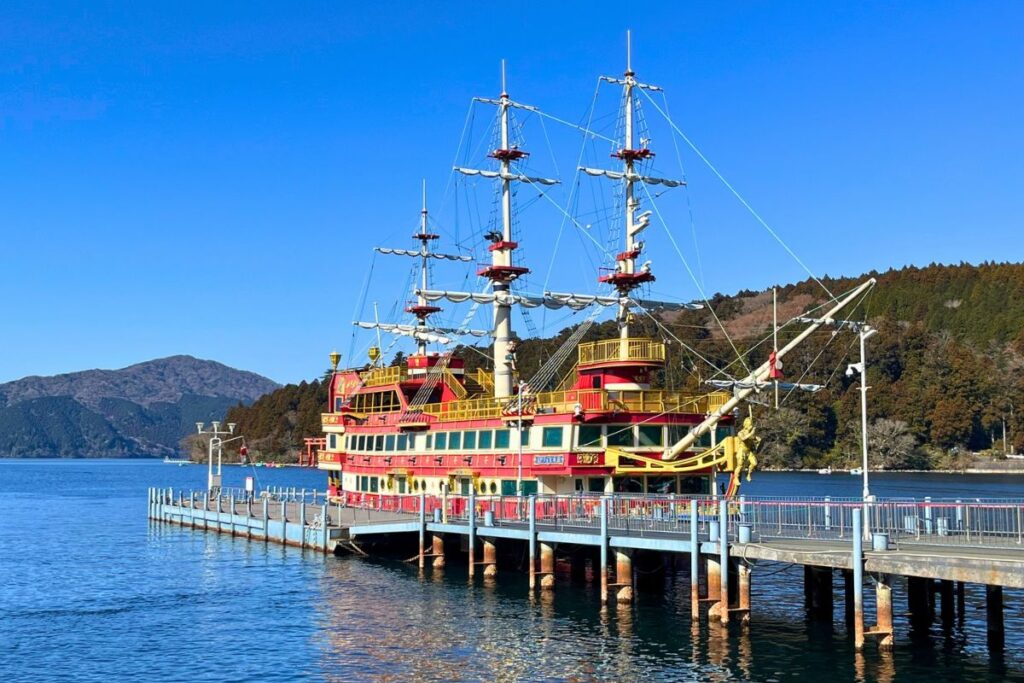
- Hakone Sightseeing Cruise: Another great way to take in the views around Lake Ashi is aboard one of Hakone’s sightseeing boats. On a clear day, you can see the famous torii gate with Mount Fuji in the background. The boats are also pirate-themed, which is a fun little addition!
- Narukawa Art Museum: Even if you’re not particularly interested in art, the Narukawa Art Museum is worth a visit for its incredible vantage point overlooking Lake Ashi. The views here were actually much better than I was expecting! You can spot Hakone Shrine and the pirate boats cruising across the lake, with Mount Fuji visible on clear days.
- Old Tokaido Road: The Old Tokaido was one of Japan’s major highways during the Edo period, connecting Edo (present-day Tokyo) with Kyoto. A section of the original route still runs through Hakone, where you can walk along its old stone-paved path beneath towering cedar trees.
- Hakone Checkpoint: Used along the Old Tokaido Road, Hakone Checkpoint once served as an important security checkpoint. It was used to inspect travelers and goods as they traveled along the route. Today, visitors can explore a reconstructed version of this historic security post.
🌟 Looking for more things to do in Hakone? Be sure to check out my 2-day Hakone itinerary for ideas and inspiration!
Frequently Asked Questions About Visiting Hakone Shrine
Here are my thoughts on some commonly asked questions about Hakone Shrine!
How Busy Does Hakone Shrine Get?
Hakone Shrine can get quite busy, particularly around the famous torii gate. It’s not uncommon for there to be long lines of visitors waiting to take photos. Crowds definitely tend to be heavier in the afternoon, so I’d recommend arriving early in the morning if you want a quieter experience.
Is There Parking at Hakone Shrine?
Yes! Hakone Shrine has a few parking lots, but they can fill up quickly, especially during busy periods. I drove during my visit and arrived around 9:30 am, and the lots were already starting to fill up. I’d recommend getting there early if you’re planning to drive!
Can You See Mount Fuji from Hakone Shrine?
Unfortunately, you cannot see Mount Fuji directly from the shrine grounds, but you can enjoy beautiful views of the mountain from the main port of Lake Ashi. On a clear day, you may even spot Mount Fuji peeking out from behind the famous torii gate, making for one of Hakone’s most iconic views!
What Should You Wear When Visiting Hakone Shrine?
There isn’t a strict dress code when visiting Hakone Shrine or any shrine, really, in Japan. However, as a sign of respect, it’s best to dress modestly and avoid overly revealing clothing. I’d personally recommend keeping your shoulders and knees covered; otherwise, you might stick out. I usually bring a shawl with me when I visit shrines and temples, especially in the summer, so I can cover up as needed.
Are There Any Festivals at Hakone Shrine?
Yes, Hakone Shrine hosts several festivals and celebrations throughout the year! Some of the most notable include:
- Hakone Ashinoko Summer Festival (late July to early August): A week-long celebration featuring traditional Shinto rituals, cultural events, and fireworks displays over Lake Ashi.
- Hakone Setsubun Festival (early February): A traditional bean-throwing ceremony to ward off evil spirits, with a rather unusual twist: a priest dressed as a demon skis across the lake while participants throw beans at him!
- New Year’s Celebrations: The shrine welcomes the new year with special ceremonies and fireworks, attracting visitors for hatsumode (the first shrine visit of the year).
While these celebrations offer a unique cultural experience, they also attract large crowds. Be mindful that parking can be limited, public transportation may be busier than usual, and getting around the area could take longer than expected.
Final Thoughts: Is Hakone Shrine Worth Visiting?
Absolutely! I really enjoyed visiting Hakone Shrine, and personally I think it’s one of the major highlights of Lake Ashi.
Of course, the famous floating torii gate is a big part of its appeal, but I also loved just wandering through the forest, admiring the traditional architecture, and discovering some of the smaller details around the grounds.
With its beautiful setting and convenient location near several other attractions, it’s an easy stop to add to your itinerary.
If you’re spending time in Hakone, I’d definitely recommend visiting Hakone Shrine!
Have you been to Hakone Shrine? I’d love to hear about your experience in the comments below!
Enjoy this guide to Hakone Shrine? Pin it now for later!


KRYSTI ATKINSON
Krysti is a travel writer currently based in Okinawa, Japan. Over the past 4 years, she has explored Japan extensively while traveling throughout Asia – from iconic cities to quiet, off-the-beaten-path destinations. Through Wanderful Horizons, Krysti shares detailed itineraries, practical travel tips, and firsthand recommendations to help travelers plan unforgettable adventures.