Last updated on November 5, 2026 by Krysti
Looking for a mountain getaway filled with scenic landscapes, unique attractions, and a little Japanese culture? Hakone might be just the place!
I lived in Japan for 3 years before I finally made it to Hakone. And, honestly, I don’t know why I waited so long!
Not only does this charming town offer beautiful views of Mount Fuji, but there’s also so much to do here – way more than I originally thought.
From scenic cruises and steaming onsens to quirky museums and volcanic craters, Hakone really has a little bit of everything.
It’s no wonder why it’s become such a popular escape from the hustle and bustle of Tokyo.
Located less than two hours from the city, it’s the ultimate getaway, offering a slower pace of life, beautiful countryside scenery, and a chance to experience a different side of Japan.
Whether you’re planning a quick weekend trip or adding a relaxing stop to your Japan itinerary, this 2-day Hakone itinerary will help you make the most of your visit.
*Please note: This post contains affiliate links to trusted partners. If you make a purchase using these links, I will earn a commission at no extra cost to you. Thank you for your support!
Headed to Hakone Soon?
Here are a few quick recommendations to help you plan your trip:
🚅 Getting There:
– Hakone Romancecar (Limited express train from Tokyo to Hakone)
– Car Rental (Best for exploring Hakone at your own pace)
🛏️ Hotels:
– Laforet Hakone Gora Yunosumika (Hot spring hotel in central Hakone)
👣 Activities & Tours:
– Hakone Freepass (Discounted transport pass for Hakone)
Is 2 Days Enough for Hakone?
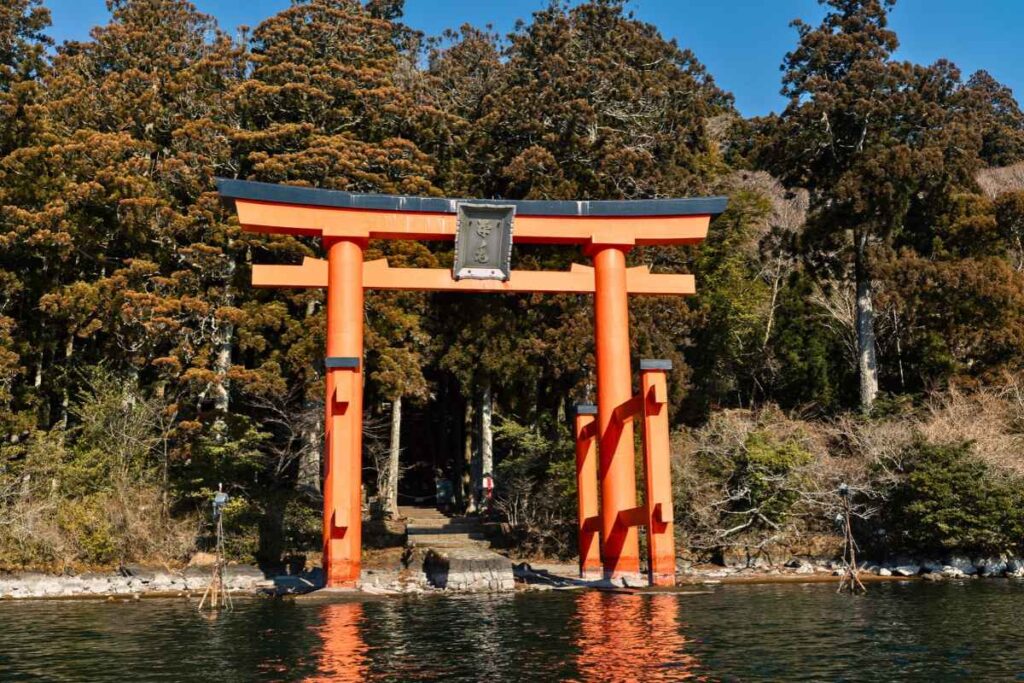
Yes, two days is a great amount of time to experience Hakone’s main highlights without feeling like you’re rushing from one attraction to the next.
With two days, you can explore the famous Hakone Loop, taking in Lake Ashi, the Hakone Ropeway, and Owakudani Valley, while still leaving time to slow down and enjoy the area’s hot springs.
You can also fit in a museum visit or two if that’s more your style.
Of course, you could easily spend longer in Hakone, especially if you’re hoping to explore beyond the main sights.
But for a first visit, two days gives you a nice balance of sightseeing and relaxation.
Hakone 2 Day Itinerary: An Overview
Before we dive into the full itinerary, here’s a quick look at how to spend 2 days in Hakone. This itinerary is designed for first-time visitors, offering a mix of top sights, unique experiences, and plenty of time to slow down and enjoy the hot springs!
Day 1: The Hakone Loop
- ⛩️ Visit Hakone Shrine
- 🌊 Enjoy Hakone’s scenic waterfront
- 🚢 Cruise across Lake Ashi
- 🚡 Ride the Hakone Ropeway
- 🌋 Discover Owakudani Crater
Day 2: Beyond Hakone’s Highlights
- ♨️ Experience a traditional onsen
- 🎨 Explore Hakone’s museums
Map of Hakone
To help you plan your trip, I’ve also included a map overview of all the places mentioned in this Hakone itinerary.
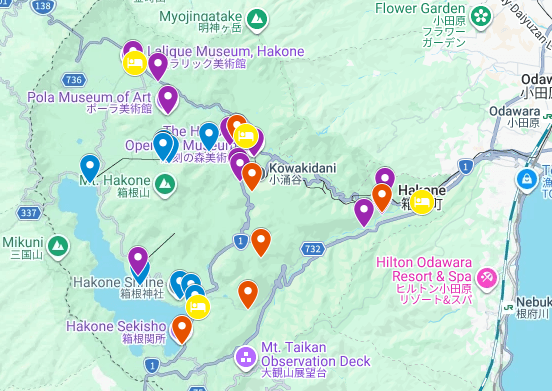
➡️ Click here to view an interactive version of this map!
Hakone 2 Day Itinerary: Explained
That said, let’s jump right in and discuss in detail the perfect 2-day itinerary for Hakone. I’ve included numerous options for you to consider, as well as some alternative attractions. So, feel free to pick and choose and adapt this itinerary as you see fit!
📝 Please Note: This itinerary assumes you have 2 full days in Hakone, so I recommend arriving either early in the morning or the night before!
Day 1: The Hakone Loop
On your first day in Hakone, you’ll have the chance to visit the town’s most famous attractions, traveling along a sightseeing circuit commonly referred to as the Hakone Loop. This popular route connects several of the area’s highlights, including Hakone Shrine, Lake Ashi, the Hakone Ropeway, and Owakudani Valley, using a combination of buses, boats, cable cars, and trains.
💡 Pro Tip: While the circuit can be traveled in either direction, I recommend beginning at Hakone Shrine and working your way clockwise – that way you can avoid the shrine’s afternoon crowds.
Early Morning: Visit Hakone Shrine
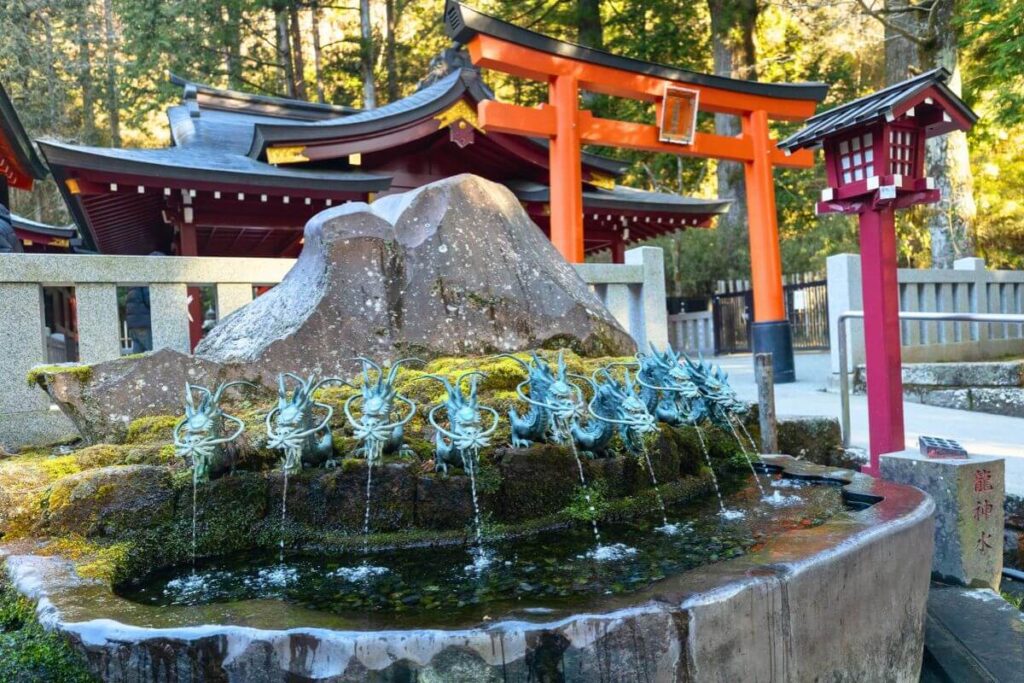
Nestled along the forested shores of Lake Ashi, Hakone Shrine is one of the area’s most notable attractions.
Founded in 757 AD, the shrine is not only historic, it’s also quite famous – best known for its striking red torii gate (aka the Torii of Peace), which stands right along the waterfront.
Unfortunately, when I visited, this torii gate was closed off for repair and maintenance, so I wasn’t able to walk down to it.
I did manage to get a closer look from the water, though – more on that later!
That said, I still enjoyed exploring the shrine and taking in its sights.
There are several smaller torii gates tucked among the trees, along with the main shrine building, and some adorable dragon-shaped water fountains.
Why It’s Worth It: Between its beautiful forest setting, cultural atmosphere, and waterfront views, Hakone Shrine offers a lovely mix of natural beauty and Japanese culture. Plus, it’s a lovely way to start your day!
Mid-Morning: Explore Lake Ashi’s Waterfront
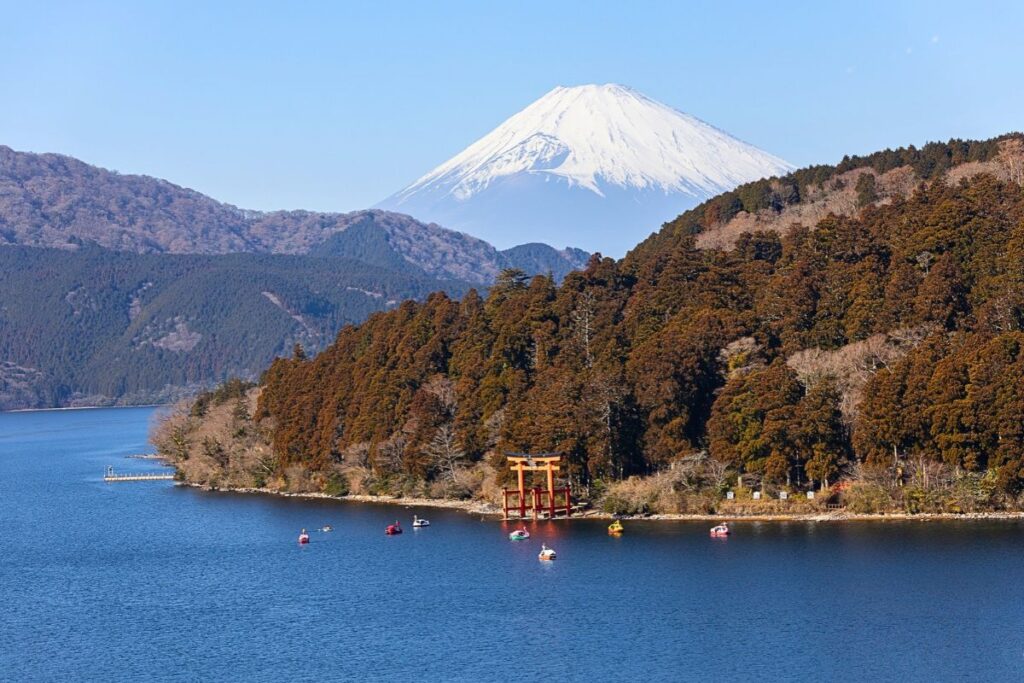
After visiting Hakone Shrine, take some time to explore the surrounding waterfront.
A leisurely stroll along the lakeshore offers lovely views not just of the famous floating torii gate, but also Mount Fuji and the colorful boats that cruise across the lake.
I recommend walking toward the far end of the harbor area, where you’ll find some great photo opportunities!
For a different perspective, you can even rent a swan boat and head out onto the lake.
Boat rentals are available right along the waterfront, so they’re easy to find.
I actually did this during my visit and was able to get up close to the Torii of Peace, which was great since I wasn’t able to access it by land.
Nearby, you can also visit the Narukawa Art Museum, a small contemporary art museum that offers incredible views overlooking Lake Ashi and Mount Fuji.
Why It’s Worth It: Lake Ashi is one of Hakone’s most scenic spots, and exploring the waterfront gives you a chance to appreciate it from several different perspectives. It’s also the perfect spot for photos!
💡 Pro Tip: This part of the lake is home to several restaurants and cafes, making it a great place to grab a bite to eat if you’re feeling hungry.
Early Afternoon: Hop Aboard a Hakone Sightseeing Cruise
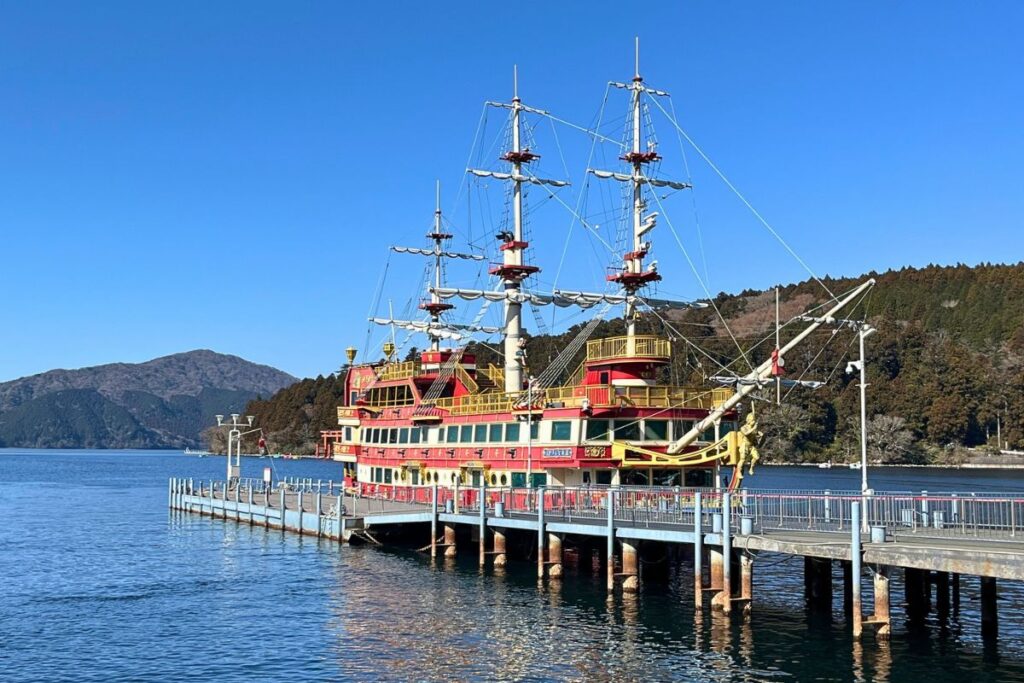
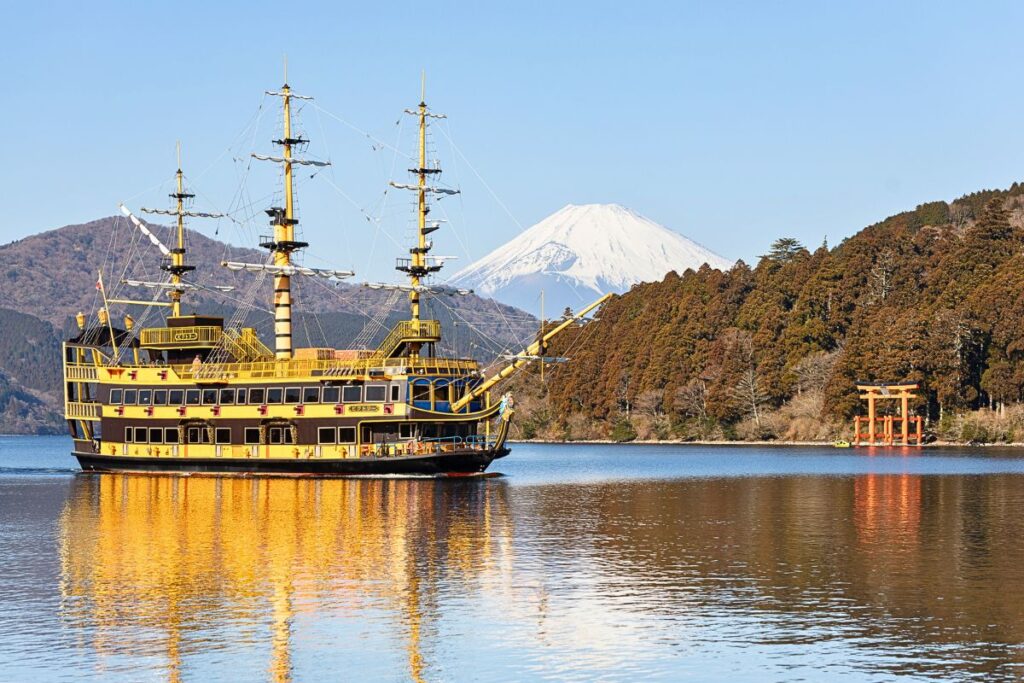
Once you’ve finished exploring the waterfront, hop aboard one of Hakone’s pirate-themed sightseeing boats to make your way across Lake Ashi.
You can board right along the waterfront at Moto-Hakone-ko Port and travel over to Togendai-ko, where you’ll find the Hakone Ropeway (the next stop on our itinerary).
Along the way, you’ll be treated to beautiful views of Hakone Shrine, the surrounding mountains, and, on a clear day, you may even catch a glimpse of Mount Fuji.
While you’re here, be sure to also take a moment to explore the ship itself.
I was actually quite impressed by the attention to detail and all the little pirate-themed decorations!
Why It’s Worth It: Not only is the sightseeing cruise a convenient way to travel across the lake, it’s also an experience in and of itself – and the views are quite stunning!
💡 Pro Tip: If you have the Hakone Freepass (a transportation pass specifically for the Hakone area), your sightseeing cruise and admission to the Hakone Ropeway are both covered!
Mid-Afternoon: Ride the Hakone Ropeway
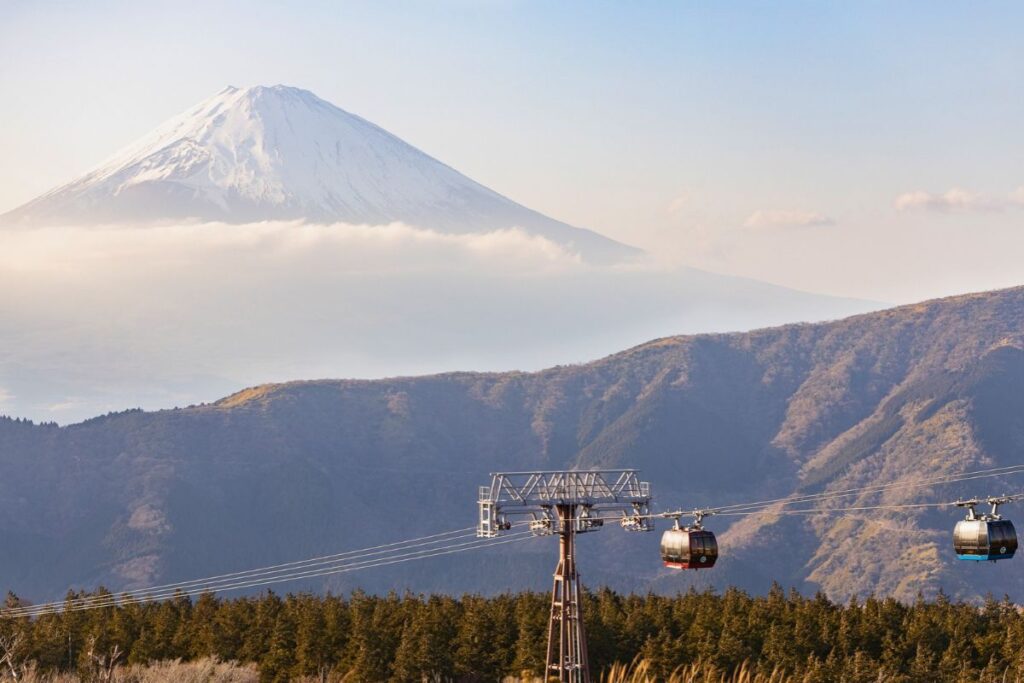
After arriving at Togendai Port, make your way to the Hakone Ropeway for one of the most scenic parts of the Hakone Loop.
The ropeway travels over the mountainside, offering incredible views of Lake Ashi, the surrounding volcanic landscape, and, on a clear day, Mount Fuji.
As you approach Owakudani, you’ll also get a closer look at the area’s famous volcanic steam vents and sulfurous plumes.
Unfortunately, the clouds rolled in during my visit, so I didn’t get the best views of Mount Fuji from the ropeway.
But I did still appreciate the dramatic volcanic landscape below, which was pretty incredible to see!
Why It’s Worth It: The Hakone Ropeway offers some of the area’s most spectacular scenery, taking you high above the mountains and giving you a bird’s-eye view of Hakone’s unique volcanic landscape!
💡 Pro Tip: The Hakone Ropeway may temporarily suspend operations due to strong winds, extreme weather, unsafe conditions around the volcanic crater, or for scheduled maintenance. Be sure to check the official maintenance schedule before your visit for any planned closures, as well as the operational status page for day-of updates.
Late-Afternoon: Discover Owakudani Valley
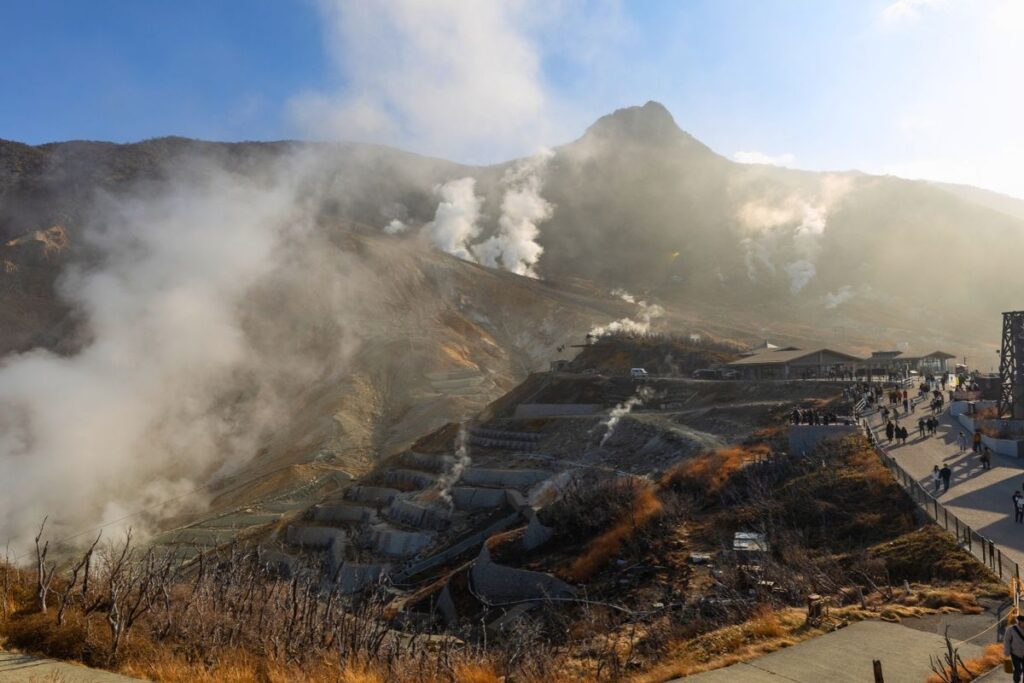
After arriving at Owakudani Station, take some time to explore Owakudani Valley, one of Hakone’s most fascinating volcanic areas.
Formed by a volcanic eruption around 3,000 years ago, the valley is known for its active sulfur vents, steaming hot springs, and dramatic volcanic landscape.
There are several observation decks where you can take in the scenery, and on a clear day, you may even get some incredible views of Mount Fuji.
You’ll also find a gift shop and the Hakone GeoMuseum, where you can learn more about the area’s volcanic activity.
While you’re here, be sure to try out the local Kuro-Tamago, or black eggs!
These eggs are boiled in the area’s natural hot springs, which in turn, makes their shells black.
Honestly, I think they taste just like regular hard-boiled eggs, but they’re a fun little part of the experience – and not something you’re likely to find elsewhere!
Why It’s Worth It: Owakudani offers a completely different side of Hakone, with dramatic volcanic scenery, steaming sulfur vents, and a chance to see the area’s geothermal activity up close.
💡 Pro Tip: When you’re finished exploring the crater, take the Hakone Ropeway onward to Sounzan Station. From there, you can transfer to the Hakone Tozan Cable Car and continue down to Gora and the town center.
Health & Safety at Owakudani Valley
Owakudani’s volcanic vents release strong chemicals and gases that may pose health risks. While the area does close down if conditions become too dangerous, visitors with certain health conditions are advised to exercise extra caution. People with asthma, respiratory or heart conditions, and pacemakers are advised to avoid the area. Others, including pregnant visitors, infants, and older adults, should review the official safety guidance before visiting.
Day 2: Beyond Hakone’s Highlights
On day 2, we’ll slow things down a bit and take some time to explore a quieter side of Hakone. In the morning, I suggest starting your day with a relaxing onsen experience. Then in the afternoon, you can explore some of the area’s museums and cultural attractions.
Morning: Experience a Local Onsen
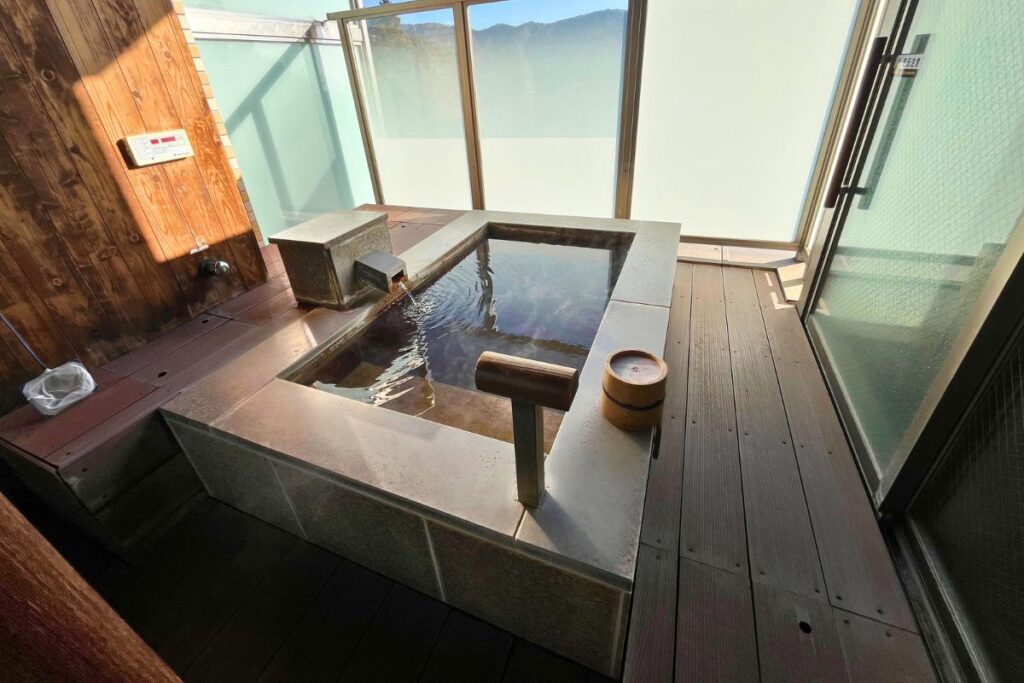
Hakone is famous for its natural hot springs, making it one of the best places in Japan to experience a traditional onsen.
If you’re planning to spend the night, I definitely recommend choosing a hotel or ryokan with its own hot spring.
It’s a lovely way to unwind after a day of sightseeing, and well worth considering if you have a little extra room in your budget.
I personally stayed at Laforet Hakone Gora Yunosumika, where I booked a room with a private onsen, and absolutely loved it!
Having my own hot spring bath was such a treat – one that I definitely took advantage of, night and day!
Of course, you don’t have to book an overnight stay to experience Hakone’s hot springs.
There are several places around the area that welcome day visitors, making it easy to add a relaxing soak to your itinerary. A few of the most noteable include:
- Hakone Yuryo: A popular traditional onsen facility, Hakone Yuryo offers indoor and outdoor baths, as well as private bathing options if you’d prefer a little more privacy.
- Tenzan Onsen: A charming hot spring retreat, Tenzan Onsen is home to several outdoor baths tucked into a peaceful, nature-filled setting.
- Tenseien: A hotel in Hakone-Yumoto, Tenseien welcomes non-guests to its extensive onsen facilities, making it a convenient option if you’re exploring the area.
- Ryuguden: A hotel known for its views of Lake Ashi, Ryuguden also opens its doors to day visitors seeking a scenic onsen experience.
- Hakone Kowakien Yunessun: A swimsuit-friendly onsen water park, Hakone Kowakien Yunessun features a variety of fun themed baths. Although different from a traditional onsen, it’s a great alternative if you’re nervous about communal bathing.
Why It’s Worth It: A traditional onsen offers more than just a relaxing soak – it’s an opportunity to experience one of Japan’s most cherished cultural traditions.
Afternoon: Go Museum Hopping
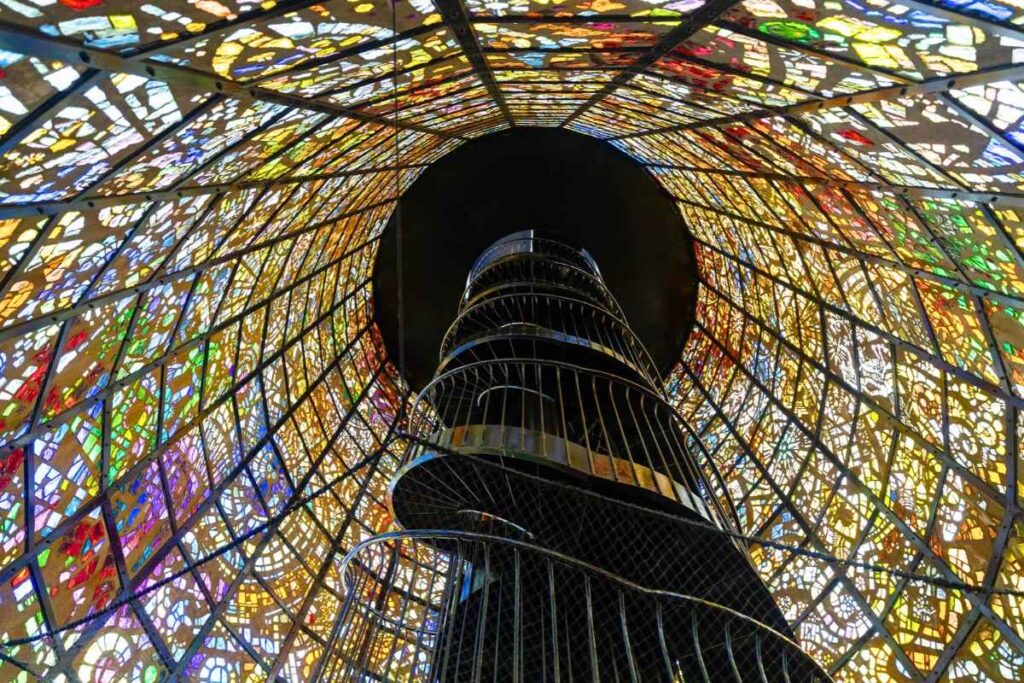
One thing that might surprise you about Hakone is just how many museums are scattered throughout the area!
From outdoor art installations and traditional Japanese artwork to Venetian glass and decorative arts, there’s quite a variety to explore.
You probably won’t have time to visit them all in one afternoon, so I’d recommend choosing one or two that interest you most. Here are a few worth considering:
- Hakone Open-Air Museum: The Hakone Open-Air Museum features an impressive collection of sculptures and large-scale art installations spread throughout its beautiful outdoor grounds, as well as a dedicated Picasso Pavilion. I visited during my trip and absolutely loved it – there’s so much to see and explore here!
- Hakone Venetian Glass Museum: The Hakone Venetian Glass Museum showcases beautiful Venetian glasswork, with both indoor galleries and picturesque outdoor displays. I really wanted to visit this one, but unfortunately, it was closed for an exhibition change during my trip.
- Pola Museum of Art: The Pola Museum of Art is tucked away in the forests of Sengokuhara and features an impressive collection of Western and Japanese art. Its collection includes works by famous artists such as Monet, Renoir, and Picasso.
- Hakone Museum of Art: The Hakone Museum of Art is known for its collection of Japanese ceramics, particularly pieces dating back to prehistoric times. It’s also worth visiting for its beautiful moss garden and traditional Japanese landscaping.
- Okada Museum of Art: The Okada Museum of Art showcases an extensive collection of Japanese and East Asian art, including paintings, ceramics, and sculptures. With approximately 450 pieces displayed across five floors, it’s the largest museum in Hakone!
- Lalique Museum: The Lalique Museum is dedicated to French artist and designer René Lalique, featuring an extensive collection of his glasswork, jewelry, and decorative art. It’s a particularly interesting stop if you enjoy Art Nouveau and Art Deco design.
Why It’s Worth It: Exploring Hakone’s museums is a great way to round out your visit – and discover another side of this famous hot spring town!
Other Things to Do in Hakone
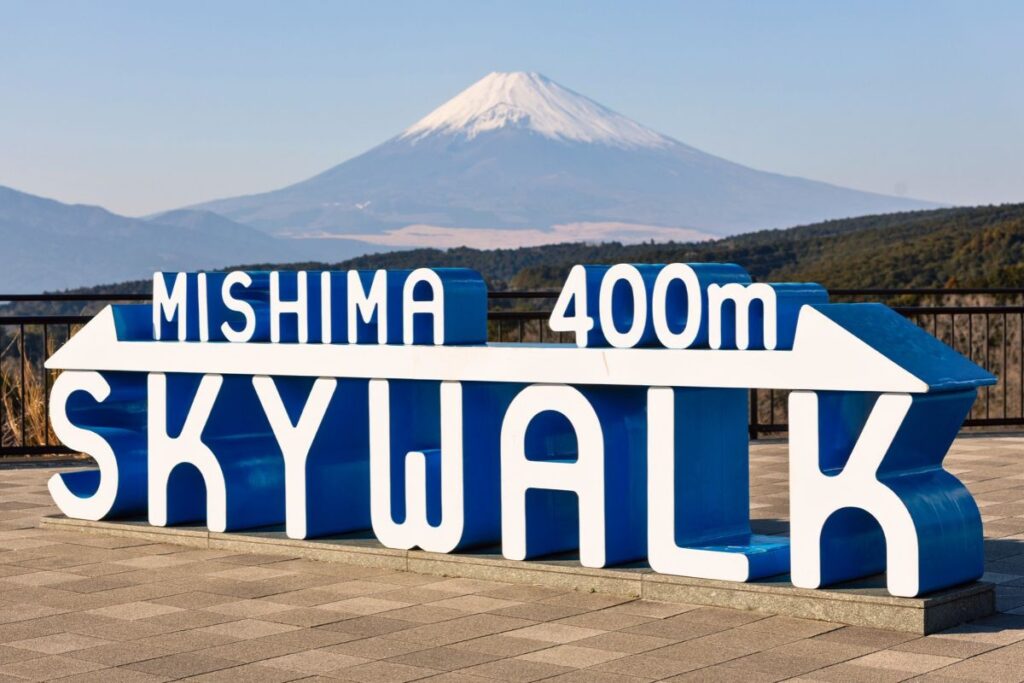
Hakone has plenty more to see and do beyond the stops included in this itinerary. If you have extra time – or want to swap out some of my recommendations – here are a few other places worth considering:
- Mishima Skywalk: Located just outside Hakone in the neighboring city of Mishima, Mishima Skywalk is a 400-meter suspension bridge that offers sweeping views of Mount Fuji and the surrounding mountains. It’s a particularly good option if you’re hoping to add another scenic viewpoint to your trip.
- Gora Park: A traditional French-style landscape garden, Gora Park features seasonal flowers, fountains, and beautifully landscaped grounds. You can also try activities like glassblowing and pottery, or enjoy a visit to the on-site tea house.
- Old Tokaido Road: For a little history and nature, follow a section of the Old Tokaido Road, a walking route that once connected Tokyo and Kyoto. The stone-paved trail travels from the shores of Lake Ashi to Hakone-Yumoto, passing through a beautiful cedar forest. Along the way, you’ll come across Amazake Chaya, a traditional thatched-roof teahouse that’s been welcoming travelers for more than 400 years.
- Hakone Checkpoint: Step back in time at the Hakone Checkpoint, a reconstructed Edo-period checkpoint that once served as an important security post along the Old Tokaido Road. You can explore the restored buildings, gates, and guardhouses while learning more about travel and life during Japan’s Edo period.
- Local Waterfalls: Hakone is also home to several beautiful waterfalls, including Chisuji Falls, Hiryu Falls, and Hien Waterfall. These make lovely stops for anyone who wants to spend a little more time exploring the area’s natural scenery.
🌟 Planning to spend more time in the area? If you have a few extra days, consider pairing your Hakone getaway with a visit to the Fuji Five Lakes. From iconic Mount Fuji views to lakeside towns and scenic attractions, there’s plenty more to explore here!
How to Get to Hakone
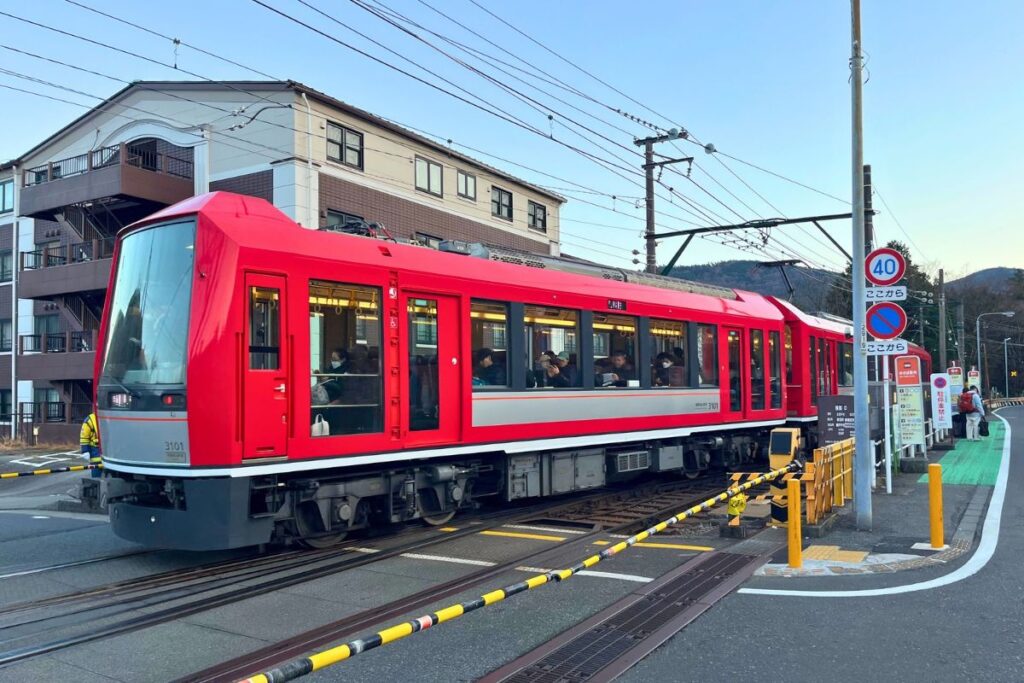
One of the best things about visiting Hakone is just how easy it is to get there! Located just outside of Tokyo, Hakone makes for an easy getaway, with several convenient transportation options available. Depending on your departure point and chosen route, you can typically reach Hakone in around 1.5–2 hours.
- 🚆 Limited Express Romancecar: The easiest option from Shinjuku is the Hakone Romancecar, which runs directly to Hakone-Yumoto Station with travel times of about 90 minutes. All seats are reserved, so you’ll need to purchase a separate limited express ticket in addition to your regular fare.
- 🚃 Odakyu Line: For a more budget-friendly option, you can take a Rapid Express train from Shinjuku to Odawara Station (approximately 90 minutes). From there, transfer to the Hakone Tozan Railway to reach Hakone-Yumoto (15 minutes) or continue onward to Gora (45 minutes).
- 🚄 Shinkansen: If you’re departing from Tokyo Station, you can take the Tokaido Shinkansen to Odawara Station (approximately 35 minutes). From there, transfer to the Hakone Tozan Railway to reach Hakone-Yumoto or Gora. While this is a pricier option, it can be convenient if you have the Japan Rail Pass.
- 🚌 Highway Bus: Direct highway buses run from the Shinjuku Expressway Bus Terminal to Togendai on the northern shore of Lake Ashi. The journey takes approximately 2.5 hours, depending on traffic.
🌟 Spending time in Tokyo? Be sure to check out my Tokyo itinerary for ideas and inspiration on what to do in the city!
How to Get Around Hakone
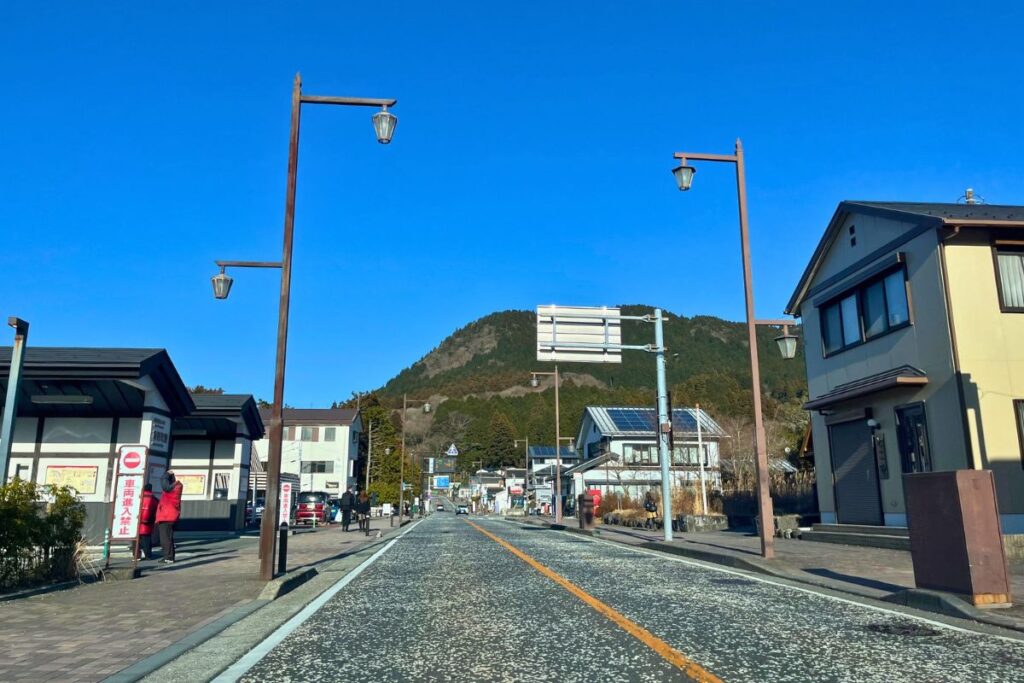
Thankfully, getting around Hakone is also relatively easy, especially if you’re sticking to the main tourist areas.
The region has a well-connected transit network, including trains, buses, cable cars, as well as the Hakone Ropeway and sightseeing boats.
You can also choose to rent a car if you don’t mind navigating a few windy mountain roads.
This is actually what I did! My husband and I rented a car at Haneda Airport and drove down to Hakone, which we found to be fairly easy and convenient.
The only downside was the Hakone Loop.
We had to leave our car behind when we boarded the pirate cruise, meaning we eventually had to make our way back to the waterfront to pick it up.
Truthfully, it was a bit of a hassle, but certainly doable!
Overall, I’d say public transportation is perfectly sufficient for most visitors, but having a car can be a nice advantage if you want a little more flexibility to explore beyond the main sights.
The Hakone Freepass Explained
If you’re planning to utilize public transportation while in Hakone, the Hakone Freepass is worth looking into! Available as a 2- or 3-day pass, it offers unlimited rides on designated transportation around Hakone, making it easy to explore the popular Hakone Loop and beyond.
The pass covers several forms of transportation, including:
- Hakone Tozan Railway
- Hakone Tozan Cable Car
- Hakone Ropeway
- Hakone Sightseeing Cruise
- Designated Local Buses
Certain versions of the pass also include round-trip travel from Shinjuku via the Odakyu Line.
It’s a convenient option if you plan to visit several attractions around Hakone, as individual transportation tickets can quickly add up.
➡️ Planning to explore Hakone by public transit? Get your Hakone Freepass here!
Best Time to Visit Hakone
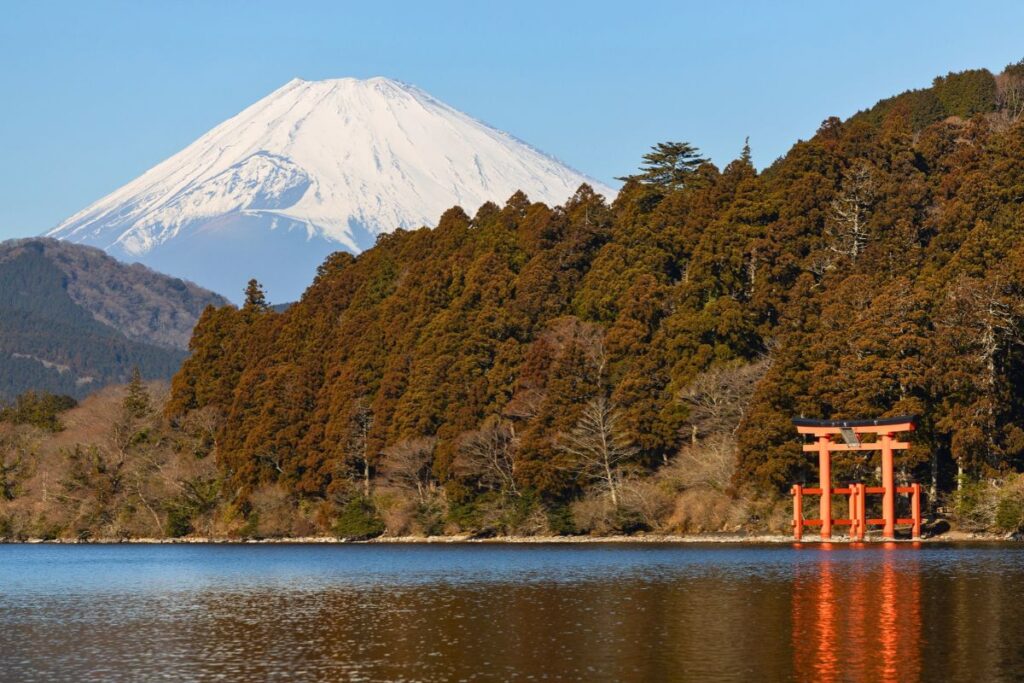
Hakone is a beautiful destination year-round, with each season offering something a little different. From clear winter views of Mount Fuji to colorful autumn foliage, the best time to visit largely depends on what you’d like to experience during your trip.
Spring: Cherry blossoms and fresh greenery make spring a beautiful time to explore Hakone. Just keep in mind that cherry blossom season is a popular time to visit, so expect larger crowds around some of the main attractions.
Summer: The warmer weather of summer makes it a great time for hiking and enjoying Hakone’s outdoor attractions. You can also experience seasonal festivals and fireworks displays around Lake Ashi. However, the rainy season and summer humidity can make Mount Fuji views less predictable.
Fall: If you enjoy autumn foliage, fall is another beautiful time to visit Hakone. The surrounding mountains transform with shades of red, orange, and yellow, although popular viewing spots can get quite busy during peak foliage season.
Winter: Generally speaking, winter is the best time to visit for views of Mount Fuji, thanks to the colder, drier air. I personally visited Hakone in January and loved it – we had such clear views of the mountain! And it wasn’t too cold temperature-wise; just be sure to bring a warm jacket and layers.
A Note on Japanese Holidays
Japan has a few major holiday periods that can significantly impact travel. These include Golden Week (late April to early May), Obon (mid-August), and the New Year holiday. During these periods, domestic travel peaks, prices can increase significantly, and some local businesses may temporarily close. If possible, I recommend avoiding travel during these holiday periods – especially if you’re hoping for a more relaxed experience.
Where to Stay in Hakone
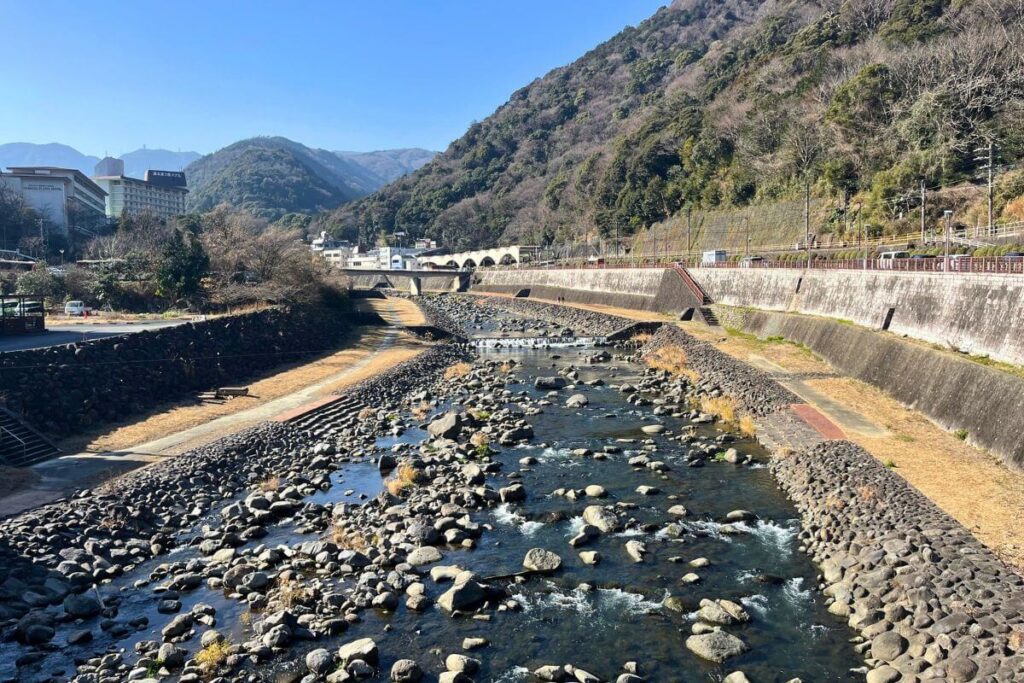
Hakone is made up of several smaller towns and resort areas, each offering a slightly different experience. Where you stay can make a difference in how easily you get around, so it’s worth choosing an area that fits your itinerary and travel plans.
- Hakone-Yumoto: As the main gateway to Hakone, Hakone-Yumoto is a convenient choice if you’re arriving by train or want easy access to shops, restaurants, and hot springs. It’s also a good option if you prefer to stay closer to the main transport connections.
- Gora: One of the most central areas to stay in Hakone, Gora offers easy access to many of the region’s main attractions. It’s also well connected by public transportation, with a good selection of traditional ryokans and hot spring hotels.
- Motohakone (Lake Ashi): If you’d love to wake up to scenic lake views, consider staying around Lake Ashi. The area is particularly well positioned for visiting Hakone Shrine, taking the sightseeing cruise, and enjoying views of Mount Fuji on clear days.
- Sengokuhara: Located in the northern part of Hakone, Sengokuhara offers a quieter, more secluded atmosphere. It’s known for its beautiful natural scenery, museums, and pampas grass fields, making it a lovely choice if you’re looking for a relaxing getaway.
🌟 Still not sure where to stay? I break down the best areas in Hakone, plus some of my favorite hotels and ryokans, in my complete guide: Where to Stay in Hakone (Coming Soon!).
What to Eat in Hakone
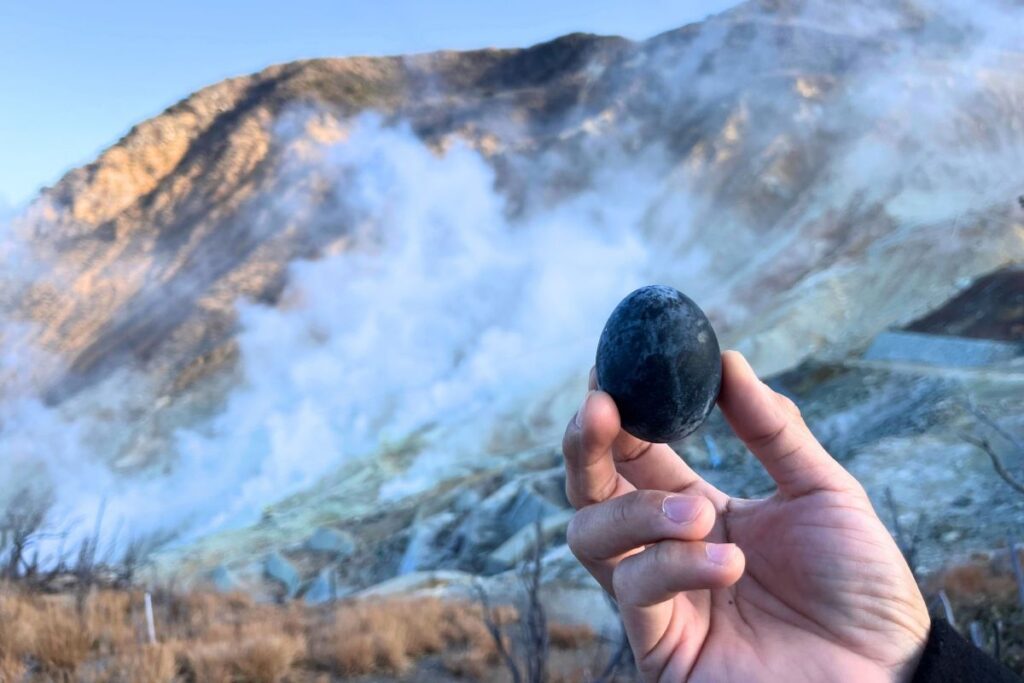
Beyond its famous black eggs, Hakone has several local specialties that are worth trying. From fresh tofu dishes to traditional soba noodles, here are a few to keep an eye out for:
- Smelt Tempura: Known locally as wakasagi, smelt are small freshwater fish found in Lake Ashi. They’re often coated in a light batter and deep-fried until crispy, making for a popular local snack.
- Tofu & Yuba: Hakone is known for its fresh tofu and yuba (tofu skin), thanks in part to the area’s clean mountain water. You’ll find these ingredients served in everything from simple tofu dishes to traditional Japanese set meals.
- Hakone Soba: Soba noodles are a local favorite, with the area’s pure mountain water used in their preparation. They’re often served hot in broth or chilled with a dipping sauce, making them a simple but delicious lunch while exploring Hakone.
- Kamaboko: This traditional Japanese fish cake is a specialty of the Odawara area, located just outside Hakone. It’s often served sliced as a side dish or added to soups and noodles.
- Hakone Yumochi: This soft, chewy Japanese confection is a specialty of Chimoto, a long-established sweets shop in Hakone-Yumoto. Made with soft rice cake and pieces of sweet bean jelly, it’s a popular local treat and souvenir.
Frequently Asked Questions About Visiting Hakone
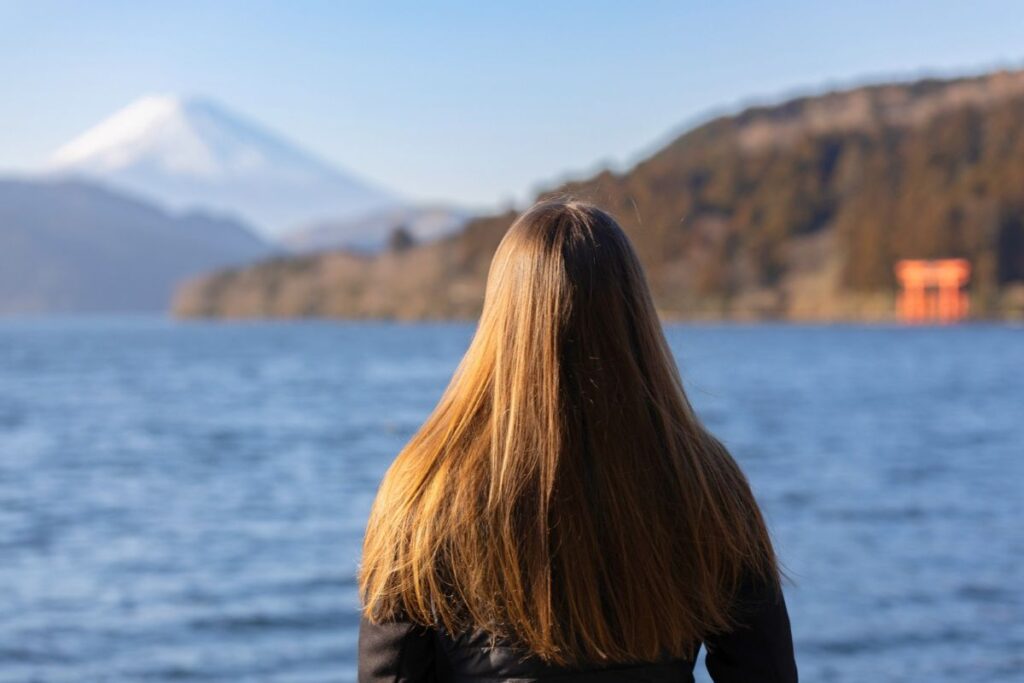
Here are my thoughts on some commonly asked questions about traveling to Hakone!
Is Hakone Worth Visiting?
Absolutely! Hakone is well worth visiting, whether you’re hoping to enjoy beautiful views of Mt. Fuji, relax in a traditional hot spring, or explore the area’s scenic lakes, mountains, and cultural attractions. There really is a little something for everyone, making it a great addition to any Japan itinerary.
Can You Visit Hakone in One Day?
Yes! It’s absolutely possible to visit Hakone in one day, although it will make for a fairly long day of exploring. I’d recommend arriving early and following the Hakone Loop, which takes you past many of the region’s main attractions. This will help you make the most of your time.
Is It Better to Visit Hakone on Your Own or on a Tour?
It really depends on what you’re looking for! Hakone is relatively easy to explore independently thanks to its well-connected public transportation network, so you don’t necessarily need a guided tour. However, joining a guided tour can be a great option if you’d prefer to avoid navigating transportation and planning the logistics yourself.
Can You Visit Hakone & the Fuji Five Lakes in One Day?
It’s possible to visit both Hakone and the Fuji Five Lakes in one day, but it’s not something I’d recommend. Both regions have plenty to offer, and trying to squeeze them into a single day means you’ll have to skip quite a bit and spend a good portion of your time in transit. If you do decide to visit both, I’d recommend traveling by rental car or joining an organized Mount Fuji tour. Getting between the two areas and visiting multiple attractions by public transportation would be quite challenging.
Hakone vs Fuji Five Lakes: Which Is Better?
It really depends on what you’re looking for! Both Hakone and the Fuji Five Lakes are wonderful destinations, but they offer quite different experiences. Hakone has plenty of activities to choose from, including a volcanic crater, hot springs, and scenic boat rides, while the Fuji Five Lakes Region is especially known for its incredible views of Mt. Fuji. Personally, I love both, but if I had to choose, I’d probably pick the Fuji Five Lakes for its scenery, vibe, and overall atmosphere. That said, you really can’t go wrong with either destination!
Final Thoughts: 2 Day Hakone Itinerary
Although it took me three years to finally make it there, I really enjoyed my visit to Hakone and had such a wonderful time exploring this little onsen town.
Between the scenic mountain views, relaxing hot springs, stunning lakeside setting, and unique experiences like the Owakudani crater, there really is so much to see and do here.
And with two days, you’ll have plenty of time to experience the highlights without feeling too rushed.
That said, don’t feel like you need to squeeze everything in!
Part of Hakone’s appeal is its laid-back atmosphere and slower pace of life.
So, take your time, enjoy the scenery, stop at a little café that catches your eye, and make room for a few spontaneous moments along the way.
After all, sometimes those unexpected experiences end up being the most memorable parts of a trip.
Planning your own itinerary for Hakone? What are you most excited to do? Let me know in the comments below!
Enjoy this guide to 2 days in Hakone? Save it now for later!



KRYSTI ATKINSON
Krysti is a travel writer currently based in Okinawa, Japan. Over the past 3+ years, she has explored Japan extensively while traveling throughout Asia – from iconic cities to quiet, off-the-beaten-path destinations. Through Wanderful Horizons, Krysti shares detailed itineraries, practical travel tips, and firsthand recommendations to help travelers plan unforgettable adventures.