Headed to Tokyo for the first time? Don’t worry! I’ve got you covered with this ultimate 4 day Tokyo itinerary!
Every time I visit Tokyo, I fall in love with the city all over again.
The bright lights, the organized chaos, the constant motion – it’s big, it’s loud, it’s hectic, it’s impressive – and honestly, I can’t get enough of it!
The problem? There’s just sooo much to do here!
Which is why I put off writing this itinerary (for far too long – might I add)! Simply put, narrowing down my list of must-see recommendations for Tokyo felt nearly impossible.
But after multiple trips and countless hours spent exploring the city, I’ve finally crafted what I believe is the perfect itinerary for first-time visitors!
From ancient temples to futuristic skyscrapers, quirky neighborhoods, stunning gardens, and unforgettable foodie spots, this itinerary offers a fascinating glimpse into the energy, culture, and charm of Japan’s largest city.
So, without further ado, let’s dive right in and discover the ultimate 4 day Tokyo itinerary for first-time visitors!
*Please note: This post contains affiliate links to trusted partners. If you make a purchase using these links, I will earn a commission at no extra cost to you. Thank you for your support!
Planning your trip to Tokyo last minute?
Here are a few quick recommendations for you!
I suggest booking these services and activities in advance!
🚅 Getting There:
– Narita Airport Trains (Choose between the Narita Express & Keisei Skyliner)
– Haneda Airport Bus (Travel to & from downtown Tokyo)
– Private Airport Transfers (For those who prefer to travel by car)
🛏️ Hotels:
– Ginza Hotel by Granbell (Mid-range hotel located in the heart of the city!)
– remm Tokyo Kyobashi (Budget hotel situated close to Tokyo Station)
👣 Activities & Tours:
– Suica IC Card (Tap-to-pay transportation pass for public transit in Tokyo & beyond!)
– Greater Tokyo Klook Pass (Discounted pass for popular attractions, including Shibuya Sky, teamLab Museums, Tokyo Tower & more!)
– Guided Day Trips From Tokyo (There are lots of options to explore!)
Best Time to Visit Tokyo
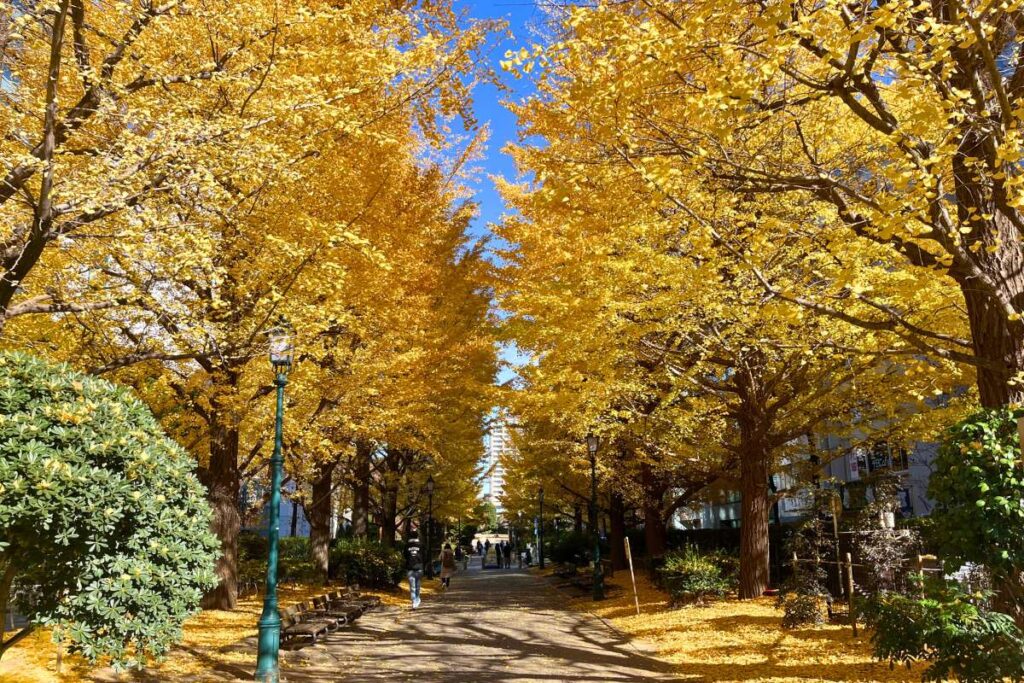
In my opinion, the best time to visit Tokyo is in the fall, from late September to early December.
The weather around this time of the year is mild and pleasant. And, the fall foliage is absolutely stunning – you can even enjoy it right in the city!
While it can get a bit busy during peak foliage (November – December), it’s not overwhelmingly so.
Aside from this, I’d also recommend visiting Tokyo in the spring, during cherry blossom season.
While it does get very crowded (emphasis on very!), the city is absolutely beautiful this time of year, and the weather is great!
Just keep in mind, spring is peak travel season for Japan, so prices will be much higher.
For a more budget-friendly alternative that isn’t quite as crowded, you could visit during winter instead. Just be prepared for some chilly weather.
And finally, we have summer – which I honestly don’t recommend. It’s hot, humid, and rainy, making it one of the least comfortable times to explore Tokyo.
Pro Tip: If you plan to visit Tokyo in the fall or winter, be sure to set aside some time to explore the city’s local Christmas markets! They usually begin in early November and run through Christmas.
A Note on Japanese Holidays
Japan has a few major national holidays that significantly impact travel. These include Golden Week (end of April – beginning of May), Silver Week (mid-September), and New Year. Around these holiday periods, domestic travel peaks, prices increase significantly, and businesses may temporarily close down. Given this, I generally recommend that visitors avoid traveling to Japan during these times.
How to Get to Tokyo
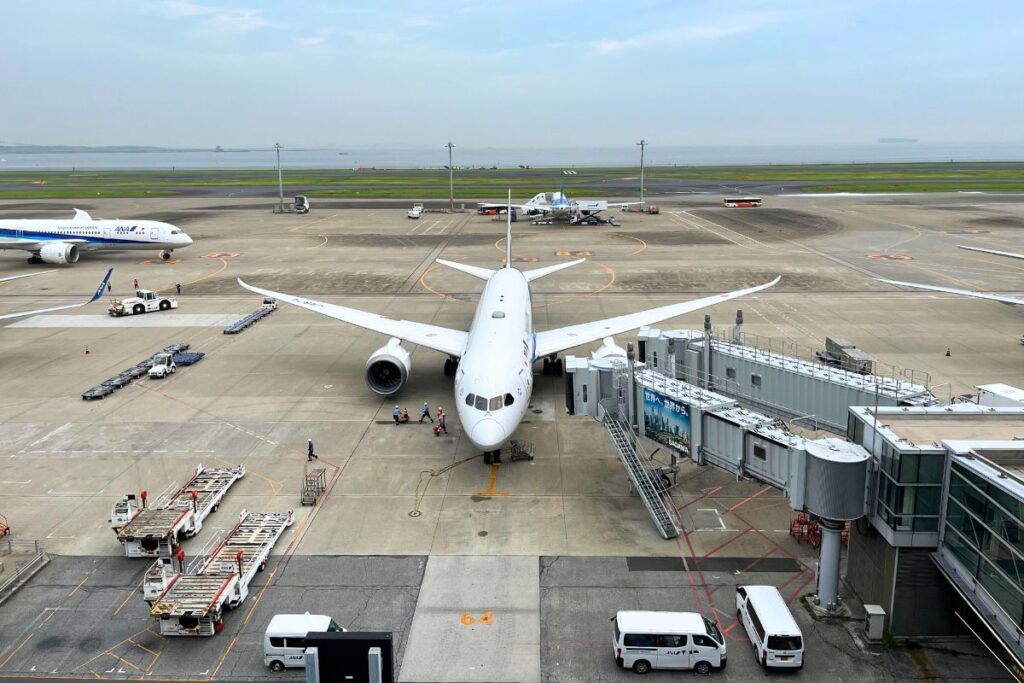
There are two main airports that service the city of Tokyo: Narita International Airport (NRT) and Haneda Airport (HND).
Generally speaking, most international flights from the United States and Europe arrive at Narita. While those traveling from other parts of Asia typically land at Haneda.
For domestic flights, both airports are used, though the majority of flights do operate through Handea.
Pro Tip: If you have the option to choose, I recommend flying into Haneda. It’s much closer to downtown Tokyo, making arrivals and transfers a lot easier.
Narita Airport to Tokyo
Narita Airport is actually located in the nearby city of Narita. This means transportation into Tokyo takes a bit longer, but it is definitely doable.
Below, you’ll find a quick breakdown of the most popular ways to travel into the city:
- 🚆 Narita Express (N’EX): The Narita Express provides direct service to several major train stations, including Tokyo Station, Shibuya Station, and Shinjuku Station. Travel time depends on your final destination. However, on average, it takes about one hour to reach the city center and costs approximately 3,000 yen one way.
- 🚄 Keisei Skyliner: An alternative to the N’EX, the Keisei Skyliner is another express train that provides transportation to downtown Tokyo, specifically to Nippori Station and Ueno Station. The ride takes around 40–50 minutes and costs about 2,300 yen one way.
- 🚃 Local Trains: There are various local JR and Keisei lines that connect Narita Airport to downtown Tokyo. Travel times vary, but average somewhere between 80 to 120 minutes. Meanwhile, one-way tickets cost between 1,000 and 1,500 yen.
- 🚌 Airport Limousine Bus: The Airport Limousine Bus provides direct service to major train stations and hotels throughout the city. Travel times and prices vary depending on your final destination. Generally speaking, it takes about 90 minutes to reach central Tokyo and costs around 3,100 yen one way.
- 🚖 Taxi or Private Transfer: It takes about 90 minutes to travel to central Tokyo by taxi or private transfer, depending on traffic. Taxis typically cost around 30,000 yen, while private transfers start at roughly 18,000 yen and increase depending on the car.
Haneda Airport to Tokyo
As mentioned above, Haneda Airport is located within city limits, close to downtown Tokyo. This makes the journey into the city much faster and more affordable.
Below, you’ll find a quick breakdown of the most popular ways to travel into the city:
- 🚆 Tokyo Monorail: The Tokyo Monorail provides transportation to Hamamatsucho Station, which is located near the city center. The trip takes about 15 minutes and costs around 500 yen. From Hamamatsucho Station, you can transfer to the JR Yamanote Line or another local subway line to reach your hotel.
- 🚈 Keikyu Line: The Keikyu Line offers direct service to Shinagawa Station in southern Tokyo. The trip takes about 15–20 minutes and costs about 330 yen. Shinagawa is a major hub for the city, so you can easily transfer to a variety of other subway lines here.
- 🚌 Airport Limousine Bus: The Airport Limousine Bus provides direct transportation to major train stations and hotels across the city. Depending on where you’re headed, the trip can take anywhere from 30 to 60 minutes and costs between 1,000 and 1,500 yen.
- 🚖 Taxi or Private Transfer: Travel time to the city center takes about 30-40 minutes by taxi or private transfer, depending on traffic. Taxis typically cost around 7,000–11,000 yen, while private transfers start around 11,000 yen and increase depending on the vehicle.
How to Get Around Tokyo
It’s quite easy to get around Tokyo, as the city is home to an extensive public transit system.
There are a variety of subway lines, buses, and trains that you can take to explore the city and the surrounding areas.
To make the most of this, it’s best to get a transportation pass, also known as an IC card.
These pre-paid, refillable cards can be purchased online, at major train stations and in airports – or for iPhone users, added digitally via the Apple Wallet.
IC cards can be used on most local trains, buses, and subways all across the country.
They cannot, however, be used on bullet trains, limited express trains, or highway buses – as these all require additional or separate tickets.
Pro Tip: Download Google Maps to help you navigate the city. It’s one of the best apps for Japan, as it provides real-time, accurate updates on the local transit system.
Map of Tokyo
To help you plan your trip, here’s a map overview of all the places mentioned in this 4 day Tokyo itinerary.

To view an interactive version of this map, click here!
Tokyo 4 Day Itinerary: An Overview
Don’t have time to read the article in full? Here’s a quick recap of my suggested itinerary for 4 days in Tokyo, Japan!
- Day 1 – Shibuya & Shinjuku: Explore Meiji Shrine & Harajuku, visit Shibuya Crossing & Gyoen National Garden, experience the nightlife of Shinjuku.
- Day 2 – Asakusa & Ueno: Discover Senso-ji Temple & Ueno Park, spend time at Tokyo Skytree & walk along the Sumida River.
- Day 3 – Central Tokyo: Grab breakfast at a local fish market, play at a teamLab museum, admire the views of Tokyo Tower & enjoy the nightlife of Roppongi.
- Day 4 – Day Trip From Tokyo: Take a day trip outside of the city & explore a nearby destination. Full list of recommended day trips below!
Tokyo 4 Day Itinerary: Explained
On that note, let’s dive right in and discuss in detail the perfect Tokyo itinerary for 4 days. I’ve included several activities and day trips for you to choose from. So, feel free to pick and choose and adapt this itinerary as you see fit!
Day 1: Shibuya & Shinjuku
For your first day in Tokyo, we’ll explore the western part of the city – specifically the districts of Shibuya and Shinjuku. You can visit these destinations in any order; however, I do recommend saving downtown Shinjuku for the evening. The area is known for its vibrant nightlife and iconic bright lights, which are a must!
Visit Meiji Shrine
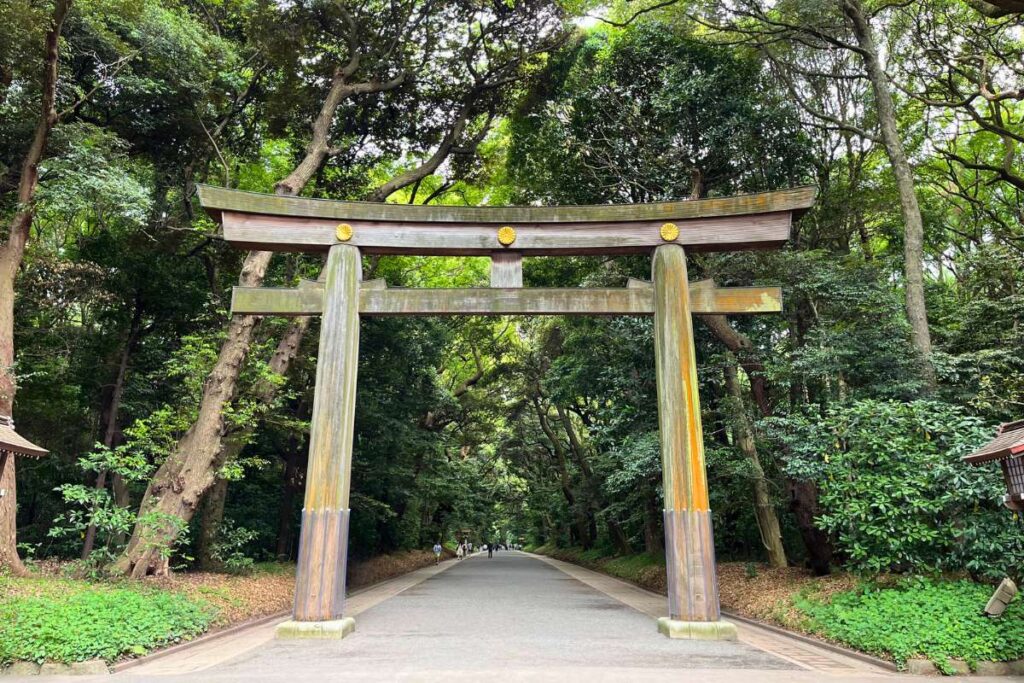
Encompassing roughly 175 acres, Meiji Shrine is the largest Shinto shrine in Tokyo – and one of the most important.
Founded in 1920, the shrine is dedicated to former Emperor Meiji and Empress Shōken, who are celebrated for leading Japan into the modern era.
Here, you’ll find a lush forest that surrounds a large complex complete with mulitple prayer halls and impressive torii gates – as well as a gift shop and restaurant.
The area is also home to several pathways that meander through the forest, offering a brief escape from the hustle and bustle of downtown Tokyo.
Explore Harajuku
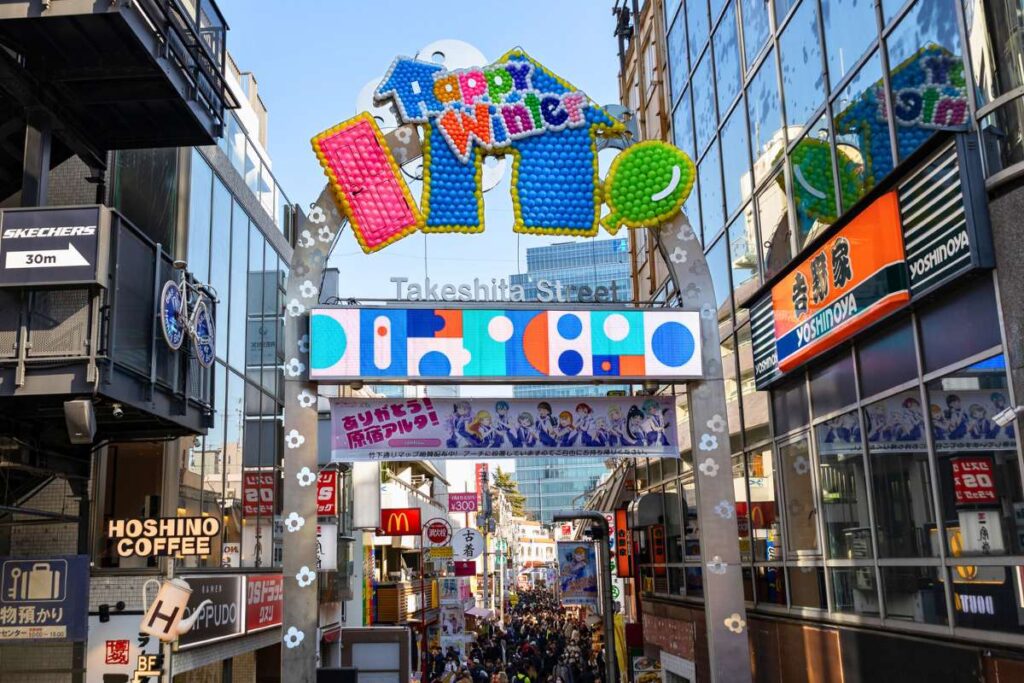
Just minutes away from Meiji Shrine lies Harajuku, a popular shopping hub known for its quirky cafes, thrift stores, and colorful street fashion.
While Takeshita Street is the main shopping destination here, it does get quite crowded, so I recommend branching out and exploring more of the neighborhood.
You’ll find that the entire area is full of countless shopping centers and boutique stores all waiting to be discovered.
Some notable spots worth mentioning include: Cat Street, a more laid-back alternative to Takeshita; Omotesando, home to the area’s designer brands; and Tokyu Plaza Omotesando, a multi-level department store famous for its mirrored entrance.
Pro Tip: Harajuku is known for its crepes (both sweet and savory). So, be sure to try one while you’re here!
Discover Shibuya Crossing
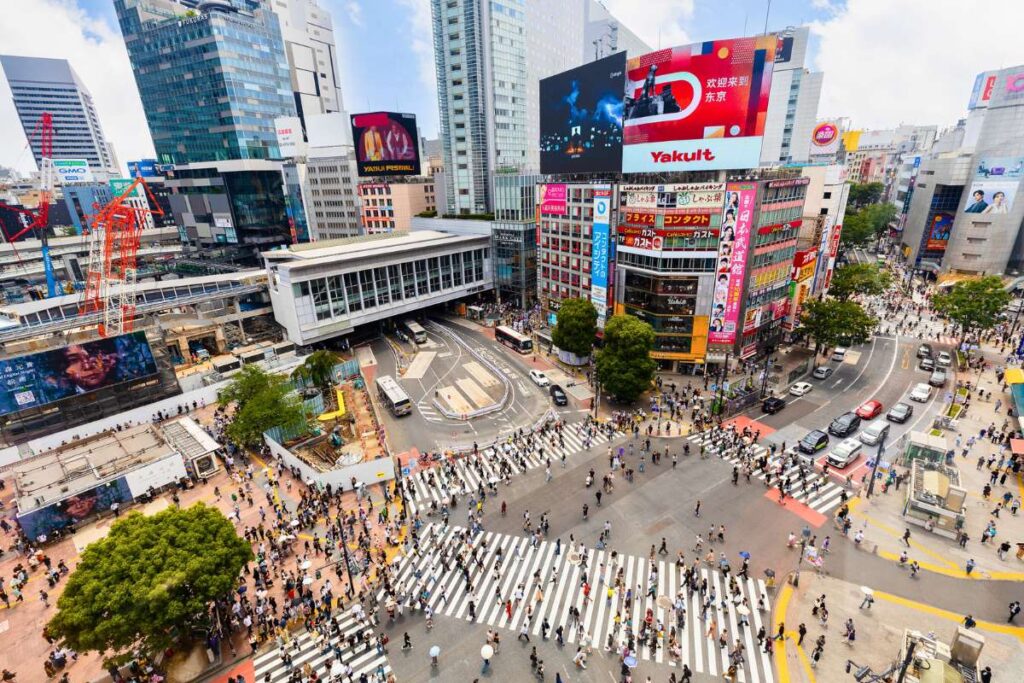
View of Shibuya Crossing from Magnet by Shibuya 1019.
No visit to Tokyo is complete without a stop at Shibuya Scramble Crossing – the world’s busiest pedestrian crossing.
Packed with thousands of people on a daily basis, it’s the ultimate example of Tokyo’s organized chaos!
For the best views overlooking the square, head up to the rooftop lounge at Magnet by Shibuya 109. This lesser-known destination offers incredible views – without the crowds.
Across the street you’ll also find Shibuya Sky, a more popular observation deck known for its fun photo ops and panoramic views of Tokyo.
Pro Tip: The area is home to countless restaurants, cafes, and eateries – so it’s a great place to grab lunch, if you find yourself hungry!
Admire Shinjuku Gyoen National Garden
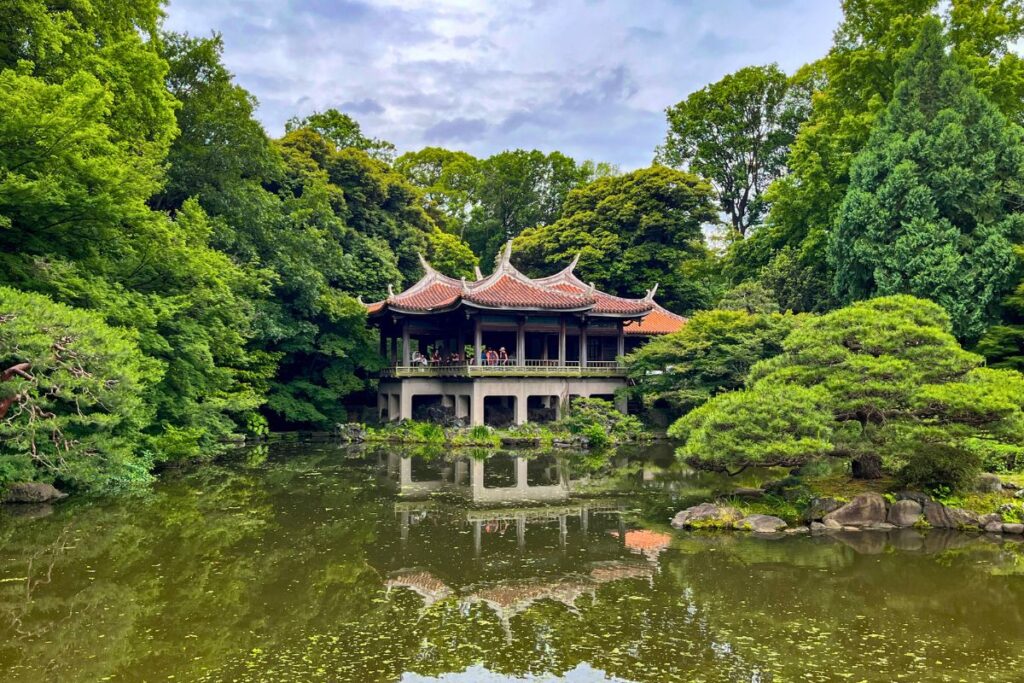
Famous for its natural beauty, Gyoen National Garden is a peaceful oasis tucked away on the outskirts of bustling Shinjuku.
Spanning 144 acres, the park features three distinct gardens: a traditional Japanese garden, a formal French garden, and an English landscape garden.
There’s also a large greenhouse on the property, home to a variety of tropical and subtropical plants, making it the perfect spot to explore year-round.
The park is especially stunning in the spring when the cherry blossoms bloom and in the fall when the foliage reaches its peak.
Experience Shinjuku’s Nightlife
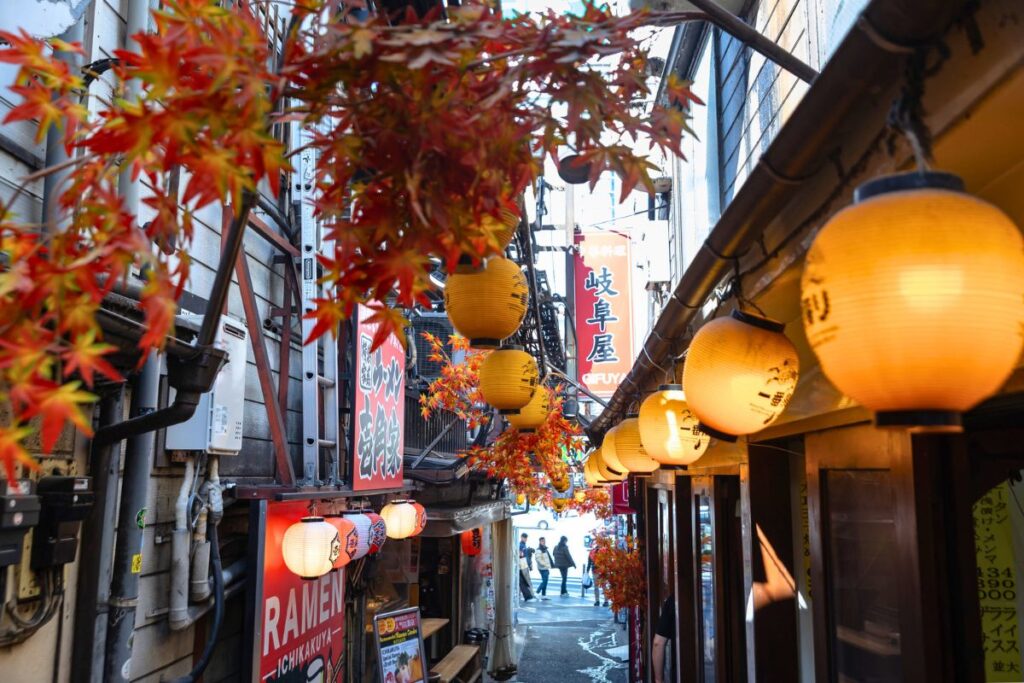
Omoide Yokocho, aka Memory Lane.
Known for its bright lights and endless entertainment, Shinjuku is the ultimate destination for nightlife in Tokyo.
Offering a mix of modern skyscrapers and historic alleyways, it’s definitely a unique spot to check out – even if you’re not into bar-hopping!
I recommend beginning your night exploring the old alleyways of Shinjuku. Specifically, Omoide Yokocho, which is home to local food vendors, and Golden Gai, famous for its tiny bars.
Both areas feature narrow, winding streets packed to the brim with local establishments and a nostalgic old-city vibe.
Afterward, if you’re looking for some more late-night fun, you can head over to Kabukicho, the city’s most famous entertainment district.
Here, you’ll find countless bars, restaurants, clubs, and karaoke venues all open until the wee hours of the morning.
Pro Tip: Please be aware, Kabukicho is technically the red-light district for Tokyo, meaning you may come across some adult-oriented venues. That said, many establishments here are PG-friendly, so it is still a safe and enjoyable area to explore – just be sure to exercise the normal precautions you would anywhere else late at night.
Day 2: Asakusa & Ueno
On day 2 of your 4 day Tokyo itinerary, we’ll head east and explore Asakusa and Ueno. I recommend beginning your day at Senso-ji (to try and beat some of the crowds!), and then you can head over to Ueno from there. Also, be sure to save Sumida River for the evening – the nighttime views here are incredible!
Explore Senso-ji Temple
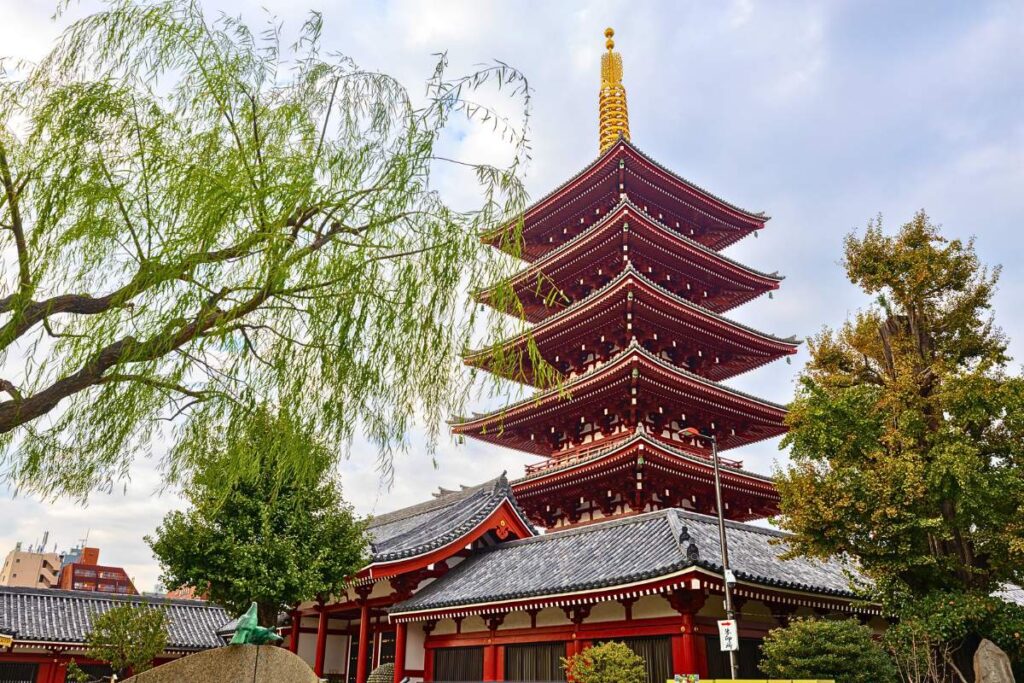
As the oldest temple in Tokyo, Senso-ji is a must-visit, especially for first-time travelers!
Dating back 1400 years, this Buddhist Temple is one of the most important and colorful temples in the city!
The complex features a variety of vibrant structures, including a striking five-story pagoda, several traditional gate archways, and a beautifully decorated prayer hall.
On the property, you’ll also find Nakamise-dori Street, a bustling shopping corridor that’s lined with local souvenir shops and street food vendors.
Pro Tip: Senso-ji is absolutely beautiful when it’s all lit up at night! If your schedule allows, consider returning after dark. While everything will be closed down, it’s still quite a sight to behold!
Discover Ueno Park
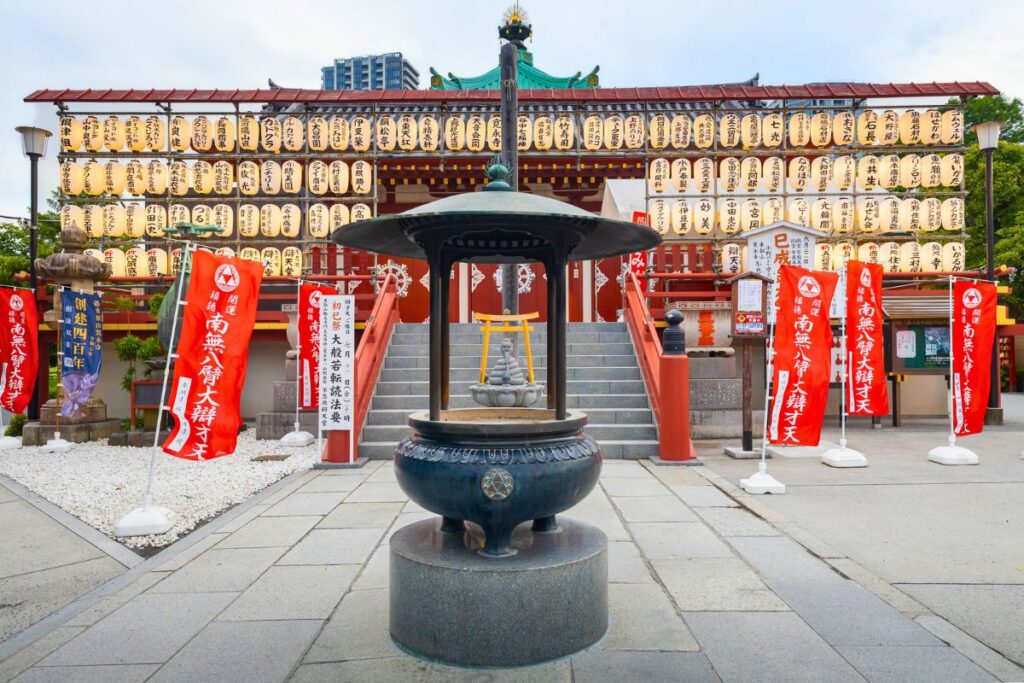
Bentendo Temple in Ueno Park.
Ueno Park is one of Tokyo’s most famous public parks, known for its wide open spaces, cultural attractions, and natural charm.
Within the park, you’ll find several scenic ponds, landscaped gardens, tree-lined walking paths, and a handful of historic shrines and monuments.
There are even a number of museums on the property, including the Tokyo National Museum, the Tokyo Metropolitan Art Museum, the National Museum of Nature and Science, and the National Museum for Western Art.
The park is especially popular in the spring, as it’s home to hundreds of cherry trees that are simply stunning when they bloom!
🔀 Alternative Destination: Prefer anime over museums? Head to Akihabara instead! This lively “Electric Town” is Tokyo’s haven for anime, manga, gaming, and all things tech!
Appreciate the Views from Tokyo Skytree

Soaring 634 meters into the air, Tokyo Skytree is not only the tallest tower in Tokyo, but in all of Japan.
Overlooking Asakusa and the Sumida River, the observation deck here offers stunning views of the city and beyond. On a clear day, you might even catch a glimpse of Mt Fuji!
Within the facility, you’ll find two observation decks to choose from: Tembo Galleria, which stands at 450 meters, and Tembo Deck, which sits at 350 meters. With both, you get incredible views!
In addition to these observation decks, the tower is also home to several restaurants and shops – perfect if you want to grab a bite to eat or need to pick up a souvenir!
Walk Along the Sumida River
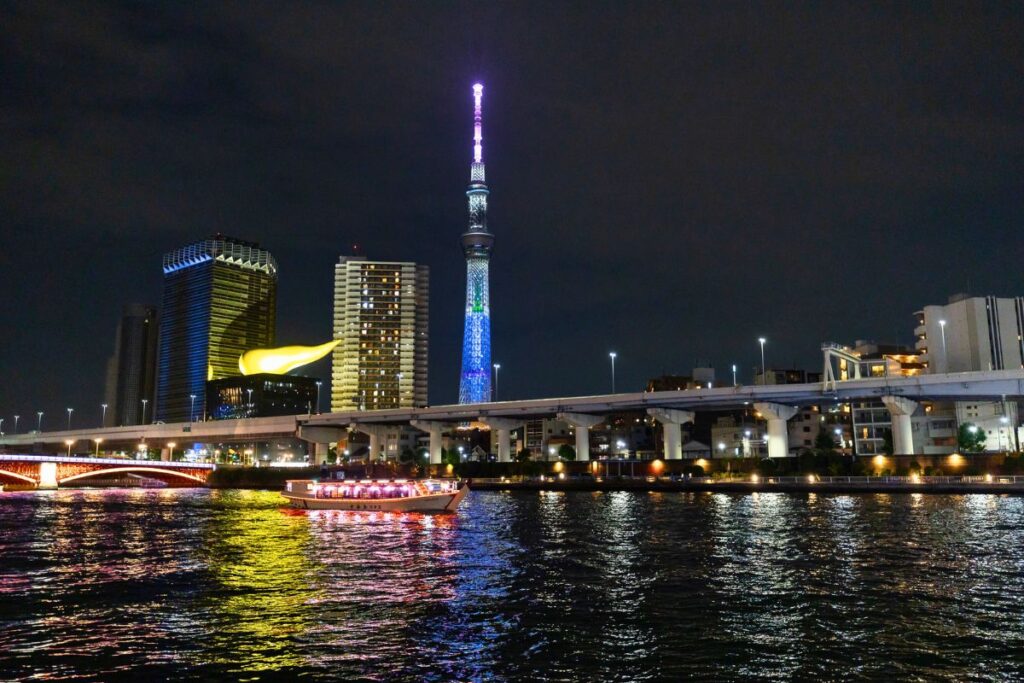
Cutting through the heart of Asakusa, the Sumida River is the perfect place to slow down and take in some nighttime views of the city.
From here, you can see Tokyo Skytree and the skyline all lit up, their reflections shimmering in the water.
The riverside is also a great spot for dinner, as there are several small restaurants and bars in the area.
Or, if you prefer, you can hop aboard an evening dinner cruise and enjoy the views from the water.
Pro Tip: For even more nighttime views, head over to the Asakusa Culture Tourist Information Center. They have a small (free!) observation deck that offers beautiful views of Senso-ji Temple and Tokyo Skytree, all lit up!
Day 3: Southern Tokyo
You’re third day in the city will be your last full day in Tokyo, so be sure to make the most of it! I suggest starting bright and early, so you can grab breakfast at one of the local fish markets. Then you can head out to explore southern Tokyo. Again, be sure to save Roppongi Hills for the evening so that you can take full advantage of its nighttime views!
Sample the Flavors of Tokyo’s Fish Markets
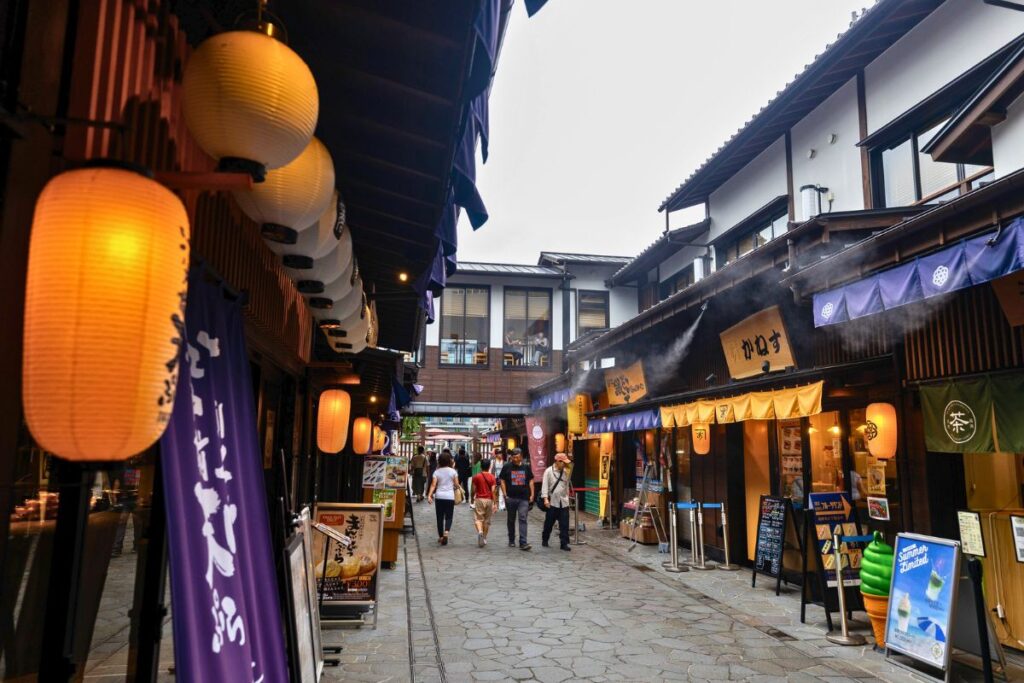
Toyosu Senkyaku Banrai at Toyosu Market.
The fish markets in Tokyo are not only known for their incredibly fresh seafood – they also offer a wide array of delectable street food.
From tempura to onigiri, wagyu beef, karaage, and the ever-popular strawberry daifuku (mochi-wrapped strawberry), there’s something for everyone!
For first-time visitors, there are two main markets worth exploring: Tsukiji Outer Market and Toyosu Market.
Tsukiji, which dates back to the 1930s, is a smaller, more historic market known for its intimate, traditional atmosphere.
Toyosu, on the other hand, opened in 2018 and offers a more modern experience. It also hosts the city’s famous tuna auctions, which take place most mornings beginning at 5:30 am.
The tuna auction and sushi restaurants at Toyosu can be found at the market’s main building. However, most of the street food vendors are located across the street at Toyosu Senkyaku Banrai.
Pro Tip: Next up, we’ll visit one of the city’s teamLab art museums. So, choose your fish market according to location! Toyosu Market is just a short walk from teamLab Planets, while Tsukiji is closer to teamLab Borderless.
Play at teamLab Planets (Or Borderless)

The Bubble Room at teamLab Borderless.
Known for their immersive, mind-bending exhibits, Tokyo’s teamLab museums offer a unique art experience that feels almost magical.
Using a mix of technology, light, and visual creations, these museums create interactive spaces where you can touch, walk through, and even become part of the artwork!
From rooms filled with floating lights to digital waterfalls and infinite reflections, every corner is a unique surprise!
And in Tokyo, there just so happens to be two teamLab locations for you to choose from: teamLab Planets and teamLab Borderless.
While Planets is known for its physical, sensory experiences (like walking through water!), Borderless offers a more visual exploration of a never-ending, continuously flowing digital world.
🔀 Alternative Destination: Not feeling teamLabs? Head to Hamarikyu Gardens instead! Dating back to the Edo period, this historic garden is especially beautiful during cherry blossom season!
Admire Tokyo Tower
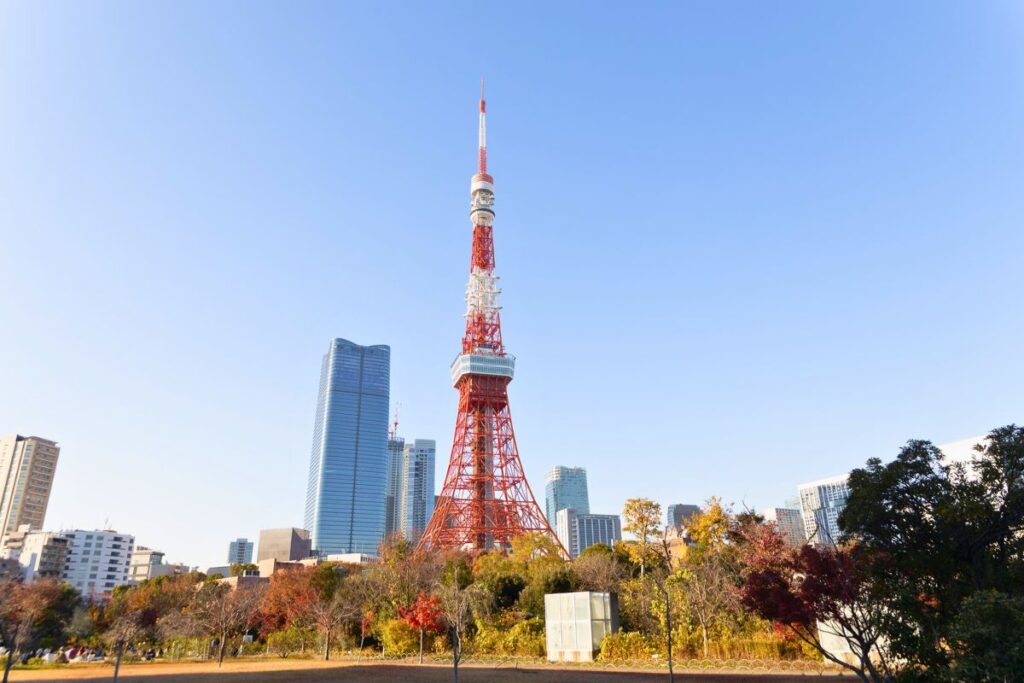
View of Tokyo Tower from Shiba Park.
Rising above the bustling streets of Tokyo, Tokyo Tower is undeniably one of the city’s most iconic landmarks.
Built in 1958, this striking red-and-white tower was inspired by the Eiffel Tower in Paris and has since become a prominent symbol of Tokyo.
While you can head up to the observation decks for sweeping views of the city, it’s also worth it to admire the tower from afar.
Some popular spots to get great views of Tokyo Tower include: Shiba Park, Zojoji Temple, Sakuradadori Street, Mori Tower (more on that below!), and, of course, right at the base of the tower itself.
Pro Tip: Don’t be afraid to wander around the neighborhood! Chances are you’ll come across some incredible views of Tokyo Tower – without the crowds!
Experience Roppongi After Dark
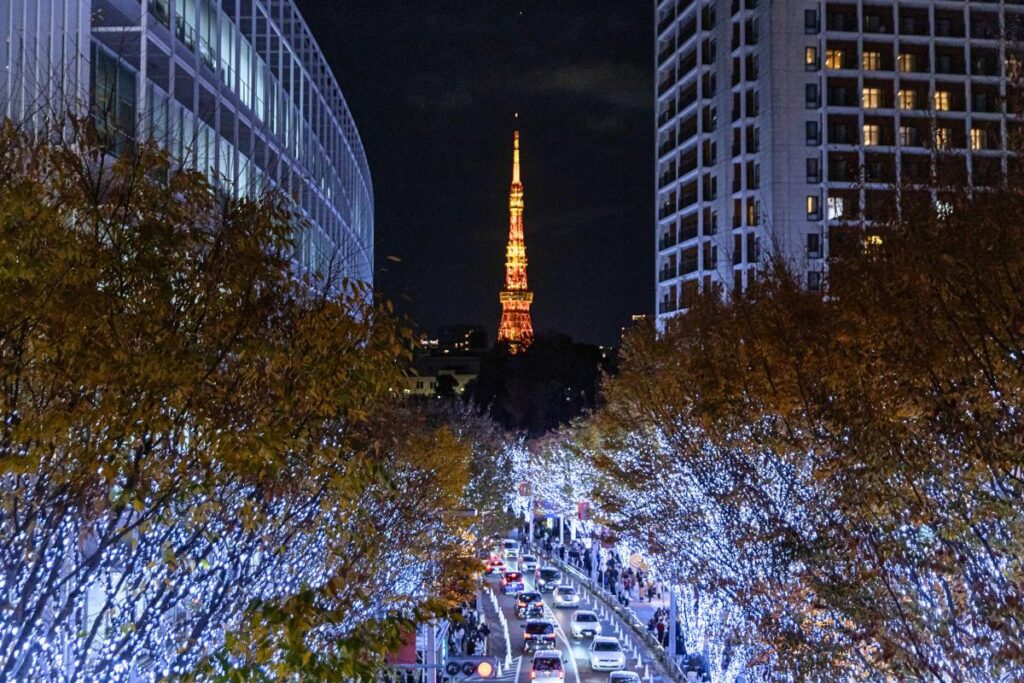
The view from Roppongi Hills at Christmas.
Situated just east of Tokyo Tower, Roppongi is a lively neighborhood known for its upscale shops, fine-dining restaurants, vibrant nightlife, and cultural attractions.
It’s the perfect spot to enjoy dinner, grab a few drinks, and take in the sparkling nighttime skyline.
For the best views of the city (and Tokyo Tower), head up to Mori Tower. The observation deck here is on the smaller side, but the vantage point is incredible!
Other highlights in the area include the Mori Art Museum, the National Art Center, the Suntory Museum of Art, and the cultural complexes of Roppongi Hills and Tokyo Midtown.
Day 4: Day Trip From Tokyo

View of Mount Fuji from Lake Kawaguchi.
For your final day in Tokyo, I suggest mixing things up with a quick day trip. It’s a fun way to see a different side of Japan without straying too far from the city. Below are a few of my favorite day trip destinations!
- Mount Fuji: Japan’s most iconic mountain! You can join a guided tour from Tokyo to explore some of the area’s highlights, from Hakone to the Fuji Five Lakes. Offering amazing views, scenic walks, and plenty of photo-worthy spots, it’s the perfect destination for those in need of a nature-filled escape.
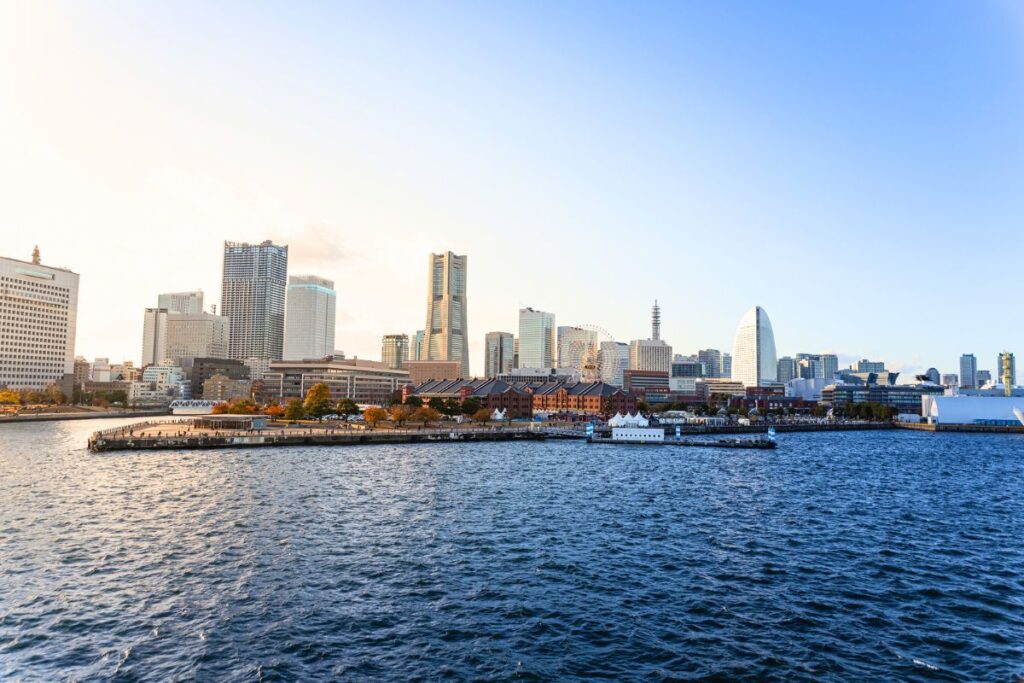
- Yokohama: Just a quick train ride from Tokyo, Yokohama is known for its stunning waterfront views and cultural charm. Here, you’ll find Japan’s largest Chinatown, alongside several notable attractions, including the Cup of Noodles Museum.
- Kamakura: A charming seaside town, Kamakura is praised for its stunning coastal views and cultural attractions – including Japan’s second-tallest Buddha! It’s the ideal spot for a relaxing day full of temples, shrines, and seaside walks.
- Nikko National Park: Encompassing more than 250,000 acres, Nikko National Park is a nature lover’s paradise. Here, you can wander through lush forests, admire waterfalls, and visit historic, ornately decorated shrines.
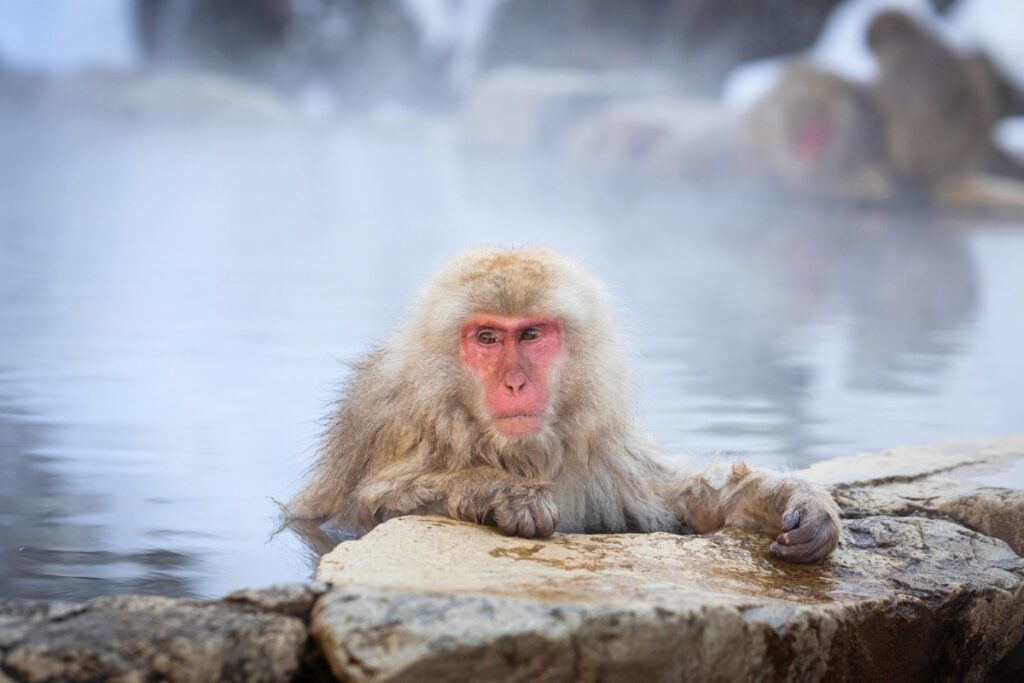
- Nagano: Home to Japan’s famous onsen-loving snow monkeys, Nagano is a popular destination, especially in the winter! While it’s a bit further away than some of the other options listed here, it’s still doable and well worth it!
- Tokyo Disney: If you’re in the mood for some playful fun (or are traveling with kids), Tokyo Disney Resort is an easy day trip! Here, you’ll find Disneyland and Disney Sea – both offering a plethora of rides, shows, and tasty treats to keep you entertained!
Other Things to Do in Tokyo
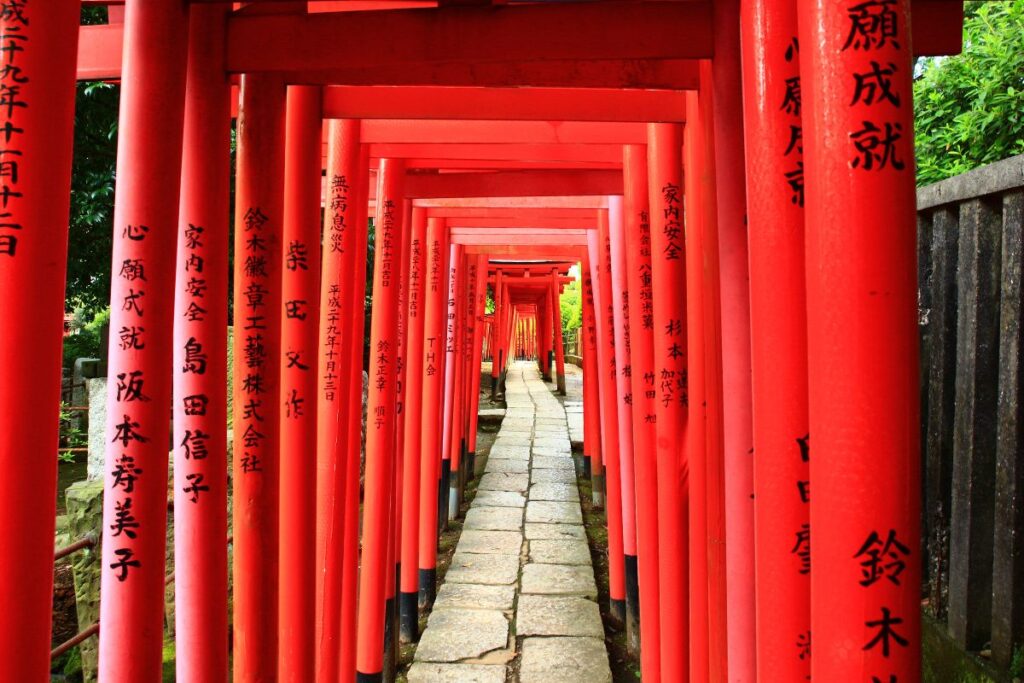
Hie Shrine in Akasaka.
Interested in adjusting this 4 day Tokyo itinerary? Or maybe you’re contemplating a longer stay? If so, consider visiting some of these other popular destinations as well!
- Imperial Palace: Home to Japan’s ruling Emperor, the Imperial Palace provides a glimpse into Japan’s royal traditions and natural beauty. While the inner grounds and buildings are off-limits, visitors are welcome to explore the palace’s serene gardens and outer plaza.
- Hie Shrine: Known for its striking red torii gates, Hie Shrine is a peaceful Shinto shrine tucked away in Akasaka. Dating back to the 1400s, the shrine is said to protect the city from misfortune and has become a popular spot for personal blessings.
- Harry Potter Studio Tour: The Harry Potter Studio Tour in Tokyo is the world’s largest indoor Harry Potter attraction, complete with magical and immersive studio experiences. From Diagon Alley to the Great Hall, the Forbidden Forest, and Privet Drive – you can explore it all!
- Ghibli Museum: Popular among anime fans, the Ghibli Museum showcases the works of Studio Ghibli – the famed animation studio behind the films My Neighbor Totoro and Spirited Away. Here, you can explore imaginative exhibits and get an insider’s look at the Studio’s creative process. Advanced tickets are required and sell out quickly!
- Odaiba: Situated along Tokyo Bay, Odaiba is a futuristic waterfront district packed with restaurants, shopping centers, and entertainment venues. Highlights here include Odaiba Marine Park, Legoland, the famous Unicorn Gundam statue, and Tokyo’s iconic Rainbow Bridge.
- Sumo Wrestling: Japan’s national sport, sumo wrestling, is quite a sight to behold! You can check out official tournaments and practice sessions at Ryogoku Kokugikan. Or, attend a foreigner-friendly sumo dinner show at the Asakusa Sumo Club!
🌟 Spending more time in Japan? Be sure to also check out my 10 day Japan itinerary as well as my guide to the top destinations in Japan for first-time visitors!
Where to Stay in Tokyo
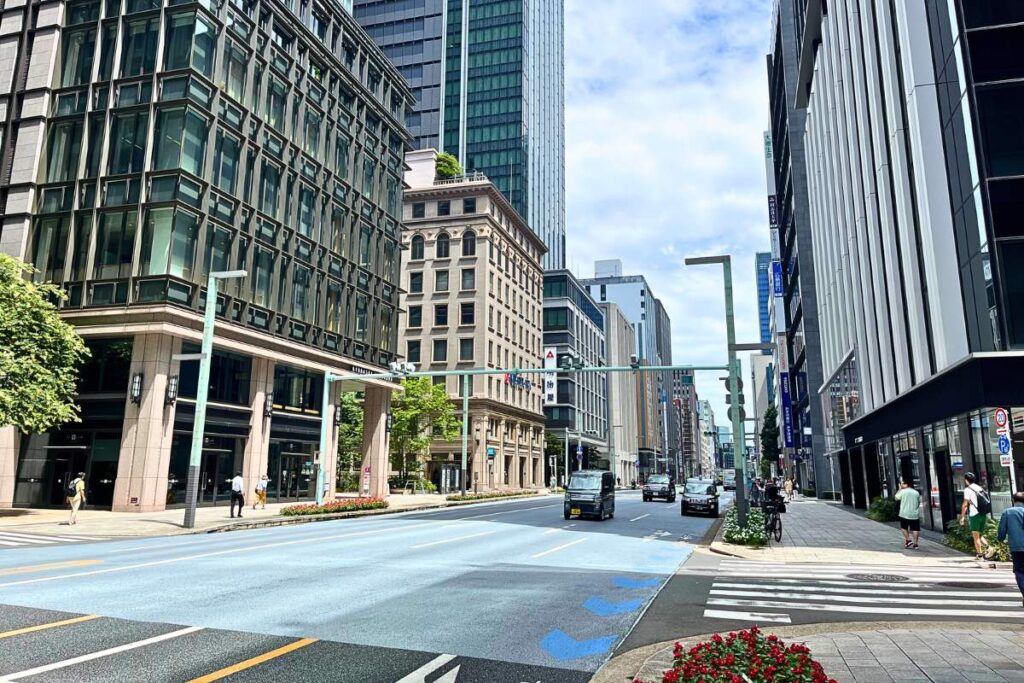
Central Tokyo is a great place to stay!
Tokyo is a massive city that offers a wide variety of accommodations. Where you choose to stay will largely depend on your budget, how you structure your 4 day Tokyo itinerary, as well as your personal preferences. That said, I’ve included below some of the most popular places to stay in Tokyo for first-timers!
- Central Tokyo: Consisting of Ginza and Tokyo Station, Central Tokyo is ideal for first-time visitors. The area is super convenient in terms of transportation and offers a wide variety of hotels, restaurants, bars, cafes, and shopping centers – all within walking distance.
- Shinjuku: Perfect for those seeking nightlife and vibrant entertainment, Shinjuku is packed with the city’s most popular bars, restaurants, and clubs. It’s also a major transport hub, making it easy to explore other parts of Tokyo and beyond.
- Shibuya: Celebrated for its youthful vibe, Shibuya offers easy access to some of the city’s best shopping, dining, and entertainment. It’s lively day and night, with plenty of cafes, boutiques, and trendy spots to explore.
- Asakusa: Known for its historic charm, Asakusa is the perfect place to stay if you’d like to experience Old World Tokyo. While the area is most famous for its main cultural attraction, Senso-ji, it also offers a variety of smaller shrines, traditional ryokans, and local shopping streets.
- Ueno: Offering a more relaxed experience, Ueno is ideal for those in search of a quieter, more laid-back stay. Here, you’ll find a variety of affordable accommodations alongside some of the city’s best museums and parks.
🧳 My Experience: I’ve stayed at several hotels, but my favorite so far is Ginza Hotel by Granbell in Central Tokyo. The rooms are quite spacious by Japanese standards, and the location is excellent. With plenty of restaurants, cafes, and bars just steps away, everything you need is right at your doorstep!
What to Eat in Tokyo
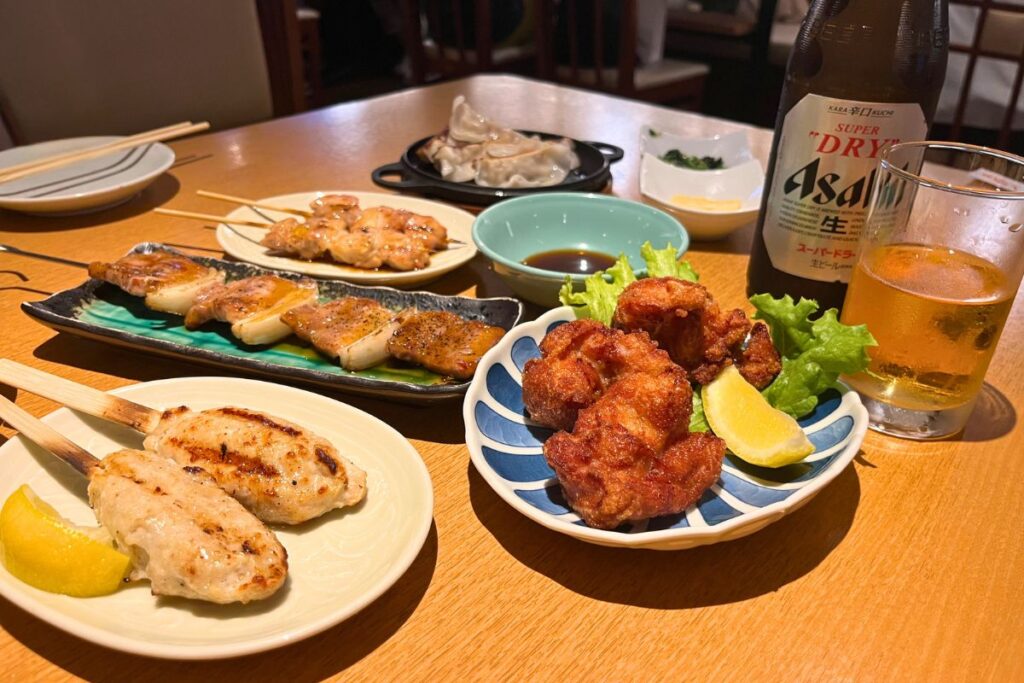
A variety of small plates at an Izakaya in Tokyo.
Tokyo is one of Japan’s top foodie destinations – and for good reason! There are so many delicious specialties and local flavors to enjoy! While you won’t be able to try it all, here are a few of the city’s more popular dishes!
- Sushi: Tokyo is famous for its fresh sushi, offering everything from conveyor-belt joints to standing-only sushi bars and high-end omakase restaurants. For the ultimate taste of Japanese seafood, be sure to try the nigiri and sashimi!
- Ramen: A staple throughout Japan, ramen is one of the country’s most popular dishes. And in Tokyo, specifically, there are countless restaurants to choose from – each unique and delicious in its own right!
- Yakitori: Popular at izakayas (casual pubs) and street food stalls, yakitori is essentially grilled skewers. Options range from chicken and wagyu beef to pork and vegetables, giving you plenty of variations to try.
- Soba: Consisting of thin buckwheat noodles, soba is either served hot in a warm broth or cold with a dipping sauce. Tokyo, in particular, is home to centuries-old soba shops where noodles are handmade daily, giving you the most authentic experience.
- Tempura: Known for its crispy texture, tempura consists of lightly battered and deep-fried seafood or vegetables. With Tokyo’s incredible seafood on offer, the city’s tempura is especially fresh and delicious.
Tokyo Travel Tips for First-Timers
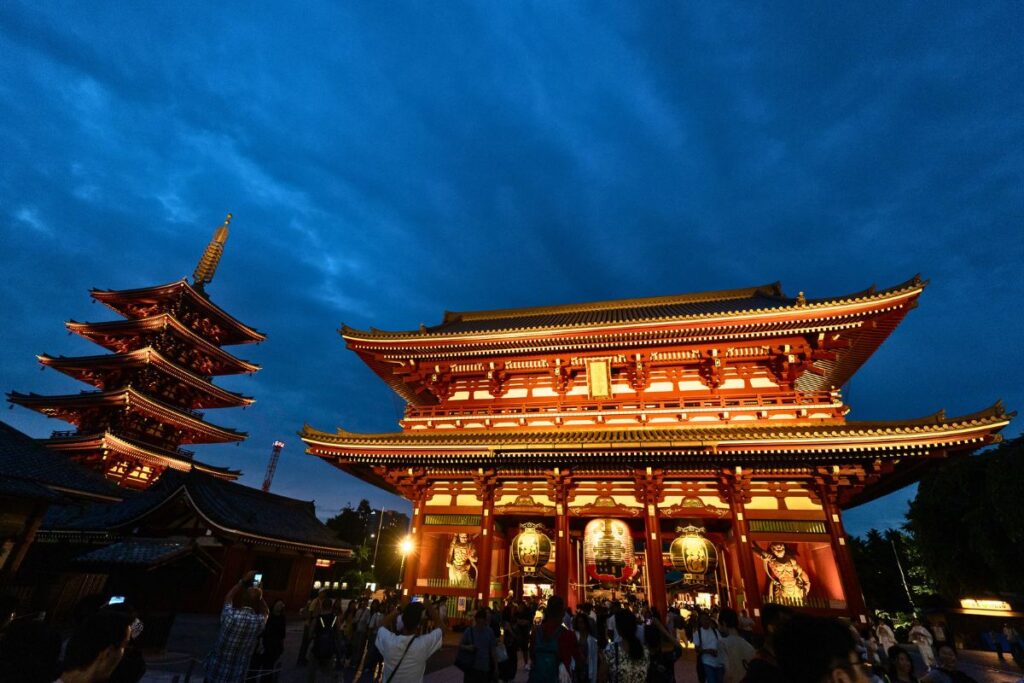
Senso-ji Temple at night.
Tokyo can be exciting, chaotic, and sometimes a little intimidating, especially if it’s your first visit. To help you navigate all of this, here are a few tips and tricks to keep in mind as you plan your 4 day itinerary for Tokyo!
- Purchase an IC Card (like Suica or Pasmo): As mentioned above, these prepaid, refillable transportation cards can be used to tap and go on trains, buses, and even at convenience stores. You can pick one up online, at most train stations, or at the airport. And the best part? They’re accepted all across Japan!
- Download Google Maps (& Google Translate): Both are lifesavers for navigating the city and communicating when English isn’t widely spoken! That said, it doesn’t hurt to learn a little Japanese too!
- Get an eSIM Card or Pocket Wi-Fi: It’s important to stay connected, so you can actually use your travel apps! You can preorder a pocket Wi-Fi or purchase an eSIM online.
- Book Popular Attractions in Advance: Attractions in Tokyo sell out quickly, so it’s best to reserve your tickets early! This is especially true for spots like Shibuya Sky, Tokyo Skytree, TeamLab Planets, TeamLab Borderless, and Disney Resorts.
- Learn to Use Chopsticks: There’s no escaping it – you will have to use chopsticks in Japan. So, start practicing early if you can! It’ll make things much easier later on.
- Have Some Cash (Yen!) on Hand: While Tokyo is a modern city, cash is still king with smaller vendors. So it’s best to have some yen on hand, especially if you plan to visit small restaurants or street food markets.
- Avoid Peak Rush Hour: Trains in Tokyo can become incredibly crowded during the weekdays – we’re talking can-of-sardines packed! If possible, plan your travel outside peak hours, which are generally 7:30–9:30 am and 5:00–7:00 pm.
- Take Advantage of Konbinis (Convenience Stores): Japan’s convenience stores are next-level! They’re perfect for affordable meals, snacks, and last-minute essentials. They also typically have international ATMs inside!
- Respect Local Etiquette: Be sure and take cues from the locals around you! Speak quietly on trains, line up properly where needed, and remove shoes when required (like in temples or traditional restaurants).
- Don’t Overdo Your Itinerary: Tokyo can be overwhelming. Give yourself time to slow down, wander, and just soak it all in!
Frequently Asked Questions About Planning a 4 Day Itinerary for Tokyo
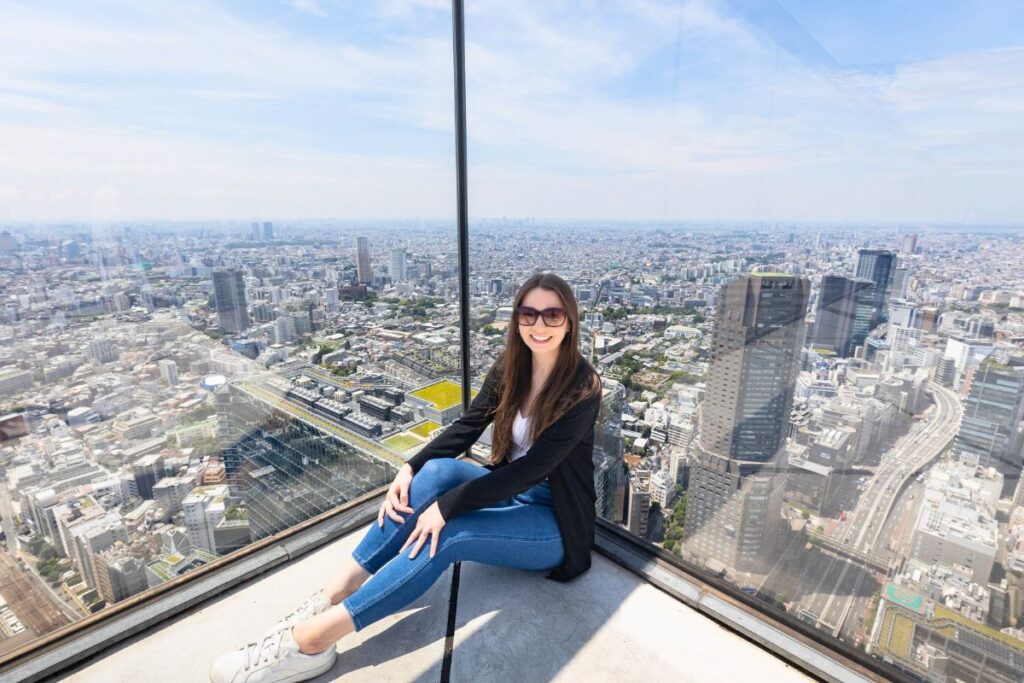
The view from Shibuya Sky.
Here are my thoughts on some commonly asked questions about visiting Tokyo.
Is Tokyo Worth Visiting?
Yes, without a doubt, Tokyo is definitely worth visiting! It’s a city that, honestly, never fails to impress. In fact, I’ve had several friends, who don’t normally identify themselves as “city people,” tell me that they genuinely enjoyed their time in Tokyo. With so much to do and a wide variety of experiences on offer, Tokyo truly has something for everyone!
Is 4 Days in Tokyo Enough?
While you could easily spend weeks (maybe even months!) exploring all that Tokyo has to offer, a 4 day itinerary gives you just enough time to get a taste of the city. And it leaves enough wiggle room to squeeze in a day trip! With this timeframe, you’ll be able to hit up all the major highlights and discover a few hidden gems along the way!
Is Tokyo an Expensive City to Visit?
Tokyo can be expensive, but it can also be surprisingly affordable. It really depends on your travel style and how much you plan to splurge (or not). While the city has its fair share of high-end hotels and fine dining establishments, there are also plenty of budget-friendly accommodations, casual eateries, and even free attractions. That said, overall, Tokyo tends to be more affordable than many major Western cities, like London or Paris.
Do the Trains Run 24/7 in Tokyo?
No, the trains in Tokyo do not run 24/7. I learned this the hard way during one of my first visits to the city. I may have stayed out a bit too late clubbing 🫣, and discovered on my way home that the trains had stopped for the night. Needless to say, getting home that day was quite the adventure! So, take it from me: plan ahead. The trains in Tokyo generally run from around 5 am until midnight.
Is It Better to Visit Tokyo or Osaka First?
I personally think that Tokyo is a great introduction to Japan, so I’d say that it’s probably better to visit Tokyo first. That said, it really just depends on your specific itinerary and where you’re flying from. While most visitors from the US and Europe will likely find it easier to fly into Tokyo, those traveling from within Asia may find it easier and/or cheaper to fly into Osaka.
Final Thoughts: 4 Day Tokyo Itinerary
So there you have it – my top recommendations for a 4 day Tokyo itinerary! Hopefully, this guide is helpful in planning your own visit to Japan’s capital city.
Regardless of what you decide to do, you’re bound to have an incredible time! After all, there’s nothing quite like the bright lights and organized chaos of Tokyo!!
Planning your own Tokyo itinerary for 4 days? What are you most excited to do? Let me know in the comments below!
Like this 4 day Tokyo itinerary? Pin it now for later!

KRYSTI ATKINSON
Krysti is a travel writer currently based in Okinawa, Japan. Over the past 3+ years, she has explored Japan extensively while traveling throughout Asia – from iconic cities to quiet, off-the-beaten-path destinations. Through Wanderful Horizons, Krysti shares detailed itineraries, practical travel tips, and firsthand recommendations to help travelers plan unforgettable adventures.