
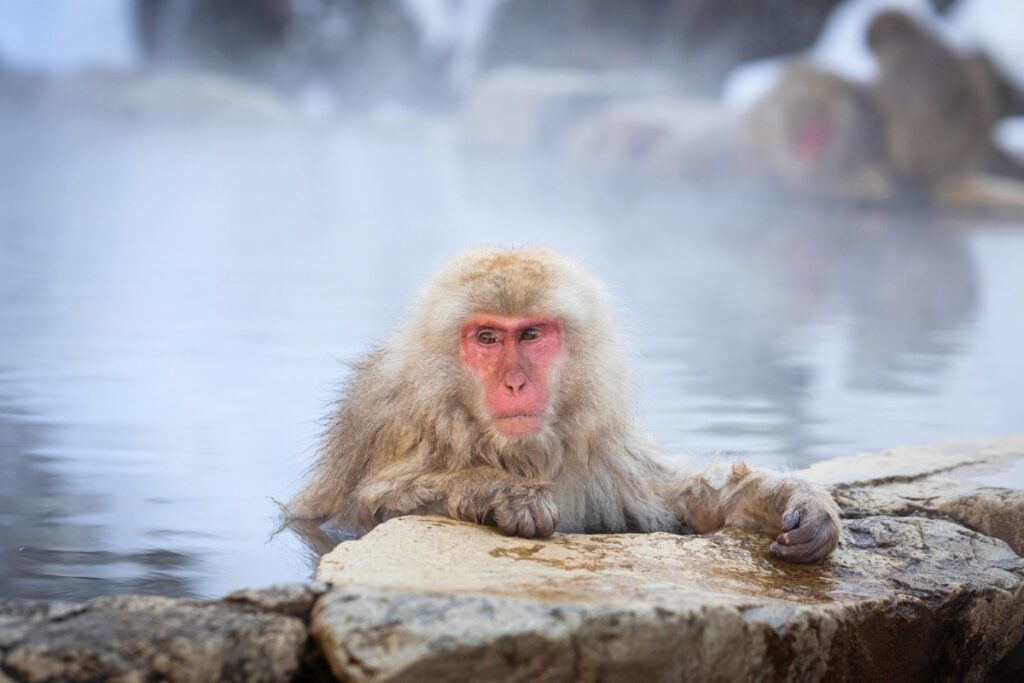
Last updated on September 17, 2026 by Krysti
There’s no question about it: Japan’s famous Snow Monkey Park is an unforgettable experience, but getting there from Tokyo – that takes some planning!
For years, I’d wanted to visit the Snow Monkey Park in Nagano, so when I finally got the chance to make the trip, I was incredibly excited.
And I must say, it did not disappoint!
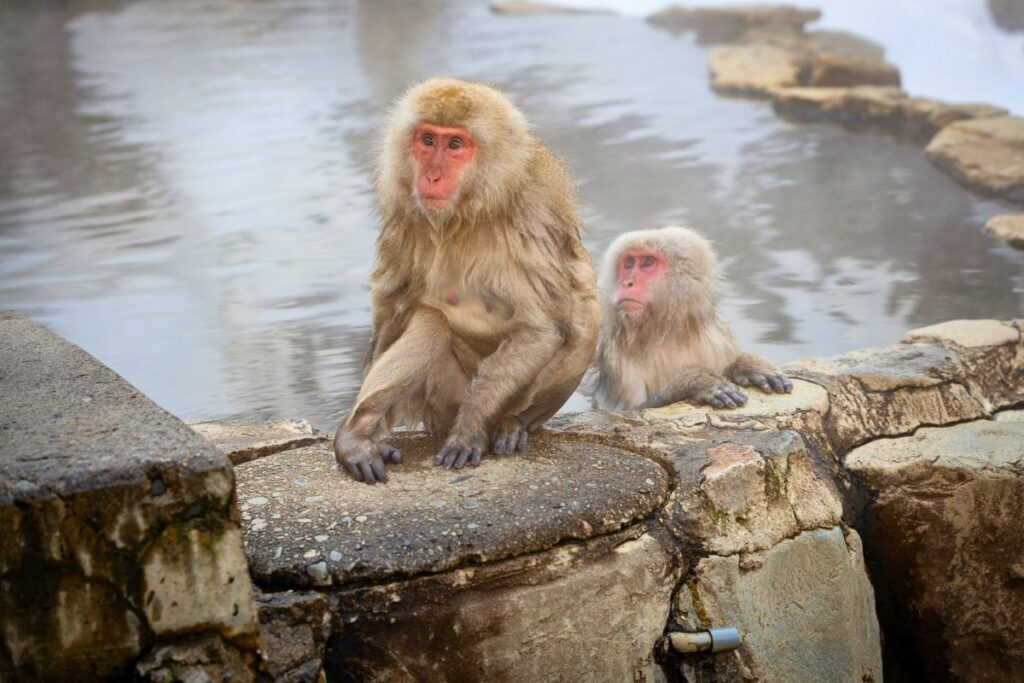
The monkeys were incredibly cute, and watching them run around, play, and lounge in their cozy onsens was such a unique experience!
Of course, seeing the snow monkeys is one thing, actually making the journey from Tokyo – that is another.
Unfortunately, the park isn’t the most centrally located attraction, so getting there does require some time and effort.
When I was planning my own trip (a day trip from Tokyo), I found there was quite a bit to consider.
From trains and buses to tours and rental cars, there are several ways to get there, and each option comes with its own pros and cons.
In the end, I opted to travel by train from Tokyo to Nagano and then took the local bus from there.
It was a long day, but it was completely doable – and seeing the snow monkeys in person made it well worth the effort.
In this guide, I’ll walk you through all the different ways you get from Tokyo to the Snow Monkey Park, so you know exactly what to expect.
Whether you’re looking for the fastest route, the most budget-friendly option, or prefer a more guided experience, this article will help you find the option that works best for you!
📢 2026 Update: In an attempt to combat overtourism, the Snow Monkey Park has implemented several major changes to its ticketing system, including a new online reservation system and capacity limits for in-person ticket sales. If you’re visiting independently, advance reservations are highly recommended, especially during the busy winter season.
*Please note: This post contains affiliate links to trusted partners. If you make a purchase using these links, I will earn a commission at no extra cost to you. Thank you for your support!
Planning a last minute trip to the Snow Monkey Park?
Here are a few quick recommendations for you!
I suggest booking these services and activities in advance!
🚅 Getting There:
– Bullet Train Tickets (Individual tickets & rail passes available)
👣 Activities & Tours:
– Snow Monkey Park Admissions Ticket (Advanced booking is highly recommended!)
– Guided Tours to the Snow Monkey Park (Depart from Tokyo or Nagano)
What Is Jigokudani Monkey Park?
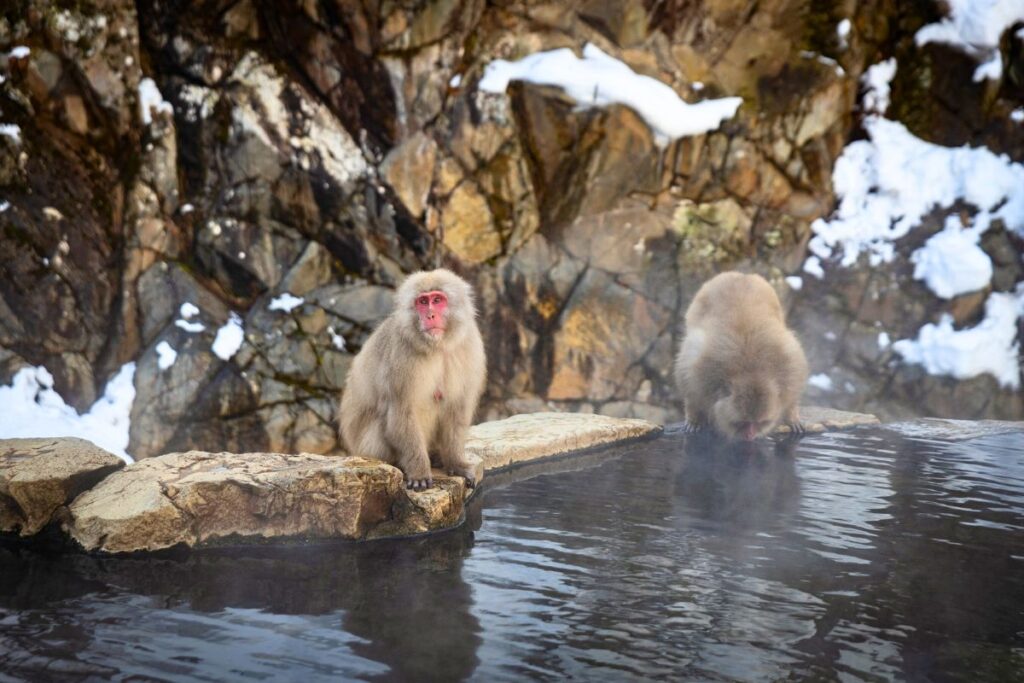
Tucked away in the mountains of Nagano, Japan’s Snow Monkey Park – officially known as Jigokudani Yaen-Koen – is one of the country’s most unique wildlife experiences.
Opened in 1964, the park is famous for its Japanese macaque monkeys, which have the unusual habit of soaking in hot springs.
The monkeys actually travel down from the nearby mountains on almost a daily basis, drawn in by the warmth of the onsens and the promise of free food.
It’s not exactly clear why the park was created in the first place – or at least I wasn’t able to find one definitive explanation.
There do, however, appear to be two common theories, and my guess is they both likely played a role to some extent.
The first theory suggests that the park was established to ease conflict between the monkeys and local farmers.
As ski resorts and other developments expanded into the mountains, the monkeys were pushed to lower altitudes, where they began raiding farms and destroying crops.
To reduce tensions, the Snow Monkey Park was created as a designated safe space for them to go.
This story is very similar to the one surrounding the Monkey Park in Beppu. So, it’s entirely possible that something similar happened in Nagano.
However, other sources suggest that the park was actually developed for research and observation purposes.
Japanese macaques are known for their complex social structures and unique behaviors. And, the monkeys at Jigokudani Park are especially fascinating due to their love of hot springs.
It’s said that researchers wanted an opportunity to study the monkeys in their natural habitat, and so the park was created to support those efforts.
Regardless of its origins, the Snow Monkey Park has become a beloved destination for locals and tourists alike.
🐒 Fun Fact: The monkeys of Jigokudani are the only monkeys in the world known to bathe in hot springs – a behavior they likely learned by watching humans!
Where Is Japan’s Snow Monkey Park Located?
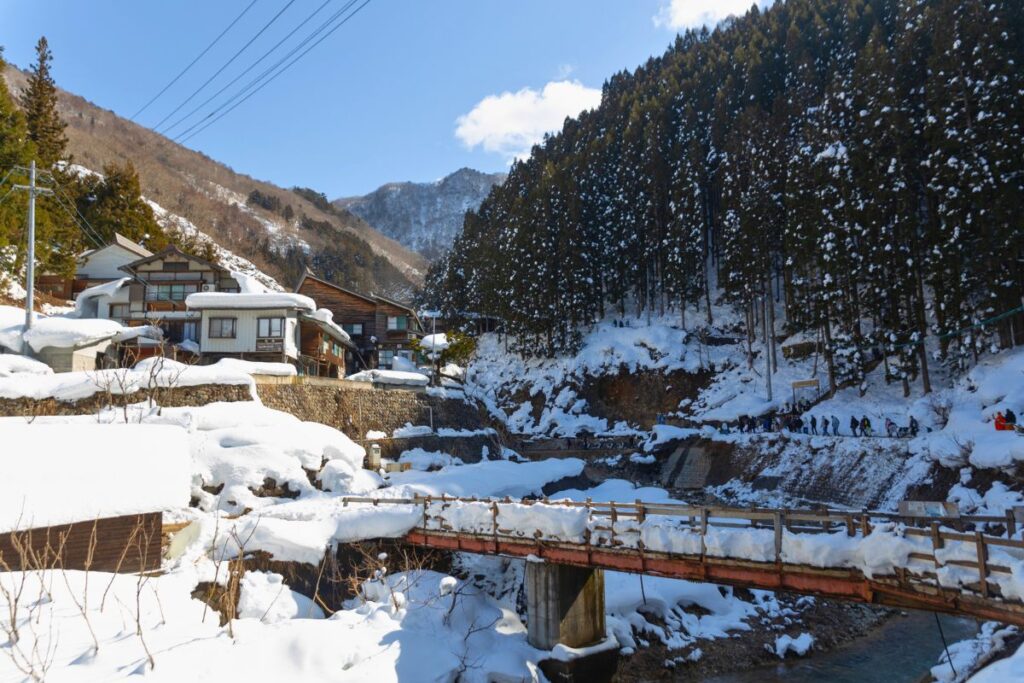
The Jigokudani Snow Monkey Park is located in Nagano Prefecture, in the northern town of Yamanouchi.
Nestled in the Japanese Alps, it lies within the Joshinetsu Kogen National Park – a vast and scenic wilderness known for its rugged mountains, lush forests, and abundant wildlife.
Despite the park’s remote setting, it’s still quite accessible from Nagano City and by extension, Tokyo.
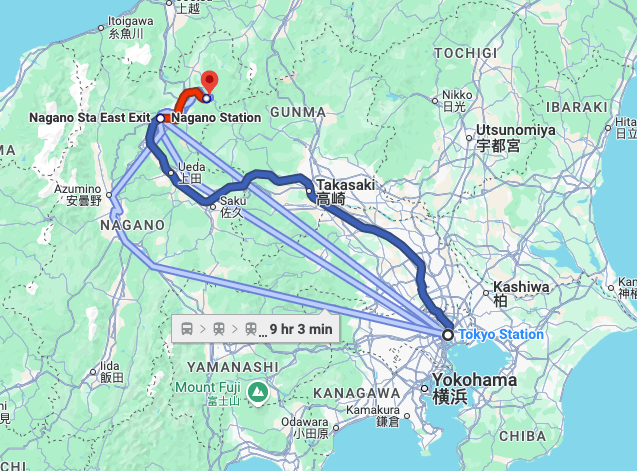
The park is situated about 38 kilometers from Nagano Station and 270 kilometers from Tokyo Station.
Map: Tokyo to the Snow Monkey Park
To help you get a sense of the area, I’ve included below a map that shows the distance from Tokyo to the Snow Monkey Park.
How to Get to the Snow Monkey Park from Tokyo
There are four main ways to travel from Tokyo to the Snow Monkey Park – by train, bus, guided tour, and car. For those short on time, I’ve put together a quick comparison of each:
- 🚄 Bullet Train: The fastest, but most expensive option. It takes about 1.5 hours to reach Nagano Station, where you’ll then need to transfer to a local bus. Total travel time is about 2.5-3 hours, and it costs about 22,000 yen round trip for the entire journey.
- 🚌 Highway Bus: The slowest, but most affordable option. It takes 4.5 hours to get to Nagano Station, where you’ll then need to transfer to a local bus. Total travel time is about 5.5-6 hours, and it costs about 10,000 yen round trip for the entire journey.
- 🗺️ Guided Tour: While prices and itineraries vary, the most popular tour lasts 12 hours and costs 22,000 yen per person.
- 🚗 Rental Car: Travel time is about 3.5 hours from Tokyo to the park. Rental prices vary, but typically range from 5,000-15,000 yen per day.
Below, you’ll also find a detailed breakdown of each option, so you can decide what works best for you and your itinerary!
Travel by Train
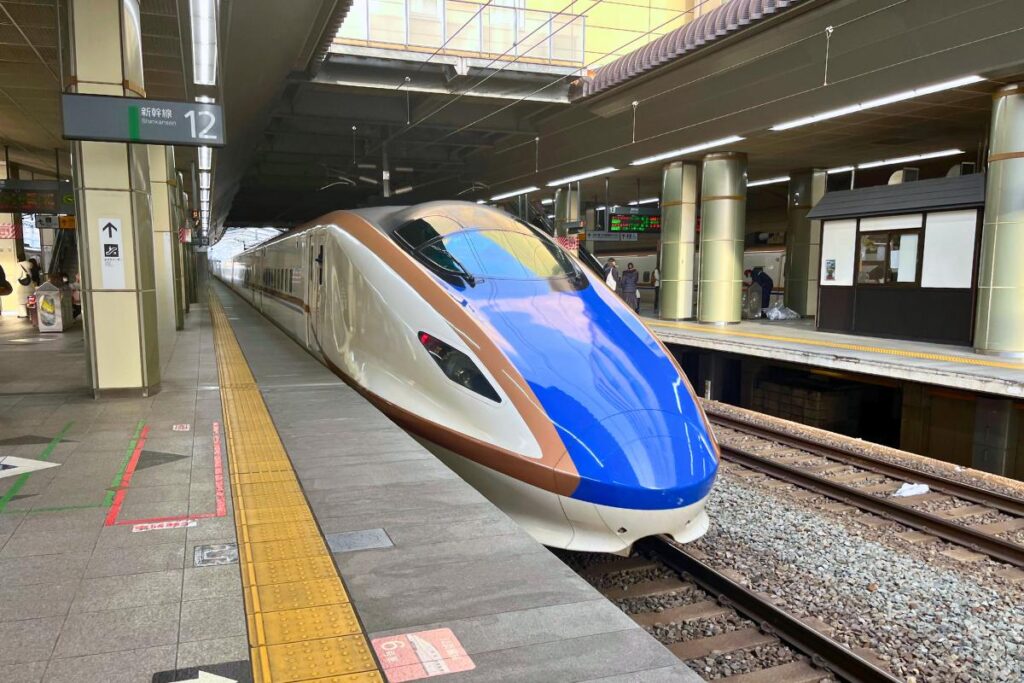
If you’d prefer to minimize your travel time, your best option is to take the Hokuriku Shinkansen (aka bullet train) from Tokyo to Nagano Station.
This train makes two stops within Tokyo – at Tokyo Station and Ueno Station – so you can board at whichever is most convenient for you.
Travel times to Nagano vary depending upon the specific train, but average about 1.5 hours.
Once you arrive at Nagano Station, you have two options to consider for the next and final leg of your journey:
- Nagaden Snow Monkey Express Bus – The fastest and most convenient option. It takes about 45 minutes in total, providing direct transportation to the park.
- Nagano Dentetsu Train – A slower but scenic option. The limited express option travels from Nagano Station to Yudanaka Station in about 45 minutes, while the local option takes about 70 minutes. Once there, you’ll need to transfer to the Kobayashi Bus Line for a 10-minute ride to the park.
I personally recommend taking the Snow Monkey Express Bus, as it’s the most direct and time-efficient option!
Info on Transit Tickets
Here’s a quick overview of where and how to purchase transit tickets for your trip!
Bullet Train:
🎟️ Tickets for the Hokuriku Shinkansen can be purchased online or at the train station.
✅ To secure your preferred train and seats, it’s best to book in advance.
💳 If you have a JR Pass, there’s no need to buy a separate ticket – this route is already covered.
Snow Monkey Express Bus:
🎟️ Tickets can be purchased at Nagano Station. They are available at a ticket machine inside the station or, during busy times, from a vendor near the bus stop.
📍 The bus stop is located near the east exit of Nagano Station, with plenty of signs to guide you.
⭐ During certain busy seasons, the park offers a 1-day Snow Monkey Pass that includes admissions as well as round-trip transportation on the Snow Monkey Express.
Nagano Dentetsu Train & Kobayashi Bus:
🎟️ Nagano Dentetsu Train tickets can be purchased at Nagano Station.
🏷️ Kobayashi Bus tickets are available at Yudanaka Station.
❌ Most IC cards (Suica, Pasmo, etc.) are not accepted, so it’s best to buy tickets as you go.
Travel by Bus
If budget is your main concern, then a highway bus is your best bet. Just keep in mind that it’s also the slowest.
In total, the journey from Tokyo to Nagano Station takes about 4-4.5 hours, then it’s another 45-minute ride minimum to reach the Snow Monkey Park.
As such, I only recommend this option if you plan to spend the night in Nagano. Visiting the park as a day trip by bus would make for a very long outing.
That said, most highway services to Nagano depart from the Shinjuku Expressway Bus Terminal, which is located right next to Shinjuku Station.
You can purchase tickets for this either online or at the bus terminal.
Once you arrive in Nagano (most buses will drop you at Nagano Station), you’ll need to transfer over to another line. There are two options for you to consider here:
- Nagaden Snow Monkey Express Bus – Provides direct transportation from Nagano Station to the Snow Monkey Park with travel times of about 45 minutes. This makes it the fastest and most convenient option.
- Nagano Dentetsu Train – A slower but more scenic option. The limited express option travels from Nagano Station to Yudanaka Station in about 45 minutes, while the local option takes about 70 minutes. Once there, you’ll need to transfer to the Kobayashi Bus Line for a 10-minute ride to the park.
I personally recommend taking the Snow Monkey Express Bus, as it’s the most efficient and convenient option!
As shared above, you can purchase tickets for the Snow Monkey Express Bus and Nagano Dentetsu Train upon arrival at Nagano Station.
Travel by Tour
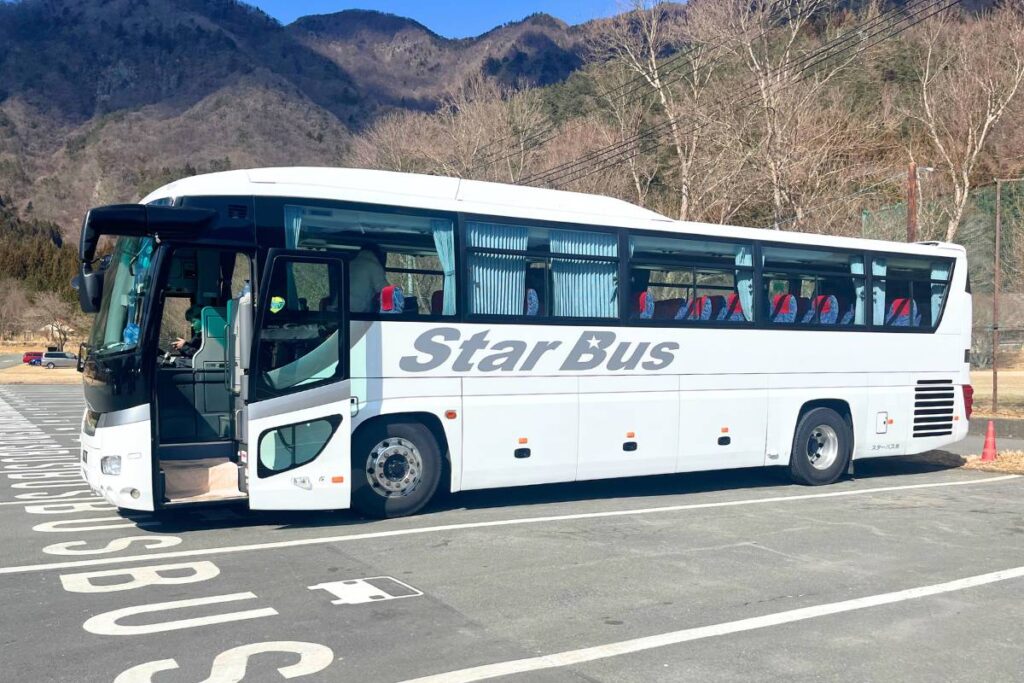
For those who prefer a more guided experience, there are Snow Monkey tours that depart from both Tokyo and Nagano.
In addition to transportation, they typically include admissions into the park, lunch, and sometimes an additional activity or destination – like a visit to the Kamakura snow huts.
That said, some tours are only offered during the winter months, so that’s something you’ll want to take into consideration.
If you do decide to join a guided tour, I highly recommend reserving your spot in advance, as they are known to sell out quickly!
Travel by Car
And last, but certainly not least, it’s possible to drive to Nagano if you’re comfortable renting a car and navigating Japan’s roads.
The drive from Tokyo to the park takes about 3.5 hours, so it’s definitely doable as a day trip.
However, I’d encourage you to hang around a bit longer and explore more of the area. You have the car, so you might as well make the most of it!
That being said, car rentals are readily available throughout Tokyo. So, you should have no problem securing a vehicle for your trip. Just be sure to book it in advance!
📢 2026 Update: In an attempt to combat traffic and congestion, the park has implemented seasonal parking bans – specifically during the winter months. From December through March, parking lots will be closed on weekends and during public holidays. If you’re visiting during this period, be sure to check the parking closure calendar for your dates and consider using public transportation instead.
Driving in Japan
Before you rent a car in Japan, make sure you look into the Japanese license requirements specific to your home country. Depending upon where you reside, you might need to obtain an International Driver’s Permit, a translated copy of your home country’s driver’s license, or, in some specific cases, a Japanese driver’s license.
For those traveling from the United States, Canada, Australia, Singapore, and most European countries, an International Driver’s Permit is required. You can obtain this from an authorized automobile association in your home country.
My Experience Traveling to the Snow Monkey Park
Now that we’ve covered the different ways to get to the Snow Monkey Park, I want to share a little bit about my own experience.
When I visited, I did it as a day trip from Tokyo, so my priority was to minimize my travel time as much as possible.
After much deliberation and research, I decided to take the Hokuriku Shinkansen from Tokyo to Nagano Station, where I then transferred to the Snow Monkey Express Bus.
Not only was this the fastest option, it also left me with the flexibility to explore at my own pace.
And for the most part, everything went pretty smoothly.
The bullet train was super easy to navigate – I purchased my tickets in advance, so I was able to just hop on the train and go.
The Snow Monkey Bus, meanwhile, was a little hectic at times, but still relatively straightforward once I figured it all out.
The biggest challenge, honestly, was the crowds.
I visited in February, which is peak travel time for Nagano, so there were really long lines at the ticketing office.
The office handles not just bus passes to the Snow Monkey Park, but to the local ski resorts as well, so it was a bit overwhelming.
Luckily, I found employees set up right in front of the bus stop selling tickets, so I was able to bypass the line.
This isn’t always the case, but apparently, it is something they tend to do for the Snow Monkey Express during the busy season.
As for the bus itself, it was almost full by the time I boarded, meaning I had to sit in an awkward middle seat.
So, I do recommend arriving at the bus stop early if you’re hoping to get a more comfortable seat – or if you’d like to sit with your travel companions.
That said, the return journey was thankfully a much better experience.
I was able to purchase my tickets right at the Snow Monkey bus stop – there was no line and I didn’t have to wait long for the bus, so that was a bonus!
From there, I made my way back to Nagano Station, spent a few hours exploring the city, and then hopped on the Shinkansen bound for Tokyo.
It was definitely a long day, but overall, I would say it’s worth it – seeing the snow monkeys in person was such a memorable experience!
Best Time to Visit Japan’s Snow Monkeys
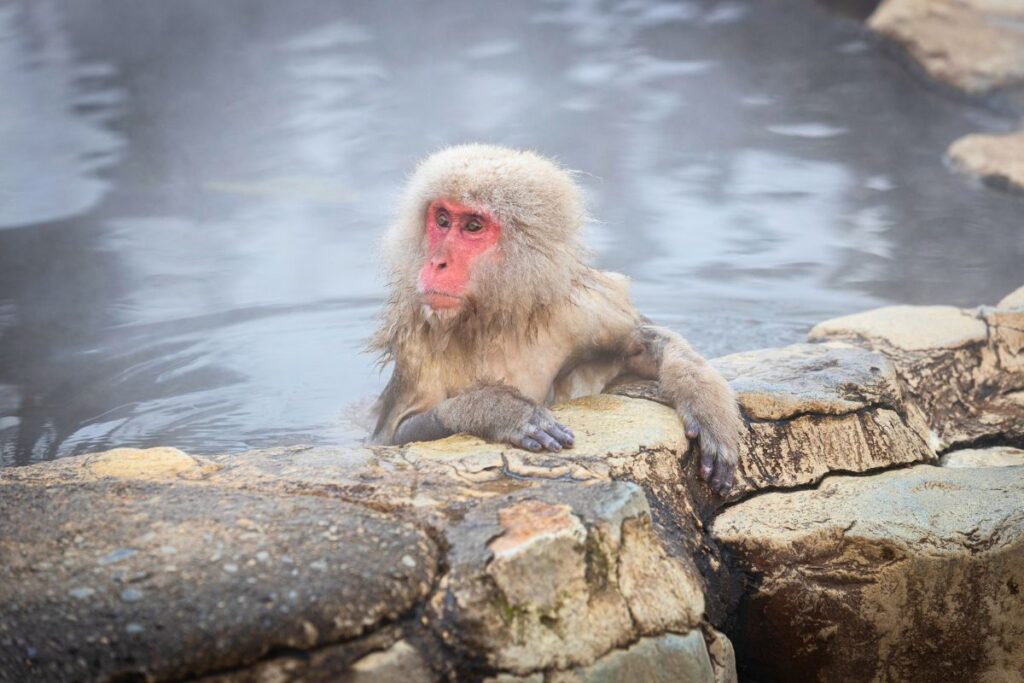
It goes without saying, but the best time to visit the Snow Monkey Park is during the winter!
This is when you’ll be able to observe the monkeys as they bathe in steaming onsens surrounded by snow – it’s truly a sight to behold!
Of course, winter is also the park’s busiest season, so you should expect larger crowds.
To avoid some of the rush, you can visit early in the morning or on a weekday – but you’re still likely to encounter other people.
If you wish to dodge the worst of the crowds, I recommend visiting the park another time. It is, afterall, open year-round and monkeys can be spotted in every season.
Summer, in particular, is a great alternative – especially if you’re hoping to catch a glimpse of baby monkeys. Those born in the spring are usually running around all over the park come summertime.
Just be sure to keep an eye on the weather and look out for rain – July and August are the rainiest months in Nagano.
Aside from this, you can visit the park in the spring or the fall. Just keep in mind that you may not see as many monkeys.
Spring is when the babies are born, so most mothers stay up in the mountains until their little ones are old enough to explore.
Meanwhile, fall is mating season and it’s also when the mountains are full of wild fruit and nuts – so the monkeys tend to be a bit more preoccupied around this time of year.
Admissions to the Snow Monkey Park
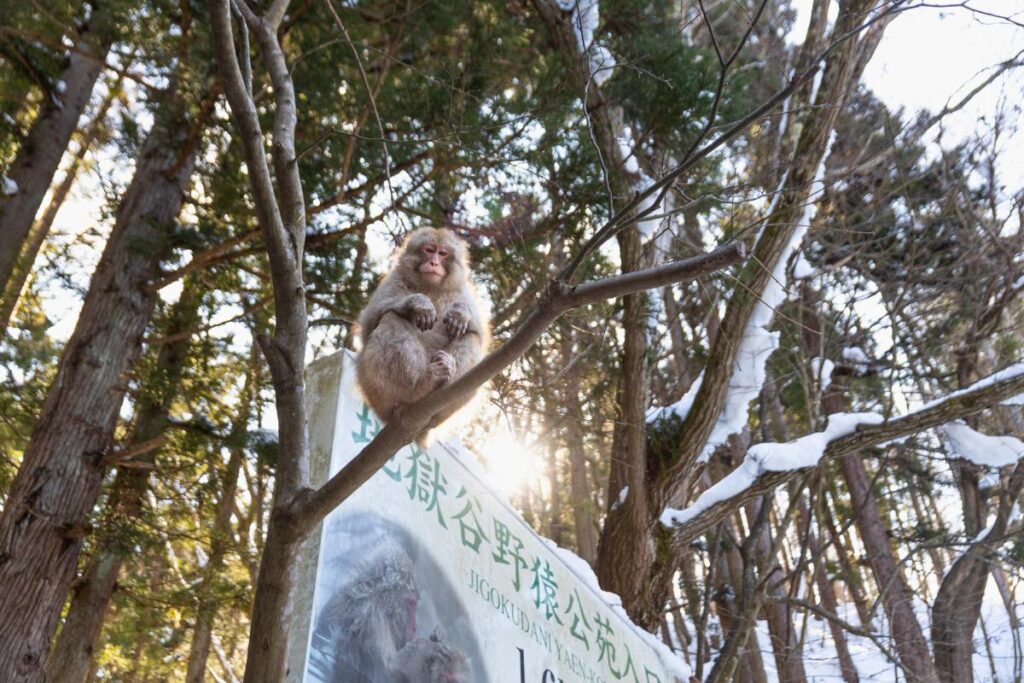
The Snow Monkey Park is open year-round, although operating hours do vary by season. They are as follows:
- November to March: 9:00 am – 4:00 pm
- April to October: 8:30 am – 5:00 pm
The cost of admission is currently set at 800 yen per adult and 400 yen per child.
As of August 2026, the park has introduced an online reservation system, with advance booking highly recommended.
Tickets are date-specific and can be purchased up to three months prior to your visit.
While it still may be possible to buy tickets upon arrival, same-day admission is not guaranteed. If the park reaches capacity, in-person ticket sales may be suspended.
This is particularly important to keep in mind if you’re visiting during the busy winter season, when the snow monkeys tend to attract more visitors.
💡Pro Tip: During busy periods, like in the winter, the park offers a combo Snow Monkey Pass that includes admission as well as round trip transfer on the Snow Monkey Express Bus.
Tips for Visiting the Japanese Snow Monkey Park
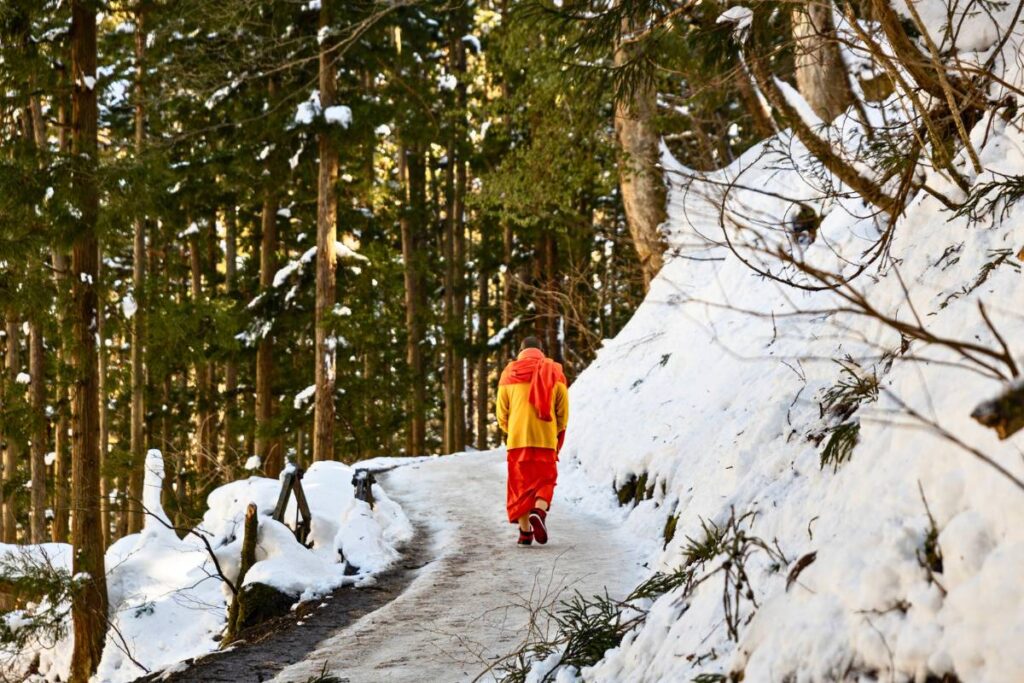
Before you head to the Snow Monkey Park in Nagano, there are a few things you’ll want to keep in mind and plan ahead for.
Arrive as Early as Possible
Although the Snow Monkey Park lies a bit off the beaten path, it’s still a popular destination – and can get quite crowded, especially during the winter.
To make the most of your visit, I highly recommend visiting the park as early as possible.
When I went, I arrived around 10:00 am and there was already a steady flow of visitors.
However, by the time I left around 12:30 pm, the crowds had more than doubled in size, and a long line had formed at the ticketing office.
So, trust me when I say – earlier is better! And this is coming from someone who is definitely not a morning person!!
Be Prepared to Hike
The park is tucked away deep within the mountains – so, you’ll actually need to hike a bit to get there.
The trail, which begins near the bus stop, is very scenic and beautiful. It’s also relatively flat and easy to navigate – although, there are a few steps here and there.
Most visitors should have no problem walking the trail. However, it does take about 30–40 minutes each way, so I recommend bringing along some water.
Also, be sure to keep an eye out – if you’re lucky, you may even spot a monkey or two along the way!
Dress for the Weather
Given that you’ll be hiking through the woods, it’s important to dress for the weather – especially when it comes to footwear.
In the winter months, the path can become quite slippery and/or muddy depending on the weather. So, I recommend wearing sturdy, waterproof shoes.
There’s also a small rental shop at the start of the trail where you can borrow shoe spikes and walking sticks, if you want.
In addition to this, winter temperatures can get quite cold. I visited in February and definitely felt the chill – even while hiking.
So, be sure to bring a warm winter coat and wear a hat and gloves to help keep yourself comfortable.
For those visiting in the summer, you should be fine with normal sneakers or hiking shoes and light layers.
You may also want to bring along an umbrella or raincoat. Summer is the rainy season for Japan, so it’s always a good idea to be prepared.
Manage Your Expectations
It’s important to remember that the monkeys here are wild – which means they are free to come and go as they please.
Given this, there’s no guarantee that you’ll see a lot of monkeys when you visit. And there’s no guarantee that they will use the hot springs while you’re there.
It really all just comes down to timing and luck.
Thankfully, I was pretty lucky – when I visited there were several monkeys running around the park, and a few were even soaking in the hot springs!
Just keep in mind that your experience may be different.
If you’d like to check on the monkeys before your visit, the park posts updates on their Facebook page or you can check their live feed camera.
Be Respectful of the Monkeys
Although the monkeys here are used to humans, they are still wild animals. So, it’s important to be respectful and keep your distance.
The park specifically asks all visitors to refrain from touching, reaching out, threatening, or startling the monkeys.
It’s also important that you avoid direct eye contact with them. In the animal kingdom, direct eye contact is seen as a threat, which can trigger defensive and aggressive behavior – even in monkeys.
Aside from this, please also refrain from feeding the monkeys or showing them food.
They are fed by park staff in small amounts to entice them down to the park. But the goal is to keep that at a minimum, so they don’t become too reliant on humans.
Take Note of the Bus Schedule
If you plan to travel by bus between Nagano and the Snow Monkey Park, it’s important to check the bus schedule ahead of time.
The buses run at specific times, and during the summer, there are fewer trips offered.
So be sure to plan accordingly. Otherwise, you may miss the bus or you may end up waiting around for a long time.
You can find the schedule for the Snow Monkey Express Bus online and posted at each of the bus stops.
🌟 Looking for more wildlife experiences? Be sure to also check out Nara & Miyajima Island – both of which are home to free-roaming Sika deer!
Other Things to Do in the Nagano Area
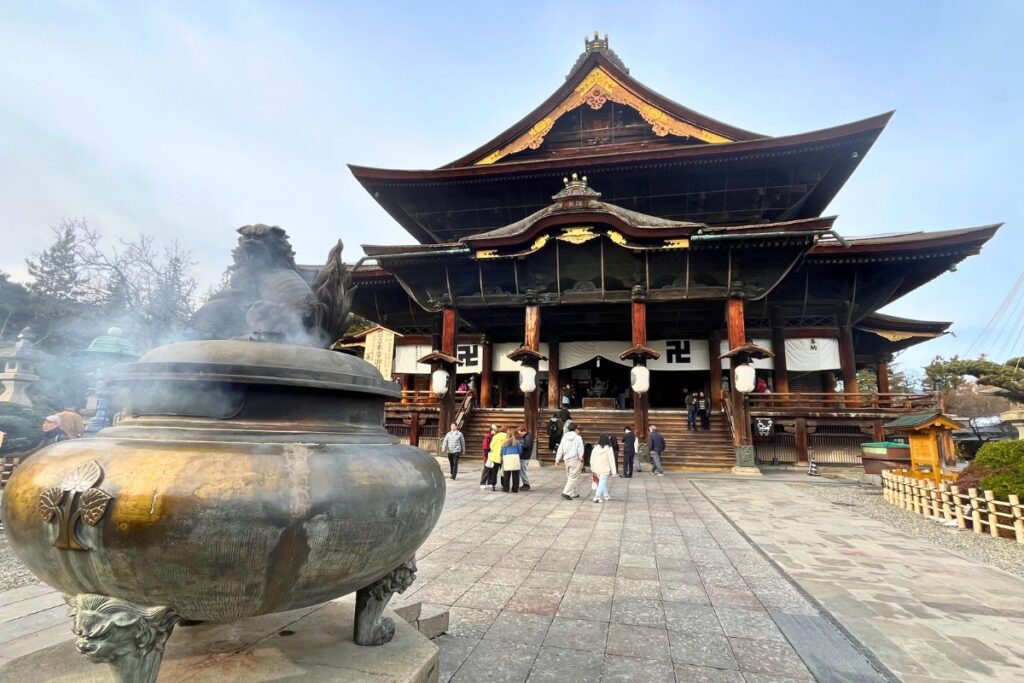
Since you’re already traveling all the way to the Snow Monkey Park, you might as well spend a little time exploring more of Nagano! While there’s a lot to do here, I’ve included a few of the most notable attractions below.
- Zenkoji Temple: Set within the city center, Zenkoji is a Buddhist temple that dates back to the 7th century. It is said to house Japan’s first-ever Buddha statue.
- Zenkōji Nakamise Street: Stretching down from Zenkoji Temple, Nakamise is a quaint shopping street home to a variety of local stores, restaurants, and cafes. It also happens to feature a number of traditional, historic buildings.
- Togakushi Shrine: Nestled in the mountains of Nagano, Togakushi is a Shinto shrine complex known for its stunning natural beauty. Here, you’ll find five separate shrines connected by a scenic hiking trail.
- Shiga Kogen: Situated within Joshinetsu Kogen National Park, Shiga Kogen is Japan’s largest combined ski area. Consisting of 12 separate ski resorts, the area is a popular spot for skiing, snowboarding, and hiking.
- Yudanaka & Shibu Onsen: Located near the Snow Monkey Park in the town of Yamanouchi, you’ll find two onsen towns – Yudanaka Onsen and Shibu Onsen. Both are known for their cozy vibes and relaxing hot springs.
Where to Stay in Nagano
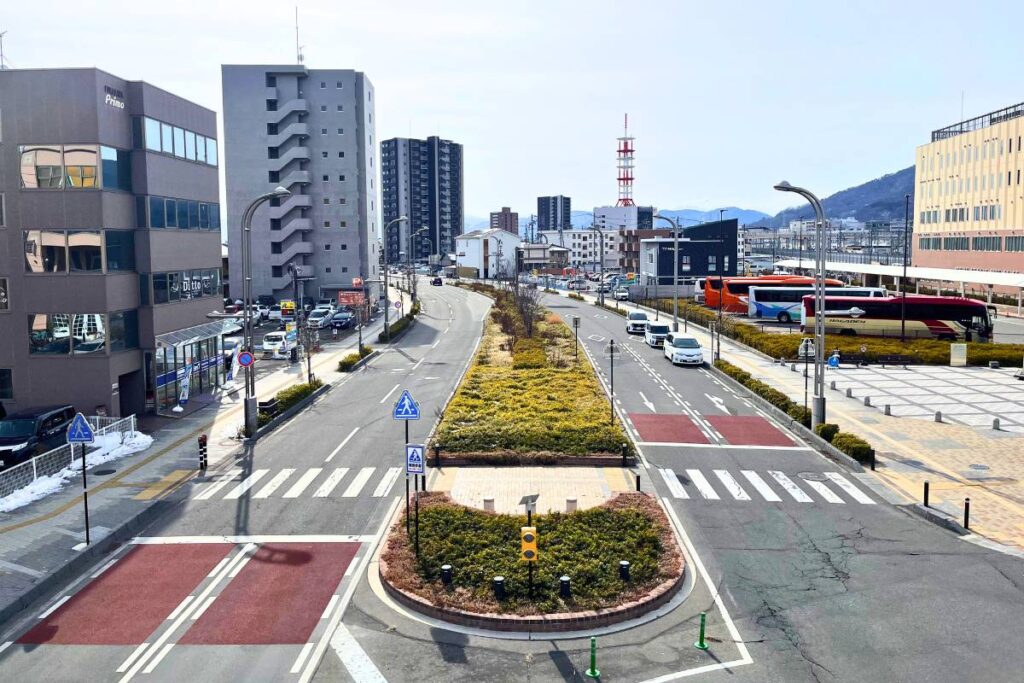
If you have extra time in your itinerary, it may be worth it to spend a night or two in Nagano. The Snow Monkey Park is quite far from Tokyo, so depending on your itinerary it might make sense to stay in the area and explore a bit more. There is, after all, quite a bit to do in the area. For those interested, I’ve included below some of the best places to stay in Nagano.
- Nagano Station: The area around Nagano Station is the best place to stay if you’re short on time. It provides easy access not just to public transportation, but also to a number of the city’s hotels, restaurants, and cafes.
- Yamanouchi: For those who’d prefer to stay closer to the Snow Monkey Park, there’s the town of Yamanouchi. As shared above, this is where you’ll find Nagano’s incredible onsen towns, including Yudanaka Onsen and Shibu Onsen.
- Shiga Kogen: If you’re interested in hitting the slopes, consider staying near Shiga Kogen. There are approximately 100 different hotels scattered around the area, so you’ll have plenty of options to choose from.
🌟 Planning to spend more time in Tokyo? Be sure to check out my 4-Day Tokyo Itinerary for ideas on what to see and do during your stay!
Frequently Asked Questions About Visiting the Jigokudani Snow Monkey Park

Here are my thoughts on some commonly asked questions about visiting the Japanese snow monkeys.
Is It Worth Visiting the Snow Monkeys in Japan?
Yes, I would say it’s definitely worth visiting the snow monkeys, at least once! They’re so cute, and watching them soak in the onsens is such a unique experience! Plus, it offers the opportunity to see a different side of Japan – one that many people don’t get to experience.
Can You Do a Day Trip from Tokyo to See the Snow Monkeys?
Yes, it’s completely possible to do a day trip to the Snow Monkey Park from Tokyo! In fact, that’s what I did – and I have to say, I thoroughly enjoyed myself! My two words of advice are: leave early and plan for a long day. The Snow Monkey Park is a long trek from Tokyo, so the earlier you leave the better. It’ll give you more time to see the monkeys and you may even be able to beat the crowds!
How Long Do You Need at Snow Monkey Park?
I would say most people spend about 2.5-3 hours at the Snow Monkey Park. This includes the hike in and the hike back out. However, it’s definitely possible to spend more time or even less time. It really just depends on your level of interest – and how many photos you want to take.
Is the Snow Monkey Park Suitable for Kids?
Yes! I saw plenty of kids when I visited, so it’s definitely a destination that families can enjoy. The trail to the park is relatively flat, so it should be fairly easy to navigate for most children. However, younger kids may find the 30–40 minute walk a bit challenging, particularly in winter when the trail can be snowy and icy. Once you enter the park, you’ll also want to keep an eye on your kids especially around the monkeys – they have been known to get very close to visitors.
Final Thoughts: Visiting Japan’s Snow Monkey Park from Tokyo
Visiting the Snow Monkey Park has definitely been one of the more memorable experiences I’ve had in Japan.
While getting there from Tokyo does take some planning, I found the journey to be completely manageable – even as a day trip.
For me, taking the Shinkansen to Nagano and then the Snow Monkey Express Bus was the best way to make the most of my time.
It was a long day, but the chance to see the snow monkeys up close made the journey well worth it.
That said, there’s no one right way to get there.
Whether you choose to take the train, hop on a highway bus, join a guided tour, or rent a car, there are plenty of options depending on your budget, schedule, and travel style.
Hopefully, this guide has given you a better idea of what to expect and helped make planning your own trip to the Snow Monkey Park a little easier!
Planning to visit Jigokudani Monkey Park from Tokyo? What are you most looking forward to? Let me know in the comments below!
Like this post about Japan’s Snow Monkey Park? Pin it now for later!

KRYSTI ATKINSON
Krysti is a travel writer currently based in Okinawa, Japan. Over the past 3+ years, she has explored Japan extensively while traveling throughout Asia – from iconic cities to quiet, off-the-beaten-path destinations. Through Wanderful Horizons, Krysti shares detailed itineraries, practical travel tips, and firsthand recommendations to help travelers plan unforgettable adventures.

This place just made it onto my bucket list; can’t wait to visit it someday! Thanks for this valuable information, will save it 🙂
You’re most welcome! I’m sure you’ll enjoy your visit – the monkeys are soooo cute!!