Last updated on May 8, 2026 by Krysti
Not sure how IC cards in Japan actually work? You’re not alone – I’ve definitely been there. The good news is: it’s not as complicated as it looks!
When I first visited Japan, I remember being genuinely confused about how to use IC cards.
Would they work on every train or only certain lines?
Did I need a separate ticket for some journeys – and if so, how on earth did I get one of those?
And, most importantly, why were there so many options, and which one was I supposed to choose?
Thankfully, Japan’s transport system looks much more intimidating than it really is.
And once you figure it all out, you’ll quickly realize that IC cards aren’t meant to confuse you; they’re actually designed to make travel easier.
In reality, they’re just rechargeable smart cards that use a simple tap-and-go system – which makes them incredibly convenient for trains, buses, and even small purchases.
With that in mind, let’s take a closer look at how IC cards work, where you can use them, and which one is right for you!
*Please note: This post contains affiliate links to trusted partners. If you make a purchase using these links, I will earn a commission at no extra cost to you. Thank you for your support!
What Are Japan’s IC Cards?
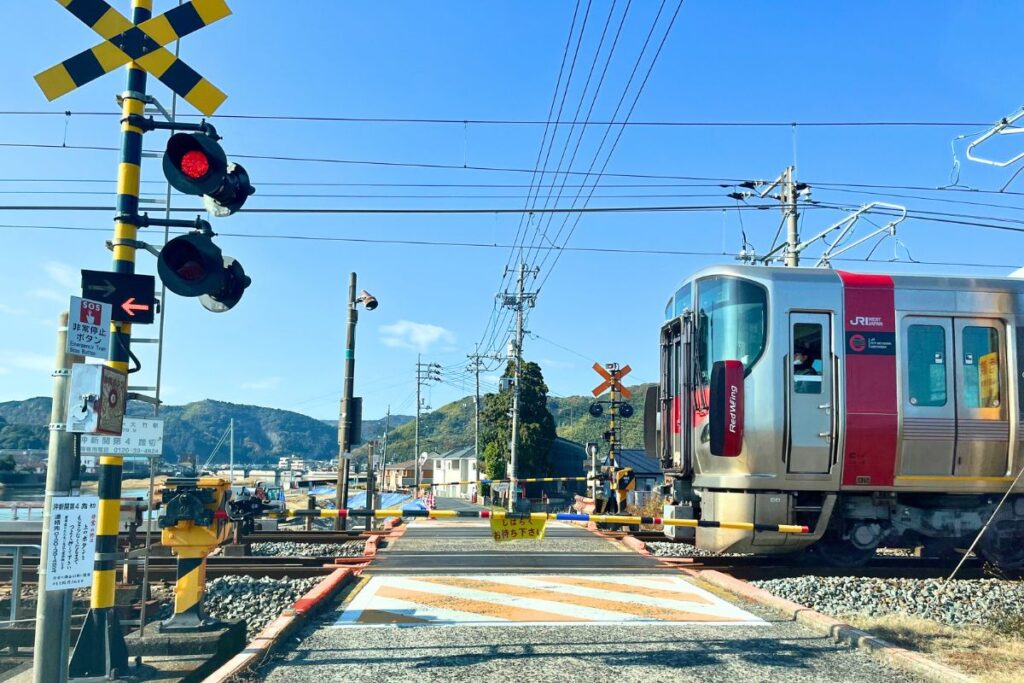
IC cards (short for integrated circuit cards) are rechargeable prepaid cards used across much of Japan’s public transport system.
Instead of buying a paper ticket every time you travel, you can simply load money onto the card and tap it as you enter and exit public transit.
The correct fare is automatically deducted for you, so you don’t need to worry about tracking your journey.
Beyond transport, IC Cards can also be used for small everyday purchases, like at vending machines, storage lockers, and convenience stores.
The Main IC Cards in Japan (Suica, Pasmo & ICOCA)
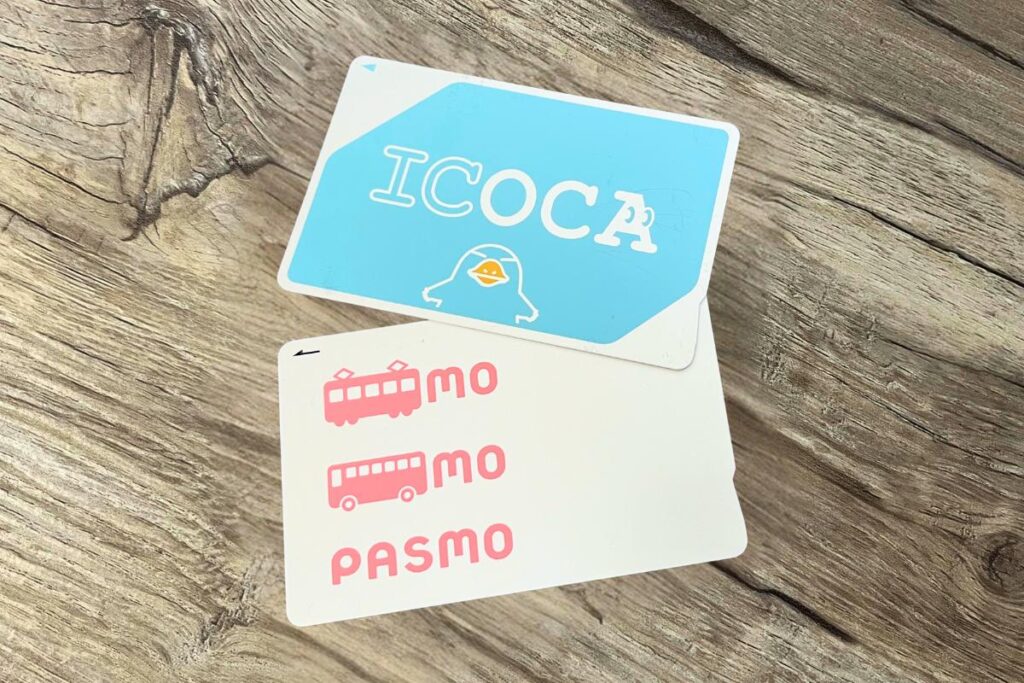
In Japan, IC cards are sold under a variety of different names, depending on where they are purchased.
While there are several, the most common ones you’ll come across are: Suica, Pasmo, and ICOCA.
All of these, regardless of name, function in the same way – they’re simply issued by different regional companies, hence the different names.
For your awareness, Suica and Pasmo are most commonly found in Tokyo and the surrounding areas.
Meanwhile, ICOCA is the main card for the Kansai region, including Osaka and Kyoto.
Which IC Card Should You Choose?
The great thing about Japan is that it doesn’t really matter which IC card you choose, because they’re all widely accepted across the country.
This means that a card purchased in Tokyo will also work in cities like Kyoto, Osaka, Fukuoka, and beyond.
The only thing to be aware of is the refund policy.
IC cards require a small deposit of ¥500, which can be refunded – but only in the same region where the card was originally issued.
Aside from this, there are no major differences between the various cards.
Where IC Cards Can (& Can’t) Be Used
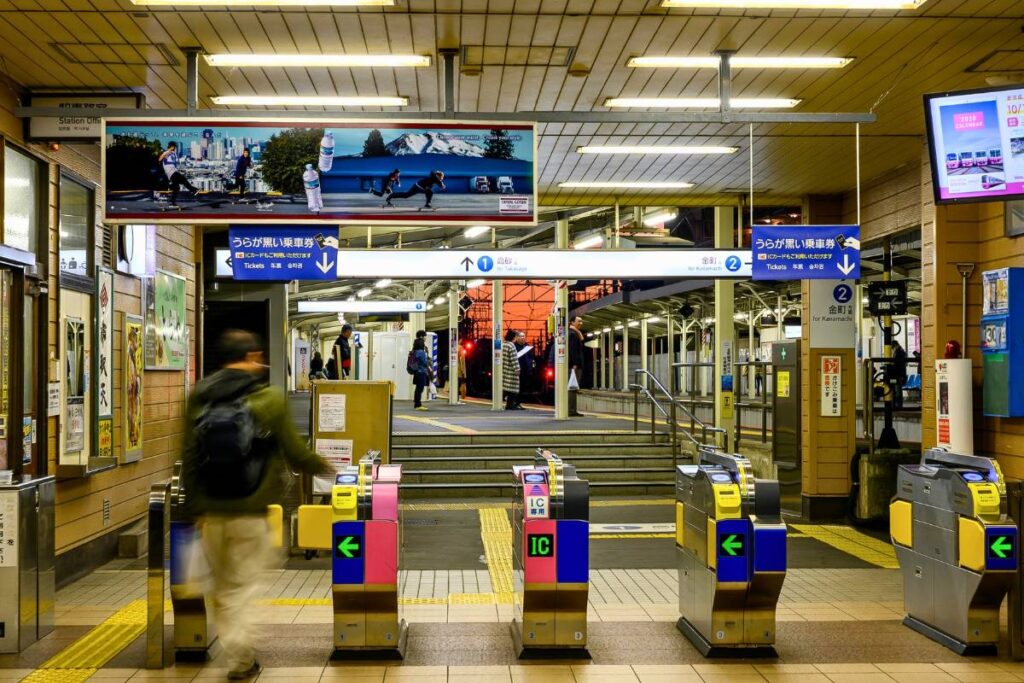
Photo of train station by MacroLingo LLC via Pexels.
The thing that makes IC cards so convenient is that they are widely accepted on most forms of public transportation across much of Japan.
Generally speaking, they can be used in major cities on the following types of transit:
- Local trains and subways
- Most city buses
- Trams in certain regions
- Select ferries
That said, there are a few limitations that you should be aware of:
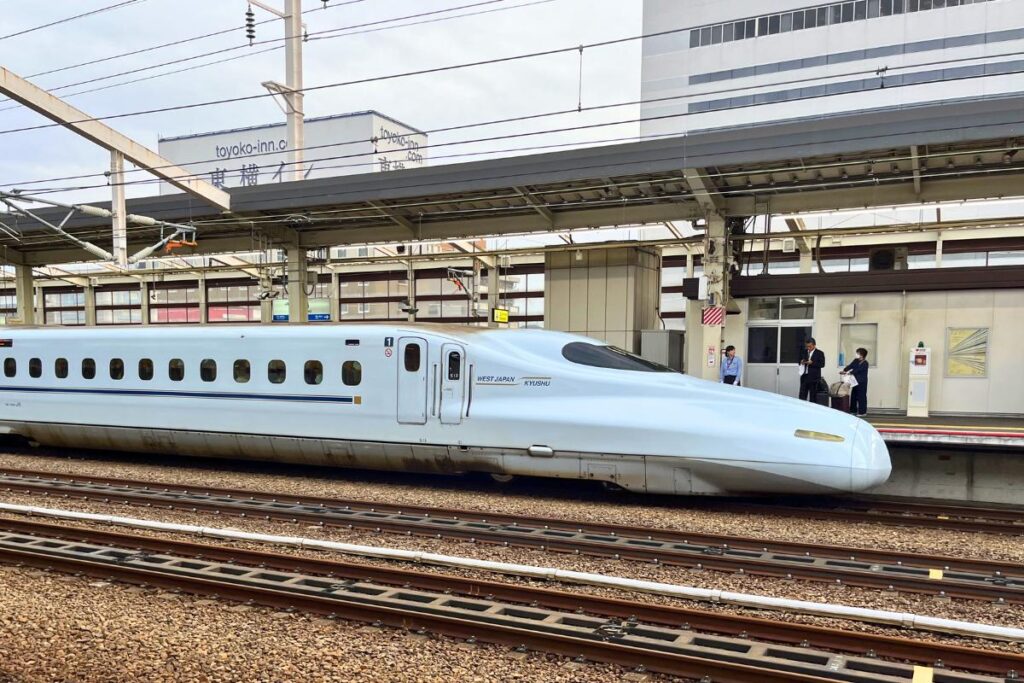
- You cannot use an IC card to board the Shinkansen (bullet train) unless you’ve separately purchased a Shin ticket and linked it to your card.
- Some rural lines (like those in more remote areas of Shikoku and Kyushu) may not accept IC cards.
- Certain private railways and buses do not accept IC cards.
- Highway buses generally do not accept IC cards.
- Long-distance routes, specifically limited-express trains, typically require a supplementary ticket that can be purchased from a kiosk at the train station.
In short: IC cards are great when traveling within cities, but aren’t designed to cover long-distance journeys.
How to Use an IC Card in Japan (Step-by-Step)
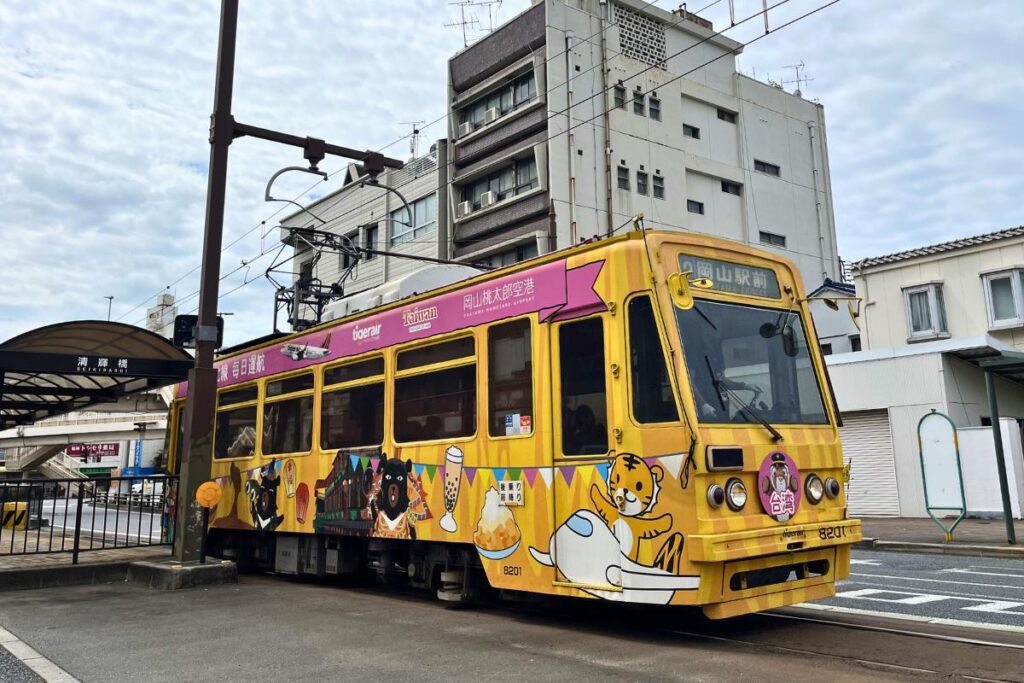
IC cards are quite easy to use as they work on a tap-and-go system.
In practice, it’s simply: tap in → travel → tap out.
You do this any time you enter and exit a station or board transport.
This allows the system to automatically calculate and deduct your fare based on the distance traveled.
Using IC Cards on Trains
For trains, you’ll need to tap your IC Card at the ticket gates when entering and again when exiting at your destination station.
Sometimes, when switching trains, you will need to tap out at the transfer station and tap back in at a different spot to board your connecting train.
While not common, this can happen from time to time depending on the specific route traveled and the setup of the train station.
Using IC Cards on Buses
Buses are known to work a bit differently from region to region.
However, in my experience, most require you to tap in when you board the bus and tap out when you depart.
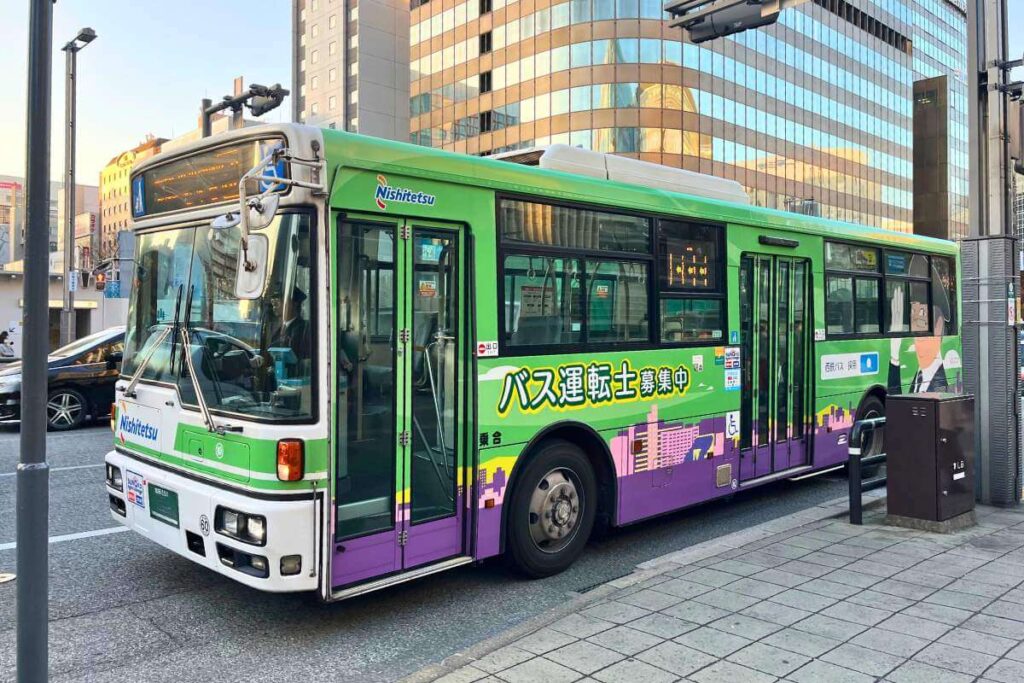
Many times, drivers will have you enter through the middle or side entrance, where you’ll tap in. And then you’ll exit through the front of the bus, where you’ll tap out.
In more tourist-friendly areas, the buses usually have signs indicating where to tap your card.
However, if you’re ever confused, simply observe the locals around you and follow their lead.
Using IC Cards on Trams
Trams work in the same way that buses do. You simply tap in when you board the tram and tap out when you exit.
Like buses, they also typically have passengers board in the middle/back entrance and exit via the front entrance.
While trams aren’t widely common across Japan, you will find them in some major cities, like Hiroshima and Nagasaki.
Using IC Cards on Ferries
Most ferries in Japan do not accept IC cards, but there is one popular exception to this – the ferry to Miyajima Island.
If you board at the Miyajimaguchi Ferry Terminal, you’ll be able to use your IC card.
You simply tap in before walking down the pier and tap out when you arrive on Miyajima Island.
On the return trip, you’ll do the exact same thing, but in reverse. Tap in on the island and tap out when you reach the mainland.
Just be aware, there are other ferry routes to Miyajima Island; however, IC cards are only accepted on those services departing from Miyajimaguchi Ferry Terminal.
🌟 Planning a visit to Miyajima? Check out my complete guide on how to get to Miyajiama Island, including a clear breakdown of the different ferry options.
Where to Buy IC Cards
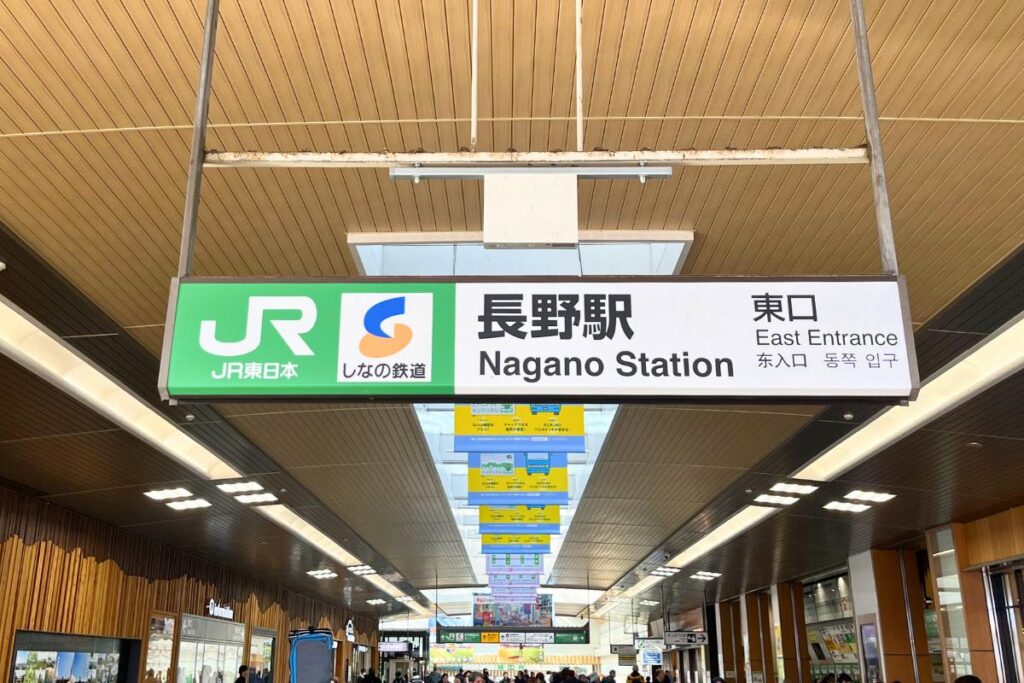
IC cards can be purchased upon arrival at most major airports and train stations – this includes Narita, Haneda, and Kansai International.
You can find them available at designated ticket machines and ticket counters.
You will typically need to pay an initial deposit of ¥500, plus whatever amount you choose to preload.
If you have an iPhone, it’s also possible to add an IC card directly to your Apple Wallet.
In this case, you’d simply tap your phone instead of a card when entering and exiting public transit.
Getting a Welcome Suica (Tokyo Only)
If you plan to fly into Tokyo, you also have the option to purchase a Welcome Suica card – a version of the Suica that is specifically designed for short-term visitors.
Unlike the regular Suica, this Welcome card doesn’t require a ¥500 deposit. But it is only valid for 28 days.
It can be purchased at the airport, ordered online in advance for pickup, or added digitally to your iPhone via the Welcome Suica Mobile app.
That said, availability can be inconsistent, as it tends to sell out often. So it’s best to think of it as a convenient option rather than something to rely on completely.
➡️ Flying into Tokyo? You can check availability and reserve the Welcome Suica here.
IC Card Refunds (What You Need to Know)
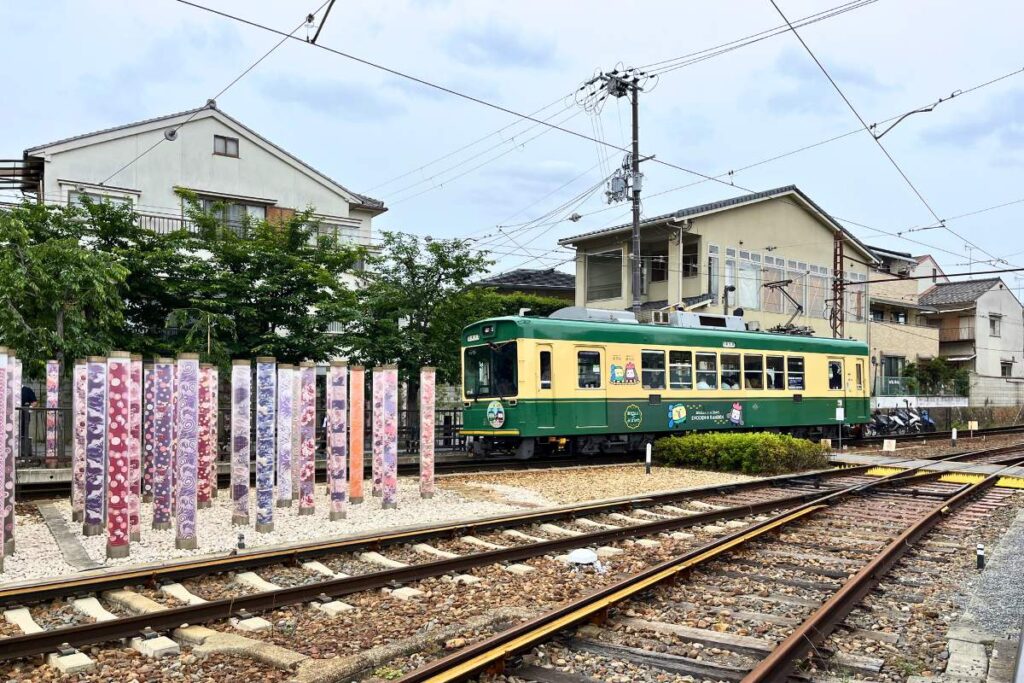
If you no longer need your IC card, you can return it for a refund at the end of your trip.
In most cases, you’ll need to bring it back to the issuing company from which you initially purchased it.
So, for example, if you have the Suica card, you’ll need to return it to a JR ticketing office in Tokyo – or you can return it at designated kiosks in Narita Airport.
Meanwhile, if you have Pasmo, you’ll need to return your card to a Tokyo Metro or private railway office.
And if you have an ICOCA card, you’ll need to return it to a JR West office in the Kansai region (Osaka/Kyoto).
You’ll be refunded your ¥500 deposit, as well as any unused funds left on the card. Just be aware that certain companies charge a ¥220 handling fee when issuing balance refunds.
One notable exception to all of this is the Welcome Suica, which is not refundable.
As for digital IC cards, refunds are typically only available if you have a Japanese bank account.
IC Cards vs Individual Tickets vs JR Pass
While IC cards are convenient and reliable, they’re not the only way to get around Japan.
Here’s how the main options compare:
- IC Cards: Your go-to for getting around within cities.
- Individual Tickets: Work well if you’re only taking a couple of trips.
- Japan Rail Pass: Best for travelers who plan to visit multiple cities in a short period of time, covers long-distance travel on the Shinkansen and local travel via JR trains only.
For most first-time visitors – especially those traveling the Golden Route (Tokyo-Kyoto-Osaka) – IC cards will usually cover the majority of your local transport needs.
🌟 Thinking about purchasing the Japan Rail Pass? Check out my full guide on the JR Pass to see if it’s actually worth it for your itinerary!
Common Mistakes to Avoid with IC Cards
While IC cards are pretty easy to use, there are a few common mistakes that you’ll want to be mindful of:
- Forgetting to Tap Out: If you forget to tap out when exiting public transit, your IC card will become locked, and you won’t be able to use it to start a new journey. If this happens, you will need to visit a ticket counter to get it fixed and have the proper amount deducted.
- Letting Your Balance Run Out: If your balance runs out mid-journey, you will need to top up your card before you can exit. If you’re in a train station, there are kiosks located near the gates that you can use. If you’re on a bus or a tram, the driver will likely ask you to pay in cash.
- Failing to Buy a Ticket for the Limited Express Train: If you forget to buy a supplementary ticket before boarding a Limited Express train, you will be asked to purchase one on the train. Conductors do come around to check this. Generally speaking, they only take cash or IC cards as forms of payment on the train.
- Leaving a Large Balance on Your IC Card: Don’t waste your money and leave Japan with a large balance left on your card! If you have funds leftover, you can use them to buy last-minute snacks from a convenience store – or you can return your card to the issuer’s ticketing office and ask for a refund.
- Buying More Than One IC Card: Unless you’d like to collect IC cards as a sort of souvenir, there’s no need to have more than one. All IC cards are widely accepted across Japan, so you only need one for your entire trip.
Frequently Asked Questions About IC Cards in Japan
Below, you’ll find answers to some of the most commonly asked questions about IC cards.
How Do You Top Up an IC Card?
The easiest way to top up your IC card is via kiosk machines, which can be found at most train stations. They’re usually located near the ticketing gate. It’s also possible to top up your IC card at convenience stores. In certain locations, you can do this through their ATM machines, otherwise just ask the clerk, and they’ll assist you at the cash register.
How Do You Check the Balance on an IC Card?
Every time you tap your card (whether entering or exiting public transit), your balance will be displayed on the card reader screen. You can also check your balance at the IC kiosk machines located at most train stations.
Can Two People Share One IC Card?
No, two people cannot share a single IC card. The way that it is set up, cards can only be used once per journey, meaning they can’t be tapped in multiple times for multiple passengers. Every single traveler must have their own IC card.
Do IC Cards Expire?
Yes, IC cards do expire – but not until 10 years after their last use. This means that if you plan to visit Japan again before that 10-year mark, you can keep your IC card and use it upon your return.
Can You Use a Credit Card Instead of an IC Card?
It is possible to use a credit card in place of an IC card, but it’s not something I’d recommend – at least not yet. This is still a relatively new option that hasn’t been widely rolled out. As of 2026, credit card payments are only supported on a limited number of routes in select cities. In most cases, it would be quite difficult to rely solely on your credit card when traveling around Japan.
Final Thoughts: Using IC Cards in Japan
Once you understand how IC cards work, getting around Japan becomes significantly easier.
They take away the stress of buying tickets and simplify day-to-day travel, making them an incredibly helpful tool – especially for first-time visitors.
If you’re planning a trip to Japan, I highly recommend picking one up. It’s a simple, affordable upgrade that makes getting around much smoother.
Still have questions about IC cards? Drop them in the comment section below, and I’ll help you figure it out!
Found this guide to IC cards in Japan helpful? Pin it now so you can reference it later!

KRYSTI ATKINSON
Krysti is a travel writer currently based in Okinawa, Japan. Over the past 3+ years, she has explored Japan extensively while traveling throughout Asia – from iconic cities to quiet, off-the-beaten-path destinations. Through Wanderful Horizons, Krysti shares detailed itineraries, practical travel tips, and firsthand recommendations to help travelers plan unforgettable adventures.