Last updated on May 13, 2026 by Krysti
Thinking about getting the Japan Rail Pass (aka JR Pass)? Be aware – the value isn’t what it used to be.
There was once a time when the JR Pass was an easy win, a simple way to save money while traveling around Japan.
For a fixed, reasonable price, it gave travelers unlimited access to most JR-operated trains across Japan, including the Shinkansen (or high-speed bullet train).
However, in October 2023, a steep price increase of nearly 70% was introduced – which significantly impacted its value.
Based on recent rates, it’s clear that while the pass can still make sense in certain cases, it’s no longer the best option for most travelers.
In many situations, you’d need to visit multiple destinations over a very short period of time just to break-even.
And for most visitors, especially first-time visitors, that type of fast-paced travel isn’t necessary – and would likely feel overwhelming.
That’s why it’s so important to look at the actual numbers before making any purchases, to determine whether or not the Japan Rail Pass is worth it for your specific itinerary.
In the guide below, I’ll help you break down the 2026 costs of the JR Pass and explore a few alternatives – so you can make the decision that works best for your trip.
📝 Side Note: In this guide, the Japan Rail Pass (JR Pass), refers specifically to the National Japan Rail Pass, which covers travel across the entire country. Regional JR passes are also available and will be covered in more detail later on.
*Please note: This post contains affiliate links to trusted partners. If you make a purchase using these links, I will earn a commission at no extra cost to you. Thank you for your support!
Why the Japan Rail Pass (Usually) Isn’t Worth It in 2026

While the JR Pass may sound like a great deal on paper, when you sit down and actually do the math, it doesn’t always work out in your favor.
The thing is, the pass is sold in fixed durations – 7, 14, or 21 consecutive days, and the more days you add on, the higher it gets in price.
To get your money’s worth, you typically need to complete multiple long-distance trips in a short period of time.
In practice, that usually means a fast-paced, multi-city itinerary with long travel days – which can feel rushed and exhausting for many travelers.
If you plan to stick to one region, prefer to travel at a slower pace, or want to follow the classic “Golden Route” (Tokyo-Kyoto-Osaka), the JR Pass usually isn’t the most cost-effective option anymore.
Japan Rail Pass Price Breakdown (2026)
That said, it helps to understand the baseline costs and available options before you make a decision. Here’s a quick breakdown of the 2026 prices for the Japan Rail Pass:
🚄 7-Day Pass
🚄 14-Day Pass
🚄 21-Day Pass
As you review these prices, there are a few key things to keep in mind:
- 💺 Green Cars: In Japan, Green cars are the equivalent of first class, with larger seats, extra legroom, and quieter environments. For most travelers, standard cars are already very comfortable, so it isn’t usually necessary to upgrade unless you specifically value the extra space.
- 📅 Consecutive-Day Usage: The JR Pass must be used on consecutive days, which can limit flexibility if you don’t plan to travel long distances every day.
- 👶 Child Pricing: For the purposes of the JR Pass, child pricing applies to anyone between the ages of 6 and 11 years old. Smaller children under 6 travel for free, while children 12 years and older are considered to be adults.
- 🚫 Coverage Limitations: The JR Pass only covers Japan Railway (JR) lines. It does not include many subways, metro lines, or private railways within cities, so you’ll still need to pay for local transport in most cases.
- 💸 Additional Surcharges: Some trains – such as the Nozomi and Mizuho Shinkansen – require an additional supplement fee even with a JR Pass. It is possible to avoid these trains, but you’ll likely need to take a slightly slower alternative to do so.
- 🎟️ Seat Reservations: Seat reservations for most bullet trains are included at no extra cost. While not required (there are non-reserved cars available), I do highly recommend reserving your seats ahead of time – especially during peak travel seasons.
- 🧳 Oversized Luggage Rules: If you’re traveling with large suitcases, you’ll need to reserve specific seats with dedicated luggage space available. Without this, you may be asked to move or you may be required to pay an additional fee.
- ⏱️ Activation Timing: The pass is activated on the date you first use it, not the date it is received. So you can plan your start date to maximize value.
📝 Side Note: Prices for the JR Pass are expected to increase again on October 1, 2026. This change applies specifically to passes purchased through authorized sellers. So, be sure to double check rates before making any purchases.
Putting the Costs Into Context
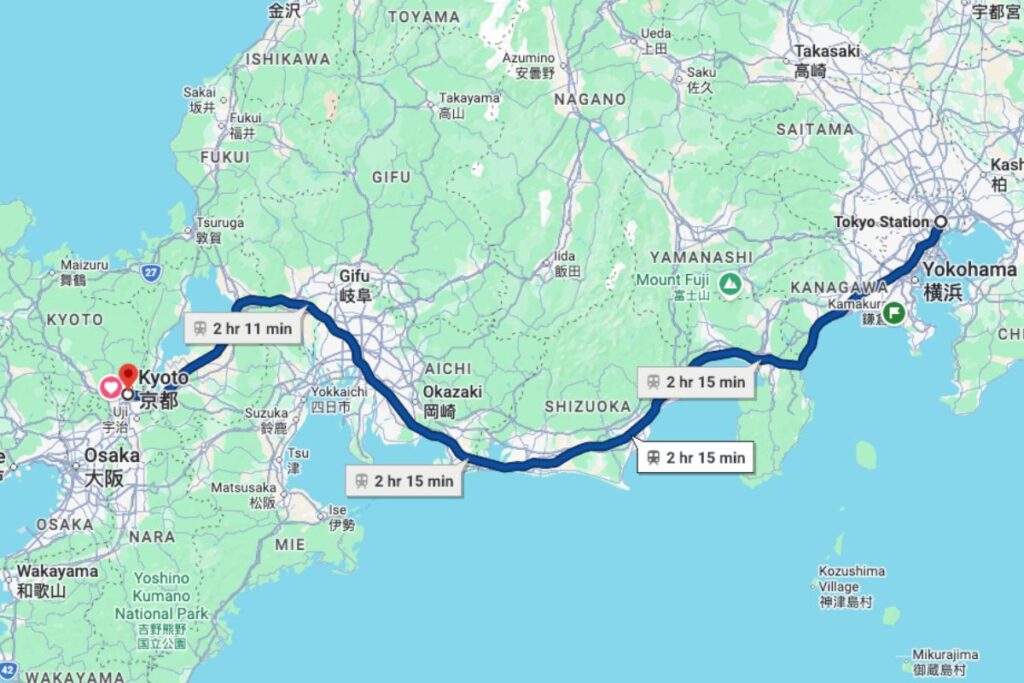
Now let’s look at how those numbers play out in real travel scenarios.
A one-way ticket between Tokyo and Kyoto on the Tokaido Shinkansen typically costs around ¥14,000, while a round-trip ticket comes to roughly ¥28,000.
Compare that to the price of a 7-day JR Pass (¥50,000), and the gap becomes clear.
Even with round trip travel between two major cities, you’re still only covering about half the cost of the pass.
To break even, you’d need to add multiple long-distance trips within that same 7-day window – which often leads to, again, rushed itineraries.
This is why the JR Pass, as we know it today, works best for travelers planning non-stop, multi-city journeys rather than more relaxed trips with only a few major destinations.
When the JR Pass Is (And Isn’t) Worth It
To make things clearer, here’s how the pass typically performs across common travel routes in Japan:
🏯 Golden Route (Tokyo-Kyoto-Osaka)
❌ Usually not worth it
Even with multiple long-distance trips, it’s typically cheaper to purchase individual Shinkansen tickets instead of the nationwide JR Pass.
🗼 Tokyo + Day Trips
❌ Usually not worth it
Most journeys are relatively short, making IC cards, local trains, and occasional regional passes the more affordable option.
⛩️ Kansai Region (Kyoto-Osaka-Nara)
❌ Usually not worth it
Cities in Kansai are located close together, so local transport and regional rail passes are often cheaper and more convenient.
🗾 3+ Regions (Tokyo-Kansai-Kyushu)
⚖️ It depends
The JR Pass may be worthwhile if you’re traveling across multiple regions within a short timeframe. Otherwise, individual tickets or regional passes are often more cost-effective.
If you’re unsure how your own itinerary fits into this, the easiest way to check and compare prices is by using a JR Pass Calculator.
Simply enter your destinations, and it will let you know if the Japan Rail Pass (or another regional pass) is worth it for your trip.
Best Alternatives to the JR Pass
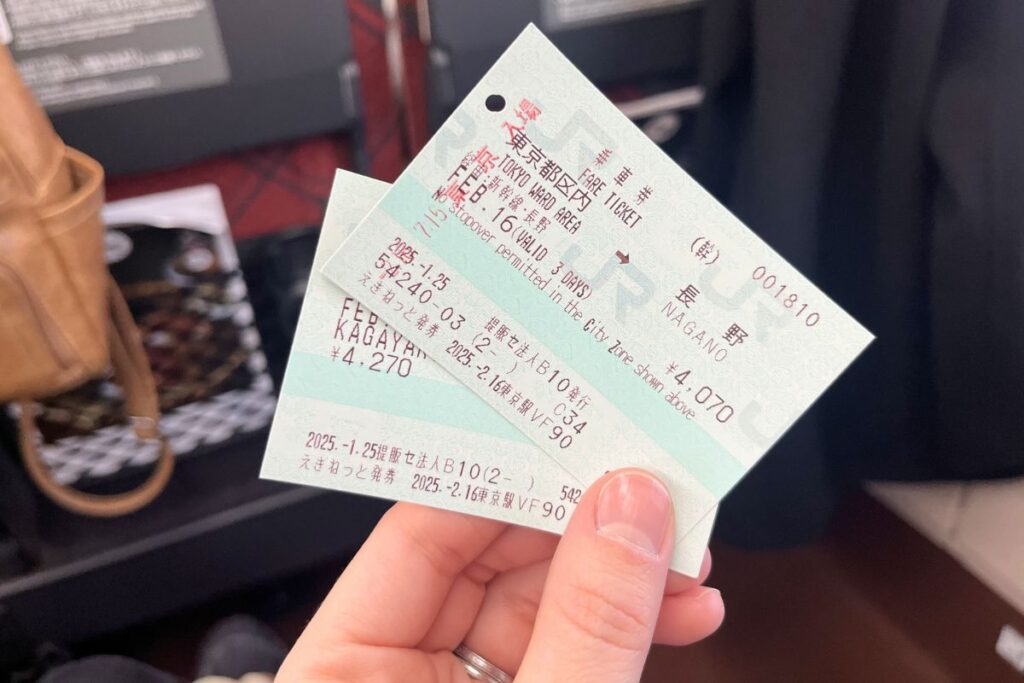
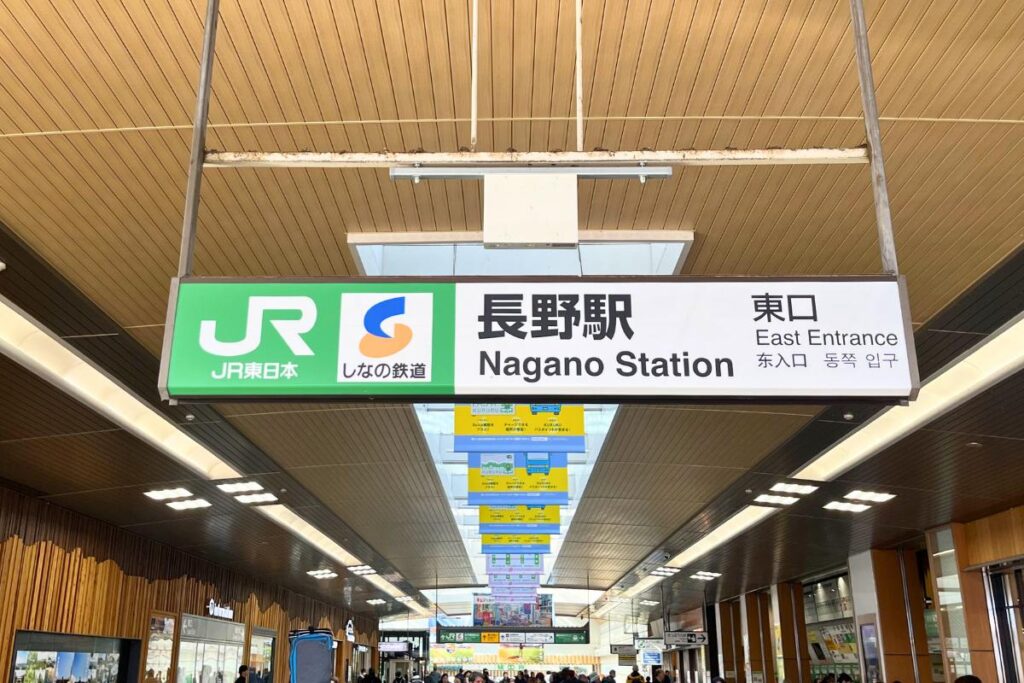
Individual shin tickets from Tokyo to Nagano.
If you decide that the Japan Rail Pass isn’t ideal for your trip, don’t worry – you’re not out of options.
There are actually several alternatives that can offer better value while still giving you plenty of flexibility.
Here are some of the most popular options to consider:
Individual Shinkansen Tickets
In many instances, it’s simply cheaper and easier to purchase your tickets for the bullet train individually.
This option works particularly well if you’re following a slower itinerary, focusing on one or two regions, or don’t plan to travel between cities every day.
Because tickets are paid per journey, you only spend money on the routes you actually take, which is typically more affordable than buying a pass.
If you want to compare routes and prices for Shinkansen tickets, you can do so via Klook, the official SmartEx app (limited to select routes), or upon arrival at the train station.
That said, I do recommend booking your tickets in advance, especially during busy periods like cherry blossom season, as popular routes tend to sell out.
➡️ Planning to explore multiple cities in Japan? You can check Shinkansen routes, prices, and availability here.
Regional JR Passes
Regional passes are another alternative to the JR Pass, available in specific areas of Japan.
While many of these passes have also seen price increases in recent years, they can still offer great value – provided you’re doing a fair amount of travel within the same region.
Below are some of the most popular regional rail passes to consider:
- 🗼 JR Tokyo Wide Pass: Available as a 3-day ticket, the Tokyo Wide Pass covers the greater Tokyo area. It includes destinations such as Nikko, Yokohama, Kamakura, and Kawaguchiko. This makes it a great option if you plan to take several day trips outside of the city.
- 🏯 JR Hokuriku Arch Pass: Sold as a 7-day pass, the Hokuriku Arch Pass covers travel between Tokyo, Kyoto, and Osaka, via Kanazawa. This is an ideal choice if you’d like to travel Japan’s classic Golden Route while also exploring the Hokuriku Region.
- ⛩️ JR West Kansai Area Pass: Available as a 1, 2, 3, 4, or 5-day ticket, the Kansai Area Pass covers the major highlights of Kansai. This includes destinations such as Kyoto, Osaka, Nara, and Kobe. There is also the Kansai Wide Area Pass, which expands coverage to destinations such as Okayama, Takamatsu, and Tottori.
- 🌸 JR Kansai Hiroshima Area Pass: Offered as a 5-day ticket, the Kansai Hiroshima Area Pass covers key destinations in Kansai. This includes Kyoto, Osaka, and Nara, as well as Hiroshima and Miyajima. This is a good option if you’re combining Kansai with a trip to Hiroshima.
- 🌋 JR Kyushu Rail Pass: Sold as a 3, 5, or 7-day pass, the Kyushu Rail Pass is divided into three options: the Northern Kyushu Pass, the Southern Kyushu Pass, and the Full Kyushu Pass. Major destinations across Kyushu are included such as Fukuoka, Beppu, and Kagoshima, making it ideal for exploring the island in depth.
- ❄️ JR Hokkaido Rail Pass: Available as a 4, 5, 7, or 10-day ticket, the Hokkaido Rail Pass is also divided into three options: the Sapporo-Furano Pass, the Sapporo-Noboribetsu Pass, and the Full Hokkaido Rail Pass. Popular destinations included with this pass are Sapporo, Hakodate, Otaru, and Abashiri, making it a great option for exploring the region’s highlights.
If you’d like to know whether any of these regional passes are worth it for your itinerary, you can check them out in the Japan Rail Pass calculator.
You can also browse the full list of regional passes on Klook. They actually offer a feature where you can input your intended destinations, and it will show you which passes are valid for your specific route.
📝 Please Note: Coverage can vary between different regional passes, so it’s important to carefully review all of the fine print and details before booking. Not all passes include Shinkansen services or full regional coverage.
IC Cards & Local Trains
When navigating within Japan’s cities, IC Cards such as Suica and ICOCA are generally the best option.
These prepaid transit cards can be used on most local trains, subways, and buses in many major cities across Japan – which makes them ideal for everyday travel and short-distance journeys.
They even work on some of Japan’s regional and express trains, allowing passengers to travel between cities at a lower cost.
Although travel times will be longer than the Shinkansen, this is a cost-effective alternative when traveling within regions.
IC cards can be purchased online (for pick up in Tokyo), or you can buy them upon arrival at most major airports and train stations.
If you have an iPhone, you can also add an IC Card digitally to your Apple Wallet.
🌟 Thinking about getting an IC card? Check out my full beginner’s guide to IC cards in Japan!
Highway Buses
Highway buses are one of the most budget-friendly ways to travel long distances in Japan.
While they do take significantly longer than the Shinkansen, they are reliable, readily available, and can offer substantial savings, especially on overnight routes.
They’re definitely a good option if you’re traveling on a tight budget or don’t mind slower travel times.
Regional Flights
I don’t generally recommend flying between destinations within Japan, simply because the train is so efficient and reliable.
That said, sometimes domestic flights are the best and, in some cases, the only way to go, especially if you’re traveling from mainland Japan to other regions such as Hokkaido or Okinawa.
Thankfully, there are a number of low-cost carriers that operate frequent routes across Japan, making flights a practical alternative for those extra-long journeys.
How to Buy the Japan Rail Pass
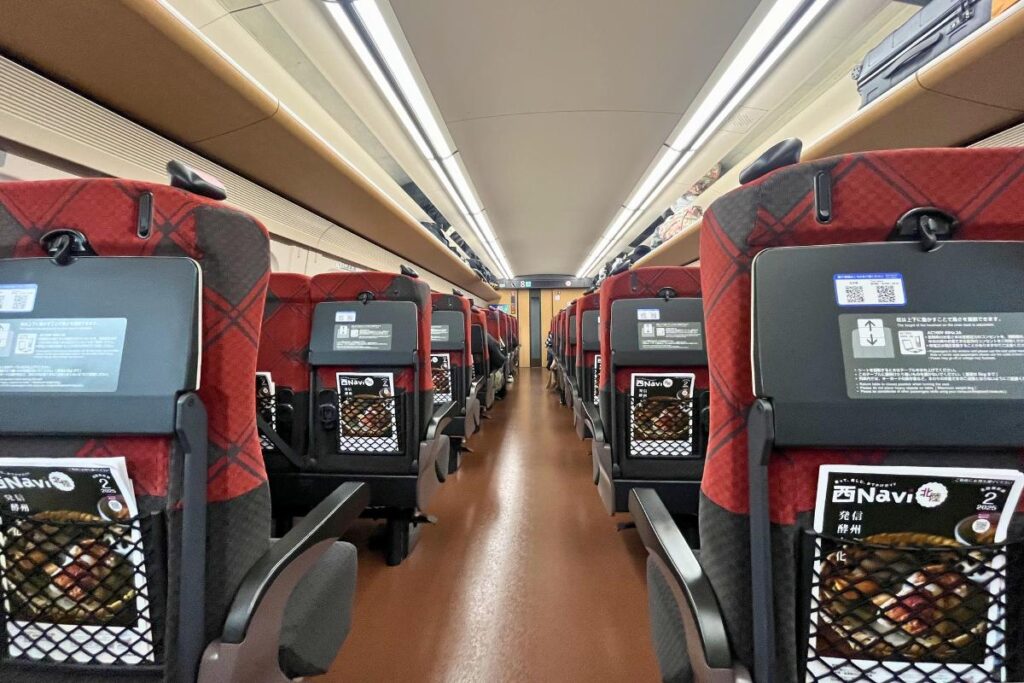
Inside an ordinary car on the Shinkansen.
If you decide to move forward with the Japan Rail Pass, it’s best to purchase it before arriving in Japan – ideally at least two weeks before your trip to allow for processing and delivery.
The pass is available online and can be purchased through the official Japan Rail Pass website or via authorized retailers like Klook.
That said, there are a few key differences among sellers that you’ll want to keep in mind:
- JR Pass Official Site: Passes must be collected in Japan within 30 days of purchase; advanced online seat reservations are available.
- Authorized Retailers: Passes can typically be collected in Japan within 90 days of purchase; advanced online seat reservations are not available.
Once purchased, you will receive a voucher sent via email or snail mail.
You’ll need to bring this voucher with you to Japan, where you’ll exchange it for your actual rail pass.
This can be done at an official JR ticket office, or in some cases, at designated ticketing machines in major JR stations.
As soon as you’ve collected your pass and activated it, you can start using it immediately on eligible JR services across Japan!
📝 Side Note: Many regional passes work the same way. You’ll receive a voucher that you will then need to exchange in Japan at a JR station before you can use it.
Frequently Asked Questions About the Japan Rail Pass
Looking for more information? Here are answers to some of the most commonly asked questions about the Japan Rail Pass.
What Is the Japan Rail Pass?
The Japan Rail Pass (JR Pass) is a discounted nationwide travel pass that offers unlimited rides across Japan on most trains and transport operated by the Japan Railway Group. It is specifically designed for international visitors and is available as a 7-day, 14-day, or 21-day pass. While it doesn’t cover every single train in the country, it does encompass many long-distance trains, including most Shinkansen services.
What Does the Japan Rail Pass Cover?
The JR Pass covers most transportation operated by the JR Group, including a wide range of trains, airport transfers, and select ferries and buses.
- JR Trains: Most JR trains are covered, including JR East, JR West, JR Central, JR Hokkaido, and other regional operators. This encompasses local, rapid, and limited express trains, as well as most Shinkansen routes. It also covers select city lines such as the Yamanote Line in Tokyo and the Osaka Loop. Please note: Nozomi and Mizuho bullet trains require an additional fee.
- Airport Transfers: The pass covers several major airport transfers, including the Narita Express, the Tokyo Monorail (Haneda Airport), and the Haruka Limited Express train (Kansai Airport).
- Local JR Buses: Select JR-operated bus routes are also included, particularly in regions such as Hokkaido, Kyushu, and Shikoku.
- JR Ferry: The JR Miyajima Ferry, which provides transportation to and from Miyajima Island, is also covered.
How Long Is the JR Pass Valid For?
The Japan Rail Pass is available in three options: as a 7-day, 14-day, or 21-day pass. The validity period is consecutive, meaning it runs non-stop from the first day of activation. For example, a 7-day pass is valid for seven straight days of travel beginning the day it is first used. Once activated, the pass cannot be paused or extended.
Do I Need to Reserve Seats with the JR Pass?
Seat reservations are not required for most trains covered by the Japan Rail Pass, as many services also offer non-reserved seating. That said, reservations are highly recommended, especially on the Shinkansen – particularly if you are traveling with large luggage or plan to visit during peak travel season. Reservations can be made online (if you purchase through the official JR Pass website), at any JR ticketing office, or at most ticketing machines in major JR train stations.
Is the JR Pass Refundable or Transferable?
The JR Pass is not transferable and can only be used by the person it was issued to. However, it is typically refundable, as long as it hasn’t been activated. Refund policies vary depending on where the pass was purchased, but most providers offer a partial refund (minus admin fees) for unused passes that aren’t yet activated.
Final Thoughts: Is the Japan Rail Pass Worth It?
For most travelers in 2026, the answer is no, the JR Pass is not worth it – but ultimately it depends on your itinerary.
While the pass can offer value in certain situations, particularly for fast-paced, multi-region trips, it’s no longer the automatic money-saver it once was.
For many travelers, especially those following a slower itinerary or visiting fewer destinations, individual tickets or regional passes will often be the most cost-effective choice.
That said, at the end of the day, the best option is the one that most closely aligns with YOUR specific itinerary.
So, take a closer look at your route, use a JR Pass calculator, and choose what makes the most sense for you based on the numbers.
Still unsure if the Japan Rail Pass is worth it for your itinerary? Drop your travel plans in the comments and I’ll help you think it through!
Found this JR Pass guide helpful? Pin it now so you can reference it later!



KRYSTI ATKINSON
Krysti is a travel writer currently based in Okinawa, Japan. Over the past 3+ years, she has explored Japan extensively while traveling throughout Asia – from iconic cities to quiet, off-the-beaten-path destinations. Through Wanderful Horizons, Krysti shares detailed itineraries, practical travel tips, and firsthand recommendations to help travelers plan unforgettable adventures.