
Last updated on August 5, 2026 by Krysti
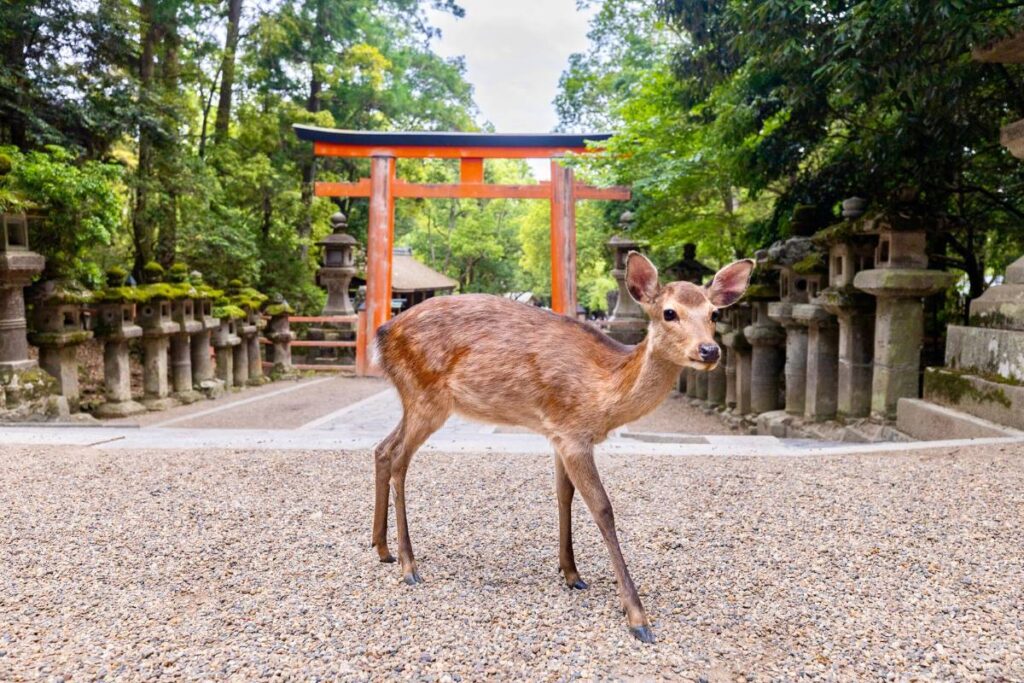
Planning a day trip to Nara? While the city’s famous deer may steal the spotlight, there’s so much more to discover here.
I visited Nara for the first time back in 2024, and like many travelers, I was most excited to see its adorable bowing deer.
In fact, that’s the entire reason I wanted to go – to bow with the deer.
And while it was a really cute experience, I was surprised to find that Nara has so much more to offer beyond its famous wildlife.
From centuries-old temples and quiet shrines to beautiful Japanese gardens, the city is filled with history, culture, and unforgettable sights.
I was so impressed by it all that I actually ended up taking my mom here when she came to visit me in Japan – and she loved it just as much as I did!
Since then, Nara has become one of my favorite places in Japan to recommend to others, especially first-time visitors.
Not only is it an easy day trip from Kyoto or Osaka, but it also offers so much more than most people expect.
In the guide below, I’ll walk you through exactly how I’d spend one day in Nara, along with my favorite sights, practical tips, and a half-day alternative if you’re short on time.
*Please note: This post contains affiliate links to trusted partners. If you make a purchase using these links, I will earn a commission at no extra cost to you. Thank you for your support!
Is One Day Enough For Nara?

For most travelers, yes, one day is the perfect amount of time to experience Nara’s highlights.
That’s largely because most of the city’s top attractions are clustered together in and around Nara Park.
This makes it incredibly easy to explore the area on foot and visit not only the city’s famous deer, but also some of its more iconic landmarks.
While you won’t be able to see everything in one day, a well-planned day trip allows you to visit the most famous sights without feeling too rushed.
And for those of you who may be short on time, a half-day visit is certainly doable – you’ll just want to focus on the main attractions like Nara Park, Todai-ji Temple, and Kasuga-Taisha Shrine.
🏛️ Did You Know? Nara was Japan’s first permanent capital! Established in 710 AD, it predates Kyoto by nearly a century. Today, it’s home to some of the country’s oldest and most important cultural landmarks.
Nara 1 Day Itinerary: Overview
Before we dive into the full itinerary, here’s a quick look at how to spend one day in Nara. Designed with first-time visitors in mind, this itinerary combines Nara’s most iconic landmarks with a few quieter spots to help you experience the city’s history, culture, and natural beauty.
- 🦌 Nara’s Sacred Deer: Free-roaming deer that famously bow to visitors.
- 🌸 Kofuku-ji Temple: Historic temple known for its striking five-story pagoda.
- 🌿 Isuien Garden: Peaceful Japanese garden filled with tranquil ponds and scenic views.
- 🪷 Todai-ji Temple: Iconic temple home to one of Japan’s largest Buddha statues.
- ⛩️ Kasuga-Taisha Shrine: Sacred shrine lined with thousands of stone and bronze lanterns.
- 🛍️ Sanjo Dori Street: Lively shopping street filled with local shops and restaurants.
Map of Nara, Japan
To help you plan your trip, I’ve also included a map overview of all the places mentioned in this 1 day Nara itinerary!
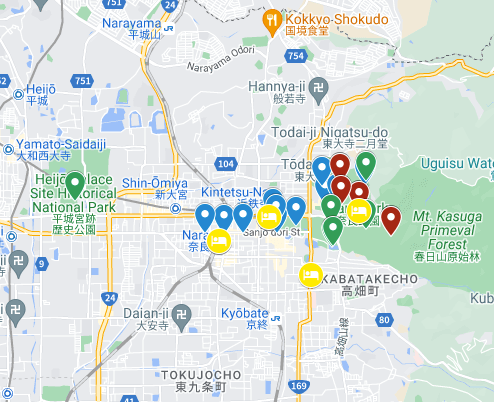
➡️ Click here to view an interactive version of this map!
Nara 1 Day Itinerary: Explained
On that note, let’s jump right in and discuss in detail the perfect itinerary for Nara. All the attractions listed below are located within or near Nara Park, making it easy to adjust this itinerary as you see fit!
💡 Pro Tip: Stop by the Visitor’s Center and grab a tourist map before venturing into the city. They’re very detailed and quite helpful! There’s a Visitor’s Center located next to both train stations – so it’s a quick pit stop to make.
All Day: Encounter Nara’s Sacred Deer
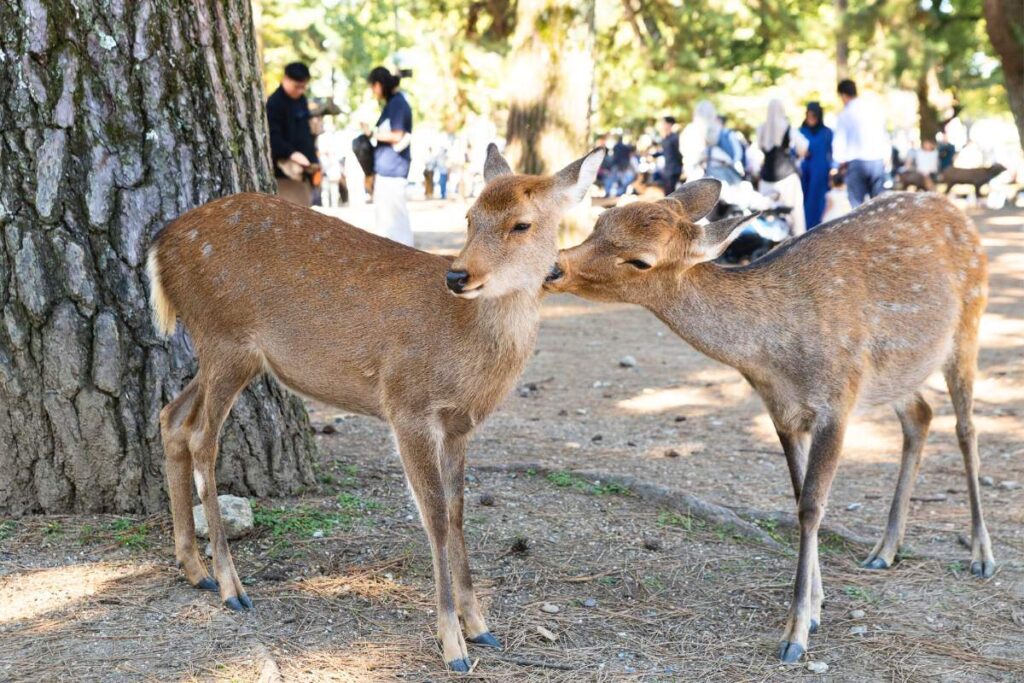
One of the first things you’ll notice when you enter Nara Park are the deer.
They are everywhere – wandering along pathways, lounging near temples, and even waiting near vendors in hopes of food.
But these deer aren’t just a fun photo opp – they’re actually considered to be sacred and, like those found on Miyajima Island, were once believed to be messengers of the gods.
In fact, their connection to Nara runs so deep that they’re officially protected by the government as natural monuments.
Over time, these sacred deer have become surprisingly comfortable around people, and getting them to bow has become one of Nara’s signature experiences.
And I must admit, watching them do it is really quite adorable!
If you’d like to try it for yourself, you can grab some deer crackers (aka shika senbei) from one of the many vendors throughout the park.
They’re specifically made to be safe and nutritious for the deer, so please avoid feeding them anything else.
Once you’re ready, simply hold a cracker above their head and offer them a small bow – they’ll often respond with a bow of their own!
Just be aware: the deer can get a bit overexcited when they see food, and you may suddenly find yourself surrounded.
To avoid getting mobbed, I usually hide my crackers until I spot a deer that has wandered off on its own.
I find these quieter, one-on-one encounters to be much more manageable and peaceful.
A Note on the Deer in Nara Park
While the deer in Nara are used to humans, it’s important to remember that they are still wild animals – and will react as such. During one visit, my husband accidentally got a little too close to a young fawn hiding in the grass. We didn’t see it at first, but the mother deer immediately noticed us and chased him away to protect her baby.
It was a surprising moment, but also a good reminder that these deer are wild and should be approached with caution. As such, always be sure to give them space and be mindful when taking photos. This is especially important during mating and fawning seasons.
Early Morning: Discover Kofuku-ji Temple
⏱️ 5 min walk from Kintetsu-Nara Station
As you make your way through Nara Park, one of the first historic sites you’ll encounter is Kofuku-ji Temple.
Founded in the 7th century, this UNESCO World Heritage Site is among Japan’s oldest and most influential Buddhist temples.
It also happens to be home to one of Nara’s most iconic symbols – a five-storied wooden pagoda.
Measuring 50 meters in height, this famous structure is actually the second tallest wooden pagoda in Japan.
Unfortunately, it was under construction both times we were there, so we weren’t able to see it for ourselves.
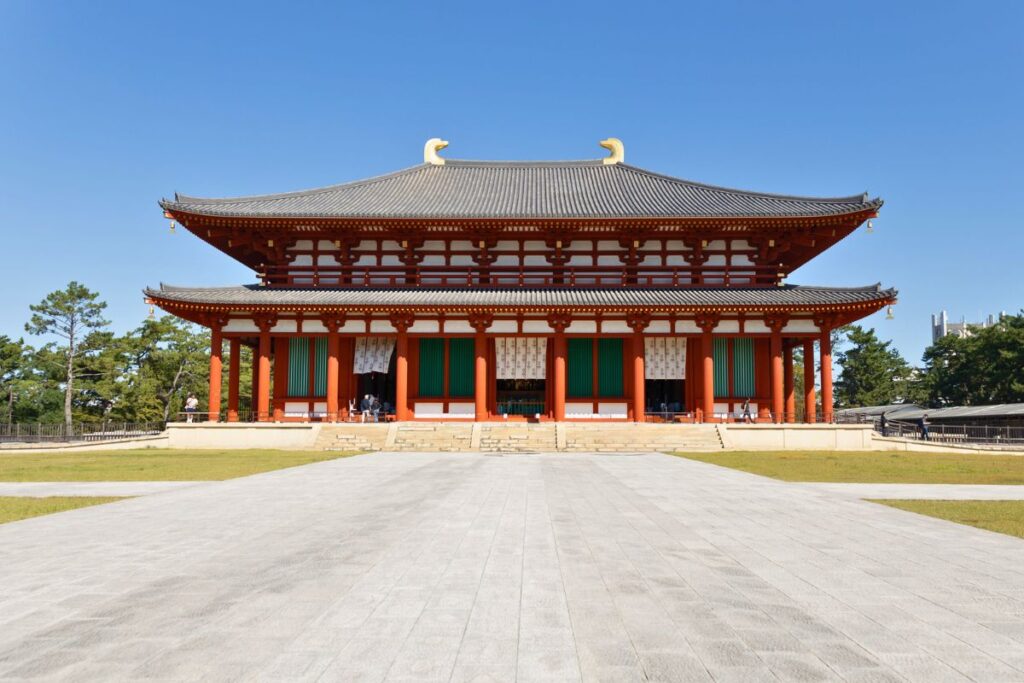
That said, we still enjoyed exploring the rest of the temple grounds – especially the Central Golden Hall with its vivid exterior and intricate architectural details.
There’s actually quite a bit to see here, including the National Treasure Hall, Three-Storied Pagoda, and several other important worship halls.
Why It’s Worth It: Kofuku-ji offers a fascinating glimpse into Nara’s past and is the perfect introduction to the city’s rich history.
📝 Side Note: The five-storied wooden pagoda at Kofuku-ji is currently undergoing major restoration work and is expected to remain covered until 2033.
Late Morning: Appreciate Isuien Garden
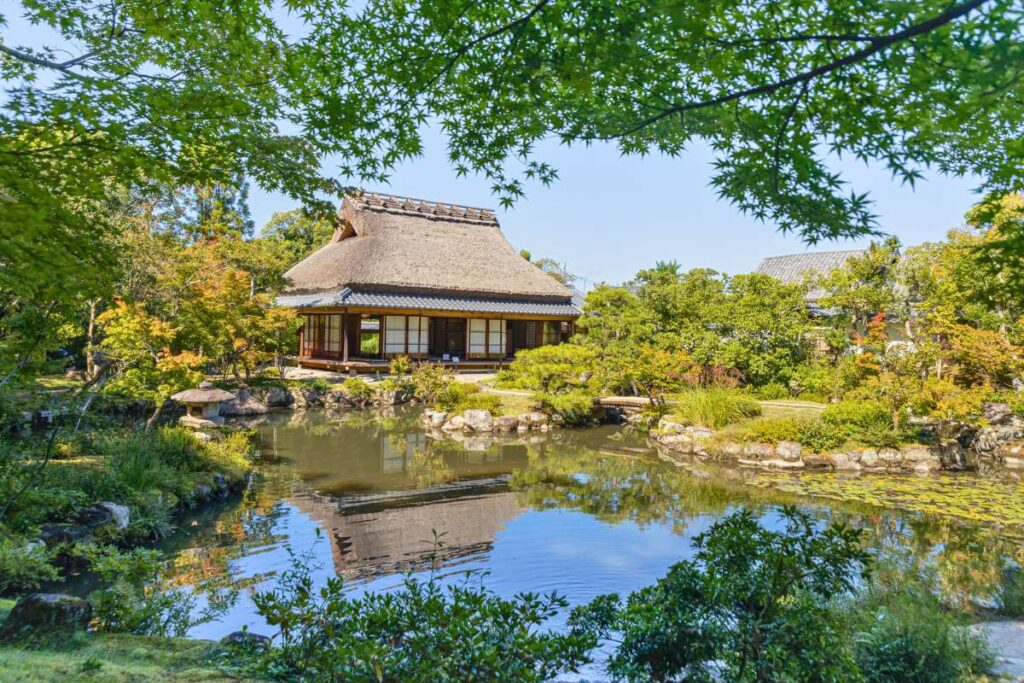
⏱️ 10 min walk from Kofuku-ji Temple
Tucked away within Nara Park, Isuien Garden is a beautiful traditional Japanese garden and one of my favorite places in the entire city.
What I love most about this garden is the sense of calm it offers.
While Nara is filled with incredible historic sites, many of its popular attractions can become quite busy.
Isuien, on the other hand, provides a peaceful place to slow down, wander, and appreciate the scenery.
Beyond its serene atmosphere, Isuien Garden also offers a glimpse into the city’s history.
Designated a “Place of Scenic Beauty” by the Japanese government, the property consists of two separate gardens built during different periods of time.
The front garden dates back to the Edo period (17th century), while the back garden was added during the Meiji period (early 20th century).
As you wander through the grounds, you’ll discover winding walking paths, picturesque ponds, vibrant greenery, and a quaint traditional tea house.
While you’re here, be sure to also stop by the Neiraku Museum of Art, a small on-site museum featuring artwork, pottery, and historic relics from across Asia.
Why It’s Worth It: Issuien Garden offers a peaceful escape from Nara’s busier attractions and a chance to slow down between sightseeing.
Early Afternoon: Explore Todai-ji Temple
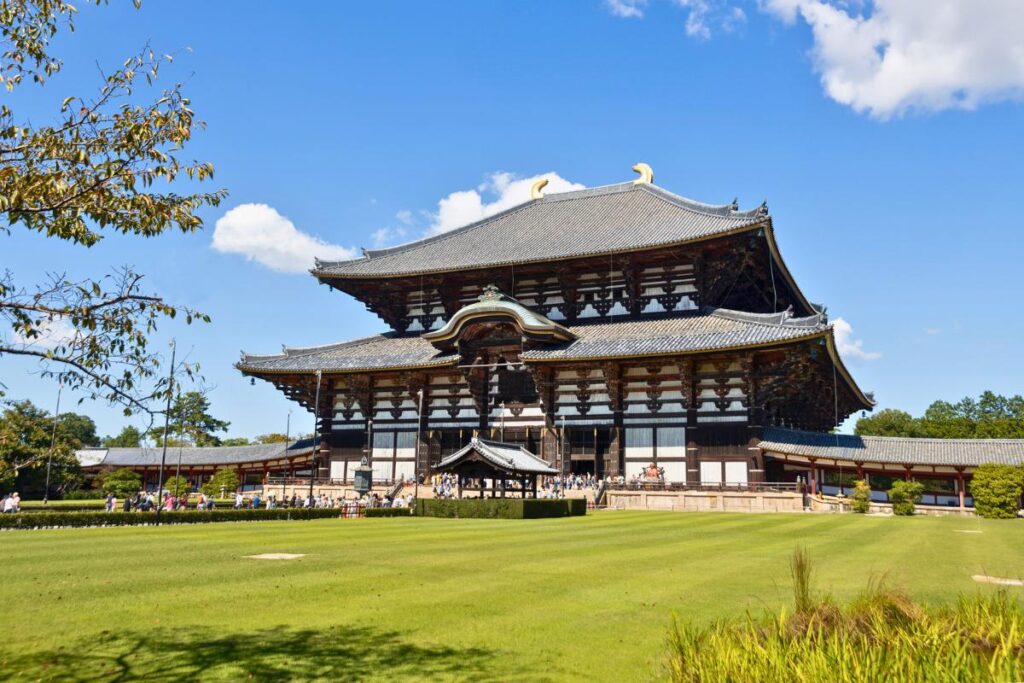
⏱️ 10 min walk from Isuien Garden
As one of Nara’s most famous landmarks, Todai-ji Temple is an absolutely incredible sight and one that you won’t want to miss.
The temple, although impressive on its own, is best known for its massive bronze Buddha statue, which is one of Japan’s largest.
It’s so large, in fact, that it’s housed in one of the world’s biggest wooden structures, the Great Buddha Hall (also known as Daibutusuden).
Recognized as a UNESCO World Heritage Site, Todai-ji dates back to the 8th century, when it served as the head temple of all Buddhist temples in Japan.
At its peak, in 784, the temple became so powerful that the government actually moved Japan’s capital from Nara to Kyoto in an effort to reduce its influence over political affairs.
Despite this, Todai-ji remains one of the country’s most historically significant temples.
It also happens to be quite enormous, so be sure to allow yourself plenty of time to explore the grounds.
In addition to the Great Buddha Hall, you’ll find several other important sites here, including the Todai-ji Museum, Nandaimon Gate, Nigatsu-do Hall, Hokke-do Hall, and Kaidan-in Hall.
For me, though, the highlight was definitely seeing the Great Buddha itself – it’s hard to fully appreciate the size (and history!) of the statue until you see it in person.
Why It’s Worth It: Todai-ji showcases the incredible scale of Japan’s Buddhist history, from its massive wooden architecture to its iconic bronze Buddha.
Late Afternoon: Admire Kasuga-Taisha Shrine
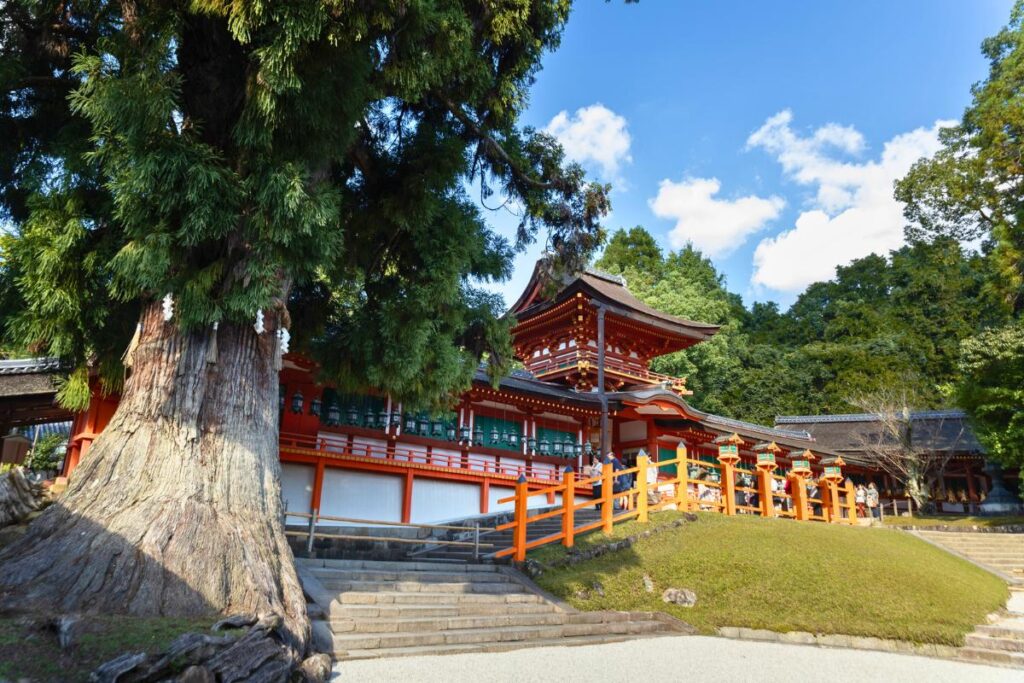
⏱️ 15 min walk from Todai-ji Temple
Nestled at the base of Mount Wakakusa, Kasuga-Taisha Shrine feels worlds away from the rest of Nara.
Surrounded by lush greenery, ancient trees, and thousands of traditional lanterns, this beautiful Shinto shrine offers an almost mystical atmosphere that immediately draws you in.
I could have easily spent hours wandering the forest-lined pathways here and admiring the shrine’s endless rows of lanterns.
Of course, this magical charm also comes with centuries of history.
Dating back to the 700s, Kasuga-Taisha is one of Japan’s most sacred Shinto shrines and a UNESCO World Heritage Site.
The shrine is actually dedicated to four deities, including Takemikazuchi no Mikoto, who is said to have arrived in Nara riding on the back of a deer.
This legend, in turn, played an important role in shaping Nara’s connection to its famous deer, giving rise to the long-held belief that they are sacred messengers of the gods.
Today, visitors can explore the shrine’s beautiful grounds, walk its forested trails, and admire the many bronze and stone lanterns donated by worshippers over the centuries.
Why It’s Worth It: Kasuga-Taisha is one of Nara’s most enchanting sights, combining history, nature, and the city’s famous deer in one unforgettable setting.
💡 Pro Tip: The deer around Kasuga-Taisha tend to be a little calmer than those closer to the main entrances of Nara Park, making this a great place to enjoy a quieter encounter.
Evening: Wander Along Sanjo Dori Street
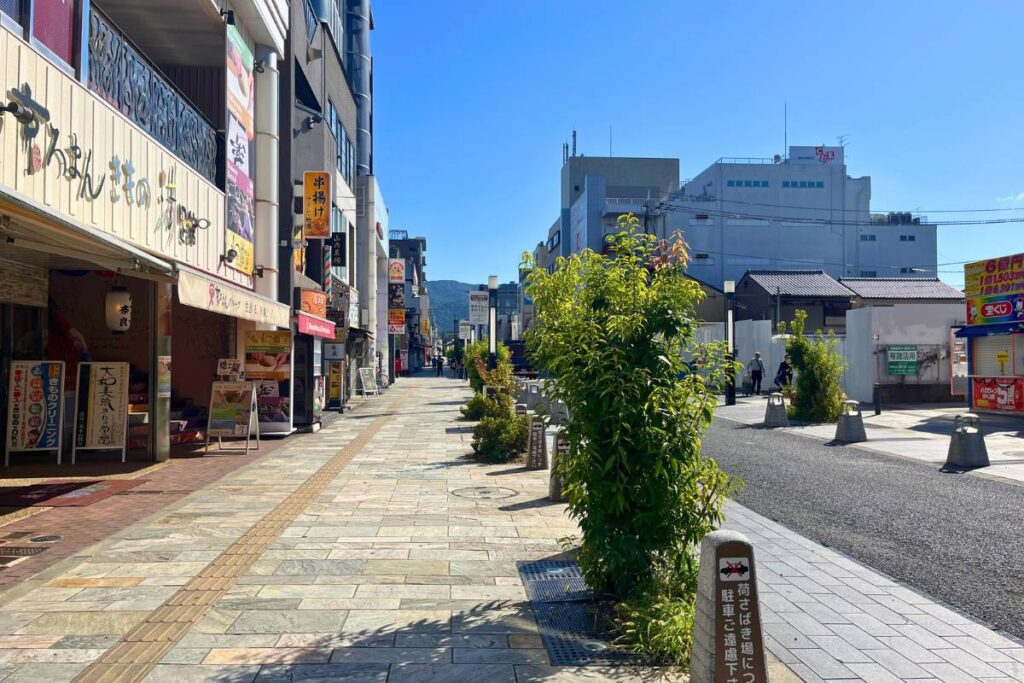
⏱️ 20 min walk from Kasuga-Taisha
Once you’re done exploring Nara Park, head back towards Sanjo Dori Street to experience a more modern side of the city.
Filled with local shops, restaurants, cafes, and bars, this lively shopping street is a great place to grab a bite to eat and pick up a few souvenirs.
One of the street’s most famous stops is Nakatanido, a popular mochi shop known for its impressive mochi-pounding demonstrations.
We actually stopped here when we were in the area, but unfortunately the line was too long – so we didn’t end up buying anything.
That said, we were still able to watch them make the mochi, which was fun to see!
Aside from this, Sanjo Dori also offers convenient access to Higashimuki Shopping Arcade, which is home to even more souvenir shops and cafes.
Why It’s Worth It: Chances are you’ll pass through Sanjo Dori Street on your way back to the train station, so you might as well stop by for a bite to eat and to do a bit of souvenir shopping.
Nara Half Day Itinerary
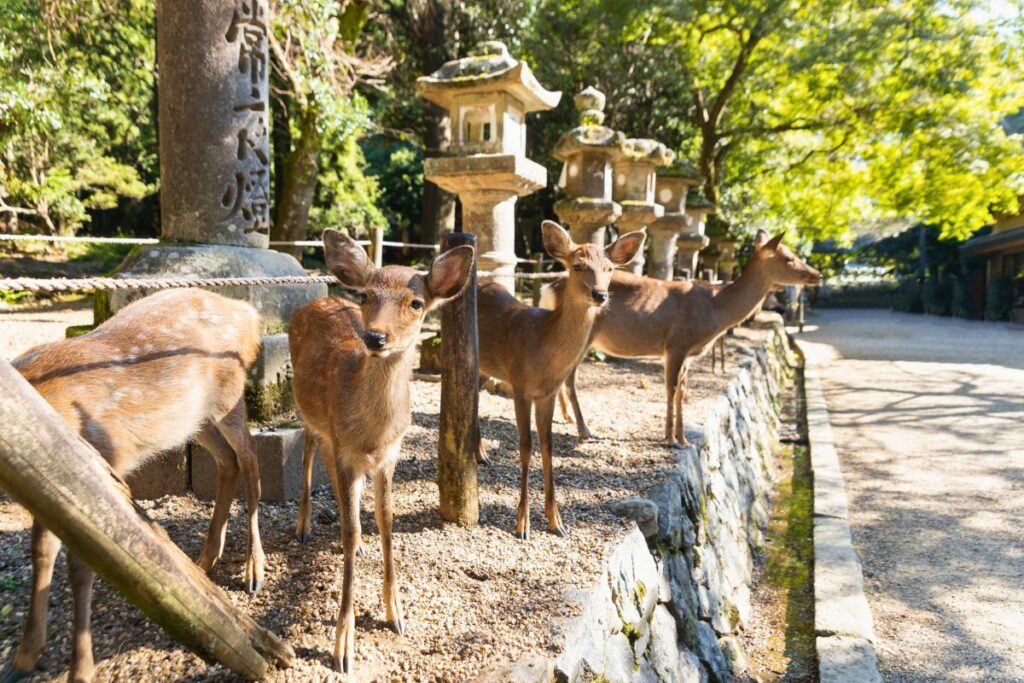
While I do recommend spending at least a full day here, it is possible to visit Nara for half a day. Although you won’t be able to see all the sights mentioned above, you should have enough time to hit up the city’s most famous attractions.
Here’s my suggested itinerary for a Nara half-day trip:
- Visit Todai-ji Temple: This is one of Nara’s most famous and historical sites, so definitely set aside time to visit it. It can get quite busy, and a line is likely to form at the entrance to the main hall, but it moves quickly – so don’t let this scare you off. Once inside, be sure to venture into the temple to view the Buddha statue up close.
- Stop By Kasuga Taisha Shrine: From Todai-ji, head over to Kasuga-Taisha Shrine. It’s a bit far away but is well worth the visit. Here, you can tour the shrine or simply wander along on the grounds’ lantern-lit pathways. You’re likely to find several deer in this area as well!
- Take a Peek at Kofuku-ji Temple: Chances are, you’ll be running out of time when you get to Kofuku-ji Temple. So I recommend doing a quick walk-through tour of the property on your way back to the train station! This temple is located quite close to Kintetsu-Nara Station, so it’s an easy pit stop to make.
Tips to Make the Most of Your Half Day Nara Itinerary

To help you make the most of your limited time in Nara, I’ve compiled below a few practical tips and tricks!
- Utilize Public Transportation: Since you’re short on time, your best bet is to make use of the local bus system. To help you navigate this, I recommend either using Google Maps or grabbing a physical map from the Visitor’s Center.
- Meet the Deer As You Go: You’ll find the city’s famous deer spread throughout the park, so there’s really no need to make a special trip to any particular location. Simply wander along to your next destination, and you’ll come across them as you go!
- Allow Ample Time Between Locations: Even if you make use of the local bus, you’ll still need to walk some – and will probably get distracted by the park’s deer along the way! So don’t rush around from place to place; save time to enjoy the walk, appreciate the views, and interact with the deer.
- Don’t Overpack Your Itinerary: Don’t try to see everything – it’s not possible. Instead, pick and choose a few things that interest you the most and focus on those. And be flexible – see how you do for time and adjust accordingly. Some attractions might take up more time than expected, while others may be super quick.
- Join a Guided Tour: If you’re worried about the logistics of visiting Nara on your own, you can always join a guided tour. There are many half-day tours for you to choose from as well as full-day tours that combine Nara with nearby destinations like Arashiyama, Uji, and Himeji.
Other Things to Do in Nara
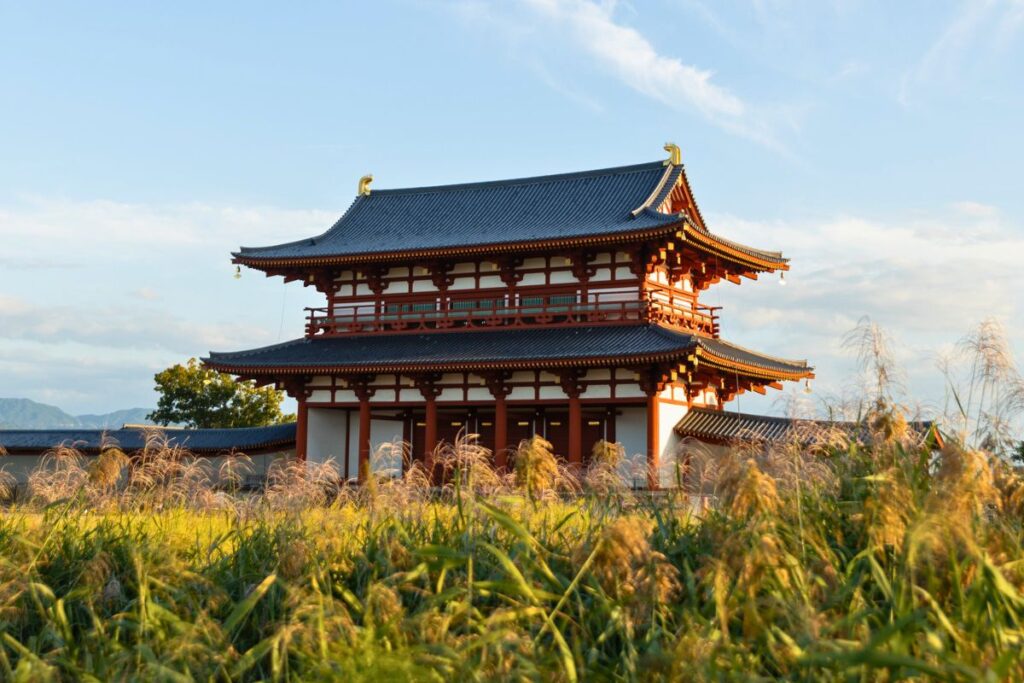
While the itinerary above covers how I would personally spend one day in Nara, there’s still so much more to explore beyond these main highlights. Whether you’re looking to add another temple, visit a museum, or discover a quieter side of the city, here are a few additional ideas to help you customize your Nara itinerary.
- Heijo Palace Site Historical National Park: A UNESCO World Heritage Site, Heijo Palace served as the Imperial Palace of Japan during the 8th century. Although many of the buildings were destroyed over time, the city is currently in the process of rebuilding and restoring them.
- Nara National Museum: A prominent art museum, the Nara National Museum is known for its exhibits on Japanese Buddhist art. You’ll also find a variety of relics from Nara’s imperial period here.
- Todai-ji Nigatsu-do: Overlooking Nara Park, Nigatsu-do is a smaller Buddhist temple located within the Todai-ji complex. It’s particularly known for its incredible sunset views.
- Horyu-ji Temple: Dating back to 607, Horyu-ji is one of Japan’s oldest and most historically significant temples. In fact, it’s home to some of the oldest surviving wooden structures in the world – offering a rare glimpse into early Japanese architecture.
- Mount Yoshino: Situated about an hour outside of Nara, Mount Yoshino is one of the best places to view cherry blossoms in Japan. The mountain is home to approximately 30,000 cherry trees, which bloom in layers across the hillsides – I’ve been told, it’s truly a sight to behold!
🌟 Planning to explore more of Japan? Check out my 10 day itinerary for Japan – which includes stops in Nara as well as Tokyo, Kyoto and Osaka!
How to Get to Nara
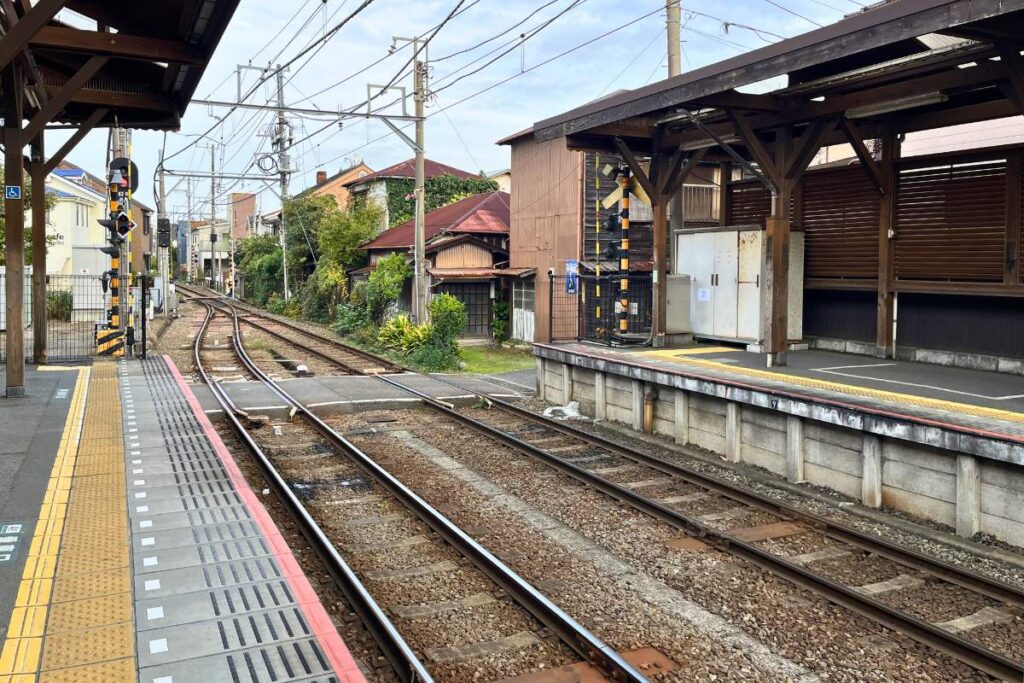
One of the best things about visiting Nara is just how easy it is to get there!
Located in the Kansai region, Nara makes for a convenient day trip from both Kyoto and Osaka.
While Nara does not have its own airport, the city is well connected by train through two major stations: JR Nara Station and Kintetsu-Nara Station.
Both offer direct connections from nearby cities, making it simple to reach Nara by public transportation.
💡 Pro Tip: For multi-city Kansai itineraries, consider a regional rail pass. The Kintetsu Rail Pass is ideal for Kyoto, Osaka, and Nara, while the JR West Kansai Area Pass may be a better fit for broader itineraries that include destinations like Kobe and Himeji.
Kyoto to Nara
For those coming from Kyoto, there are two main transit options available:
- 🚆 Kintetsu-Kyoto Line: Travels between Kyoto Station and Kintetsu-Nara Station. Transit time for the express train is about 45 minutes. This is the route I’d recommend, as it puts you closer to Nara Park.
- 🚉 Nara Line: Runs between Kyoto Station and the Nara JR Station. Travel time for the rapid train is about 50 minutes.
Regardless of which you choose, be sure to double-check and ensure that you’re boarding a rapid or express train!
There are also local trains that travel along these same routes – but they take much longer as they make more frequent stops along the way.
Osaka to Nara
If you’re traveling from Osaka, there are a few options for you to consider as well, depending on where you are in the city.
- 🚆 Kintetsu-Nara Line: Ideal for those staying near Namba or Dotonbori. Travels from Osaka-Namba Station to Kintetsu-Nara Station. Transit time for the express train is about 40 minutes.
- 🚉 Osaka Loop Line: Best for those staying in Umeda. Travels from Osaka Station to Nara JR Station. Transit time for the rapid train is about 50 mins.
No matter which line you take, you’ll again want to ensure that you’re utilizing a rapid or express train.
Like Kyoto, there are also local trains in Osaka that travel these same routes. And they take much longer to reach their final destinations as they make many more stops along the way.
How to Get Around Nara
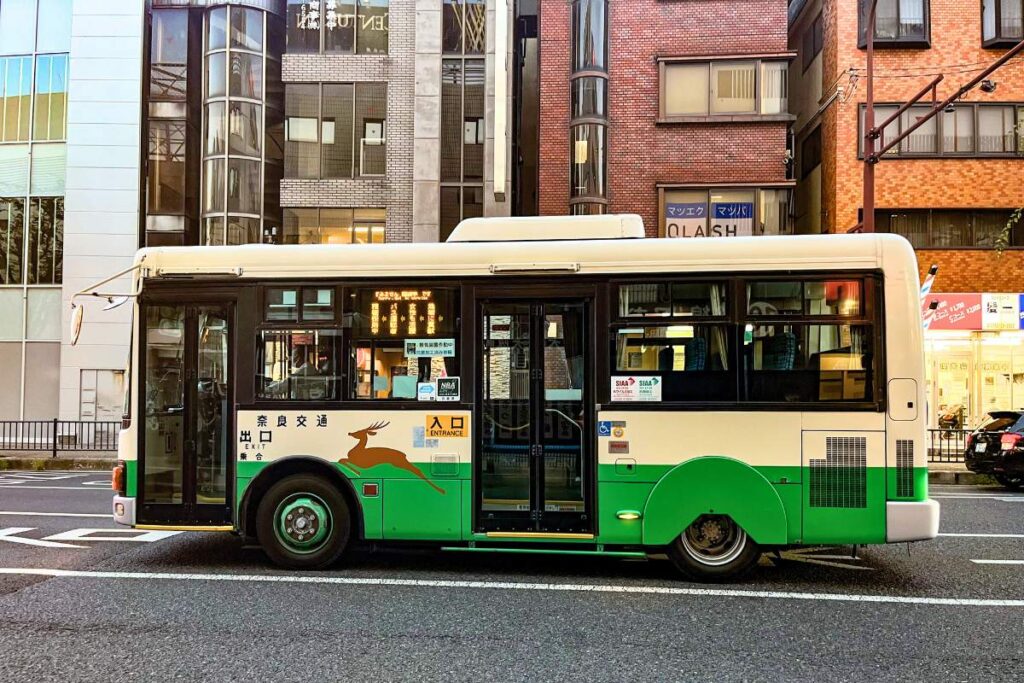
The main touristy area of Nara (including Nara Park) is very walkable – so it’s quite easy to get around and visit the major attractions.
However, if you prefer, there is also a public bus system that offers transportation around the city.
Of particular note is the Nara City Loop Bus, which travels to both train stations and makes several stops in and around Nara Park.
To utilize this bus, you can either purchase a day pass from the bus information station or use an IC card.
For those who may be unfamiliar, IC cards are basically prepaid, rechargeable transit cards. They can be purchased from most train stations and are compatible with many forms of public transportation throughout Japan.
💡 Pro Tip: One of the best navigation apps for Japan (and my personal go-to) is Google Maps, so be sure to download it and have it ready to go! It’s great when utilizing public transit and even comes in handy when walking around!
Best Time to Visit Nara
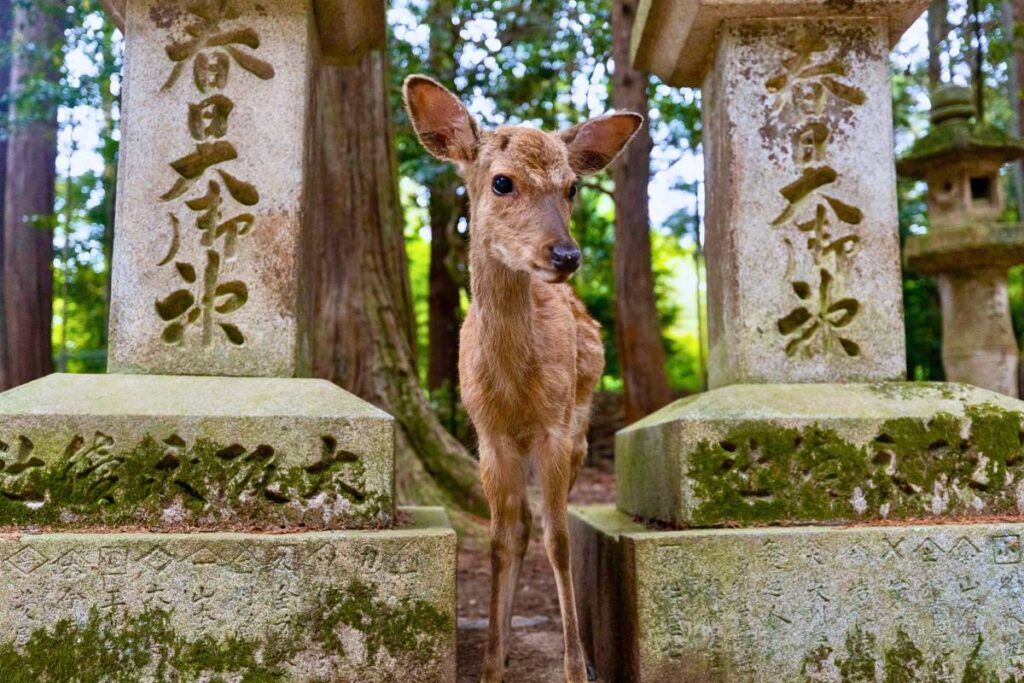
Like much of Japan, the best time to visit Nara is either in the spring or in the fall.
During both of these seasons, you can expect to encounter pleasant weather with minimal rain. Plus, the landscape is absolutely beautiful with cherry blossoms in spring and autumn leaves in fall.
However, it is worth mentioning that these seasons (especially spring) can be quite busy, as they are peak travel times for Japan.
If you wish to avoid this, you can visit Nara in the winter instead. While temperatures will be cooler, there are typically fewer crowds and more affordable prices.
And finally, we have summer – which can be very hot and humid. Given the amount of walking you’re likely to do in Nara, I don’t really recommend visiting the city around this time of the year.
A Note on Japanese Holidays
Japan has a few major national holidays that significantly impact travel. These include Golden Week (end of April – beginning of May), Silver Week (mid-September), and the New Year. Around these holiday periods, domestic travel peaks, prices increase significantly, and businesses may temporarily close down. Given this, I generally recommend, if at all possible, that visitors avoid travel to Japan during these times.
What to Eat in Nara
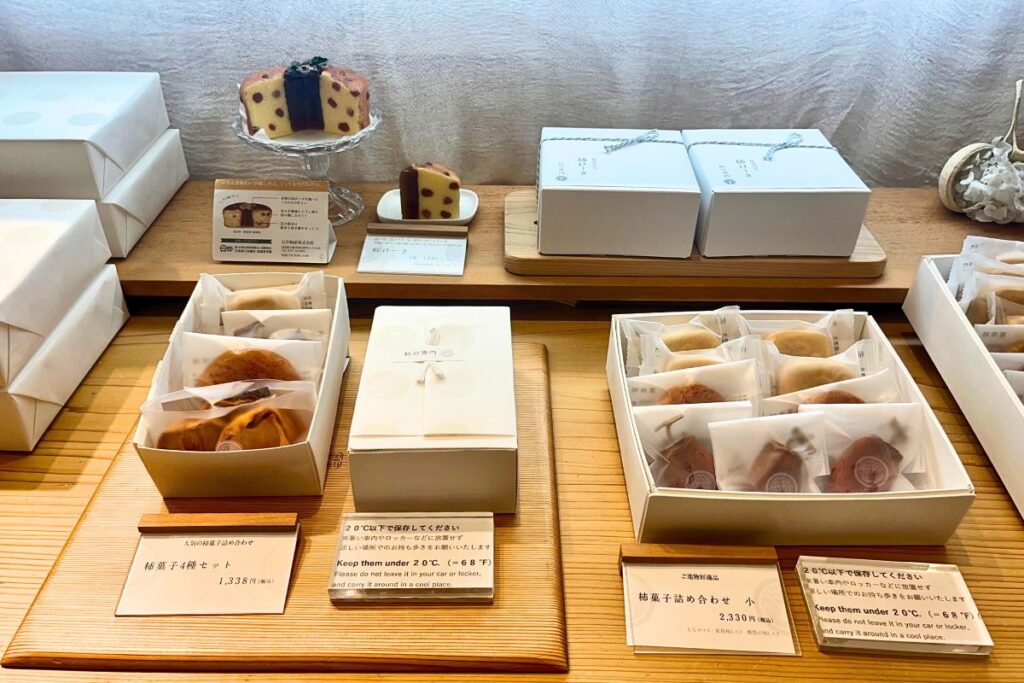
Beyond its historic temples and famous deer, Nara is also known for its unique culinary traditions. In fact, there are several regional dishes that can only be found here. While you won’t have time to sample them all, here are a few that are worth prioritizing.
- Persimmon Sweets: Nara is one of Japan’s top producers of persimmon, an almost tomato-like fruit that grows on trees. Vendors throughout the city are known for creating a variety of sweets (like those shown above) using various forms of persimmon.
- Kakinoha Zushi: Local to the Kansai region, Kakinoha Zushi is sushi that’s wrapped in persimmon leaves. It typically features mackerel or salmon, but can also be made using a variety of fish.
- Kuzu Mochi: Similar to a rice cake, kuzu mochi is made using kuzu starch and water instead of rice. Kuzu starch comes from the root of the kudzu plant, which is native to Japan.
- Chagayu: Also known as tea rice porridge, chagayu is a rice porridge that’s made with tea. A popular breakfast staple in Nara, the dish typically features green tea broth.
- Miwa Somen: Miwa somen is a noodle dish that features very thin noodles. Typically served cold, the dish also includes a variety of toppings such as soy sauce, sake, pickles, seaweed, and ginger.
Where to Stay in Nara
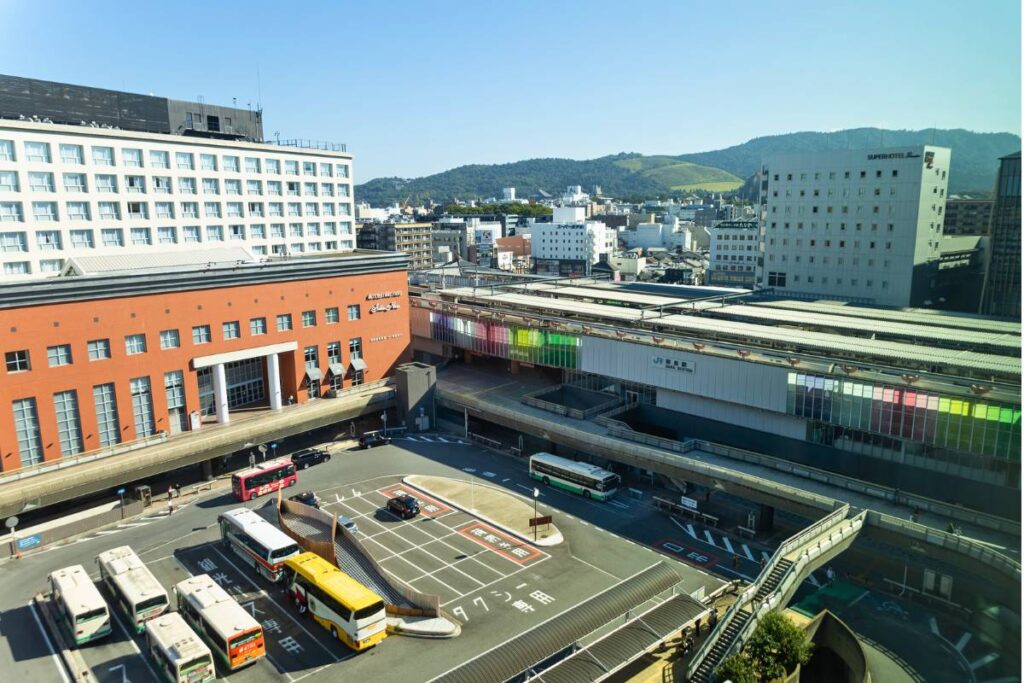
If you have the ability to do so, I highly recommend spending at least one night in Nara. Not only will it provide you with more time to explore – you’ll have the chance to experience the city without the crowds that typically flood in during the day. For those interested, I’ve included below some of the best places to stay in Nara.
- JR Nara Station: The area surrounding Nara Station is home to a variety of hotels, all of which offer convenient access to public transportation. You’ll also find plenty of restaurants, bars, cafes, and local shops within easy reach.
- Kintetsu-Nara Station: Near Kintetsu Station, there are several hotels that offer easy access not just to public transportation, but to Nara Park as well. There are also numerous shopping centers in the area, including Higashimuki Shopping Street and Sanjo Dori Street.
- Nara Park: Scattered within and around the boundaries of Nara Park are several small hotels and traditional ryokans. These charming accommodations are perfect for first-time visitors who plan to extensively explore the deer park.
- Naramachi: Once the merchant district of Nara, Naramachi is a historic neighborhood known for its peaceful streets and traditional ryokans or guest houses. Staying here offers guests a more intimate, local experience.
🧳 My Experience: We stayed at Piazza Hotel Nara and loved the convenience of it! It’s located right next to the JR train station, with a variety of restaurants and cafes within walking distance!
Frequently Asked Questions About Planning a Day Trip to Nara

Here are my thoughts on some commonly asked questions about planning a day trip itinerary for Nara, Japan!
Is Nara Worth Visiting?
Yes, without a doubt, Nara is absolutely worth visiting. While the famous deer are what draw many travelers here, they’re only one part of what makes this city so special. Between its historic temples, peaceful gardens, beautiful shrines, and natural surroundings, Nara offers a completely different experience from Japan’s larger cities.
What Is the Best Time of Day to Go to Nara Park?
I’d say the earlier the better. First of all, there are fewer people around early in the morning, so it’s easier to visit the different attractions. In addition to this, the deer are much more attentive and interested in people – probably because they’re hungry! I had a bunch of leftover deer crackers that I was trying to give away in the late afternoon, and I had a hard time finding a deer that would eat them. It seems that by the end of the day, the deer have had their fill and just want to be left alone!
Is It Better to Go to Nara From Osaka or Kyoto?
Honestly, it really doesn’t matter. It’s very easy to travel to Nara from Osaka and Kyoto – and there isn’t even much of a difference in terms of travel time. Given this, I’d recommend doing whatever works best for you and your itinerary.
Which is Better: Kobe or Nara?
It’s hard to say which is better because Nara and Kobe are both amazing cities. And I highly recommend them both. That being said, if you only have time to visit one, I’d say base the decision on your personal preferences. In short, Nara is going to be a better option if you’re looking for a smaller destination with historical and natural attractions. Meanwhile, Kobe would be the best option if you’d like a city that offers more urban amenities – think restaurants (Kobe beef!), shopping, nightlife, etc. Again, they’re both great destinations, so you really can’t go wrong either way!
Which Is Better: Nara or Miyajima Island?
This is a toss-up, as both destinations offer incredible natural scenery, friendly wildlife, and historical landmarks. Ideally, if you can, I say visit them both. But if you have to choose just one, I’d offer the following recommendations. Go to Nara if you’re really interested in seeing the deer. I think they’re friendlier here and they bow! But if you’re more interested in avoiding the crowds and partaking in adventurous activities, go to Miyajima Island. It’s very easy to venture off the beaten path here, as there are several hiking trails to explore.
Final Thoughts: Nara 1 Day Itinerary
Nara might be one of Japan’s most popular day trip destinations, but it truly lives up to the hype.
Yes, the city’s famous sights can get busy – especially around the most iconic attractions – but there’s a reason millions of travelers make their way here every year.
Between the rich history, peaceful gardens, beautiful forest shrines, and unforgettable encounters with the deer, Nara offers a travel experience unlike any other.
And for me, that’s what makes Nara so memorable – it’s a place where history, nature, and tradition blend together to create something truly unforgettable.
Planning your own day trip to Nara? What are you most excited to do? Let me know in the comments below!
Like this 1 day Nara itinerary? Pin it now for later!




KRYSTI ATKINSON
Krysti is a travel writer currently based in Okinawa, Japan. Over the past 3+ years, she has explored Japan extensively while traveling throughout Asia – from iconic cities to quiet, off-the-beaten-path destinations. Through Wanderful Horizons, Krysti shares detailed itineraries, practical travel tips, and firsthand recommendations to help travelers plan unforgettable adventures.


