

Planning your first trip to Kyoto? Look no further – I’ve got you covered with this ultimate guide to 3 days in Kyoto, Japan!
Kyoto is one of those cities that continues to captivate me, no matter how many times I visit.
There’s just something about it that feels so enchanting, so charming, so timeless.
And, while yes, it’s true, the city does get crowded at times, that hardly takes away from its magic.
I mean, Kyoto was, after all, the former capital of Japan – a title it held for over 1,000 years! So, I’m not exaggerating when I say this entire city is steeped in history and culture!
From serene temples to lantern-lit alleyways, vibrant cultural traditions, hidden teahouses, and peaceful gardens, Kyoto literally has it all!
That said, planning an itinerary – especially for a first-time visit to Kyoto – can be a bit overwhelming. There’s just so much to do and see, it’s hard to know where to begin.
In fact, I even struggled to create this post. I wanted to make sure I put together the perfect guide for you – one that hits all the major highlights, but also includes a few hidden gems along the way.
Thankfully, after several visits to the city and several reiterations of this itinerary, I can confidently say, I’ve done just that!
So, without further ado, let’s dive right in and discover the perfect 3 day itinerary for Kyoto!
*Please note: This post contains affiliate links to trusted partners. If you make a purchase using these links, I will earn a commission at no extra cost to you. Thank you for your support!
Planning your trip to Kyoto last minute?
Here are a few quick recommendations for you!
I suggest booking these services and activities in advance!
🚅 Getting There:
– Japan Rail Pass (Great option if you plan to travel all over Japan)
– Individual Train Tickets (Will likely be cheaper if you don’t plan to visit many cities)
– Private Airport Transfers (For those who prefer to travel by car)
🛏️ Hotels:
– Kyoto Brighton Hotel (Upscale hotel in central Kyoto)
👣 Activities & Tours:
– Hozugawa River Cruise (Experience the natural beauty of Kyoto!)
– Kyoto Kimono Rental Experience (Great for souvenir photos!)
– Cultural Experiences in Kyoto (There are lots of options to explore!)
Best Time to Visit Kyoto
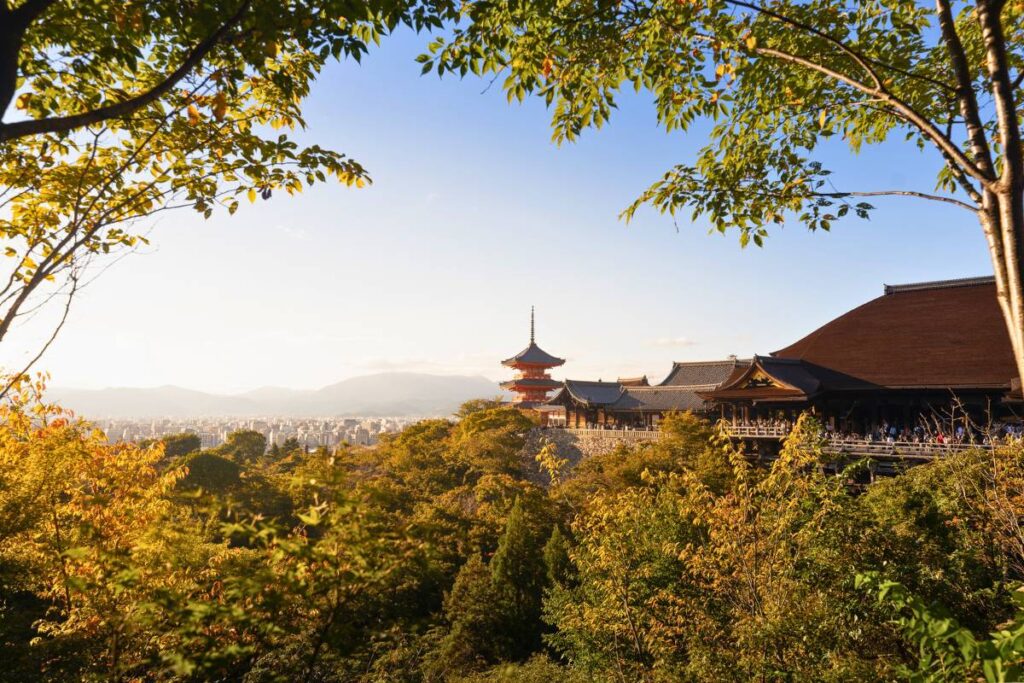
I personally think the best time to visit Kyoto is in late spring, specifically in May.
Once May rolls around, the crowds from cherry blossom season disperse, so it isn’t nearly as busy.
On top of that, the weather is mild and pleasant (since the rainy season hasn’t started yet!), and the city’s lush greenery is on full display.
I actually took my mom to visit Kyoto in May, and we had ideal weather pretty much the entire time. So, I really can’t recommend it enough!
Aside from this, fall is another great time to visit Kyoto – especially when the fall foliage peaks (around mid-November to early December).
While it does get a bit more crowded, the city is beautiful this time of the year, and the weather is quite pleasant.
Another alternative to consider is winter, if you’re looking for a more budget-friendly option. Although it will be a bit chilly, it’s typically less crowded and more affordable.
And finally, we have summer, which I must admit is quite hot, humid, and rainy.
That said, it is the perfect time to experience the local culture, as the city hosts a number of summer festivals and celebrations.
A Note on Japanese Holidays
Japan has a few major national holidays that significantly impact travel. These include Golden Week (late April to early May), Silver Week (mid-September), and the New Year. During these holiday periods, domestic travel peaks, prices increase significantly, and many local businesses temporarily close. Given this, I would avoid traveling to Japan around these holidays, if at all possible.
How to Get to Kyoto
The closest airports to Kyoto are actually located in Osaka Prefecture. The two specifically that are within easy reach are Osaka Itami Airport (ITM) and Kansai International Airport (KIX).
Itami Airport, which services domestic flights, is about an hour away from Kyoto via the local airport limousine bus.
Kansai, on the other hand, serves as the region’s primary international airport and is about 90 minutes from Kyoto. You can reach the city from here via the airport limousine bus or the JR Haruka Limited Express Train.
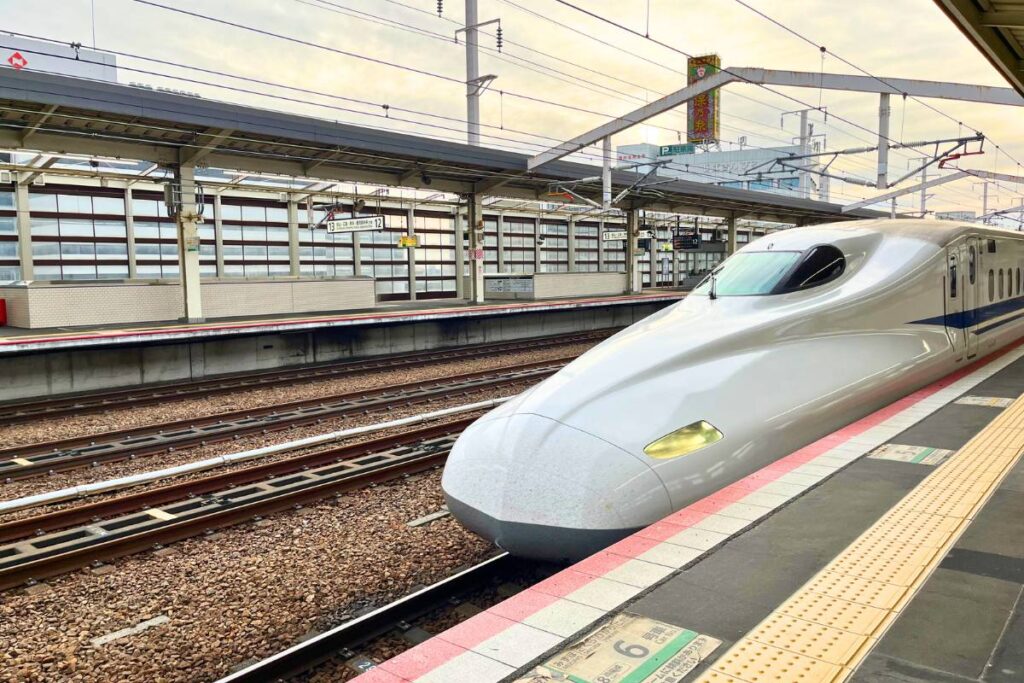
It’s also quite easy to get to Kyoto from pretty much anywhere else in Japan. The city’s main transportation hub, Kyoto Station, is served by the Shinkansen (or bullet train), connecting it to the country’s high-speed railway.
How to Get to Kyoto From Osaka City
If you’re traveling from downtown Osaka to Kyoto, there are two main transportation options for you to choose from: the special rapid service train or the Shinkansen.
I recommend taking the special rapid service from Osaka Station to Kyoto Station. It’s affordable and quick, offering travel times of about 30 minutes.
That said, the Shinkansen is faster, traveling from Shin-Osaka Station to Kyoto Station in about 15 minutes. However, it’s quite a bit more expensive.
Unless you have a Japan Rail Pass, the extra time saved isn’t worth the added cost, in my opinion.
How to Get to Kyoto From Tokyo
For those coming from Tokyo, the fastest and easiest way to reach Kyoto is via the Shinkansen.
You catch the bullet train from Tokyo Station or Shinagawa Station and travel directly to Kyoto Station.
Depending on the specific route, the journey takes anywhere from 2.5 to 3 hours in total.
How to Get Around Kyoto

While Kyoto does have a pretty extensive public transportation system, the city is quite spread out. So, getting around can be a bit cumbersome at times.
A lot of the attractions are located in different parts of the city, and some of them can be difficult to reach.
So chances are, you’ll likely need to walk or hail a taxi from time to time.
That being said, the city does offer a mix of buses, trains, and metro lines that you can utilize to reach most major destinations.
IC Cards Explained
To make the most of your 3 days in Kyoto, I recommend purchasing an IC Card for use on public transit.
These prepaid, rechargeable transportation passes are valid across the country – so you only need one for your entire Japan trip!
You can purchase them online, at major train stations, or at the airport. iPhone users can also add them digitally via the Apple Wallet.
Pro Tip: Be sure to download Google Maps to help you navigate the city. It’s one of the best apps for Japan, as it provides real-time, accurate updates on the local transit system.
Map of Kyoto
To help you plan your trip, here’s a map overview of all the places mentioned in this 3 day Kyoto travel guide.

To view an interactive version of this map, click here!
3 Days in Kyoto: An Overview
Don’t have time to read the article in full? Here’s a quick recap of my suggested itinerary for 3 days in Kyoto, Japan!
- Day 1 – Kyoto’s Gion District & The Silver Pavilion: Discover Kiyomizu-dera, admire Hokan-ji Temple, explore the Gion District, wander along the Philosopher’s Path, & marvel at the Silver Pavilion.
- Day 2 – Fushimi Inari & Central Kyoto: Experience the beauty of Fushimi Inari Taisha, sample local delicacies at the Nishiki Market, explore Kyoto’s Imperial Palace, discover Nijo Castle, & take in the nighttime vibes of Kawaramachi.
- Day 3 – Arashiyama & The Golden Pavilion: Visit Arashiyama Bamboo Forest, discover Tenryu-ji Temple, feed monkeys at the Arashiyama Monkey Park, join a local river cruise, & admire the Golden Pavilion.
3 Days in Kyoto: Explained
On that note, let’s dive right in and discuss in detail the perfect 3 day Kyoto itinerary. I’ve included several activities and alternative destinations for you to consider. So, feel free to pick and choose and adapt this itinerary as you see fit!
Day 1: Kyoto’s Gion District & The Silver Pavilion
For your first day in Kyoto, we’ll explore the Gion District before venturing north to the Silver Pavilion. If you can, I highly recommend starting your day bright and early. The first stop on our itinerary, Kiyomizu-dera, gets quite crowded by late morning. So, the earlier you get here, the better!
Visit Kiyomizu-dera Temple
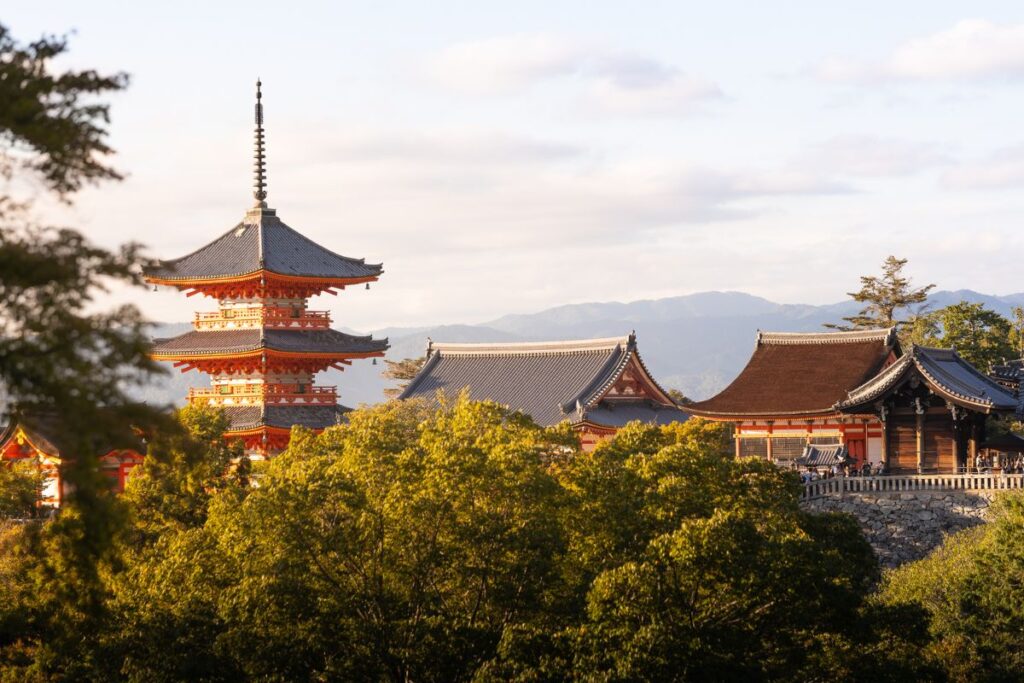
Dating back more than 1200 years, Kiyomizu-dera is one of Kyoto’s most famous temples.
A designated UNESCO World Heritage Site, it’s celebrated for its incredible panoramic views overlooking the city.
Here, you’ll also find Otowa Falls – a small sacred waterfall around which the temple was originally built.
Its pure waters inspired the name “Kiyomizu,” which roughly translates to “pure water” in English.
Pro Tip: Be sure to explore beyond the main prayer hall! There are lots of little paths that lead to hidden pagodas and unique lookout points.
Admire Yasaka Pagoda at Hokan-ji Temple
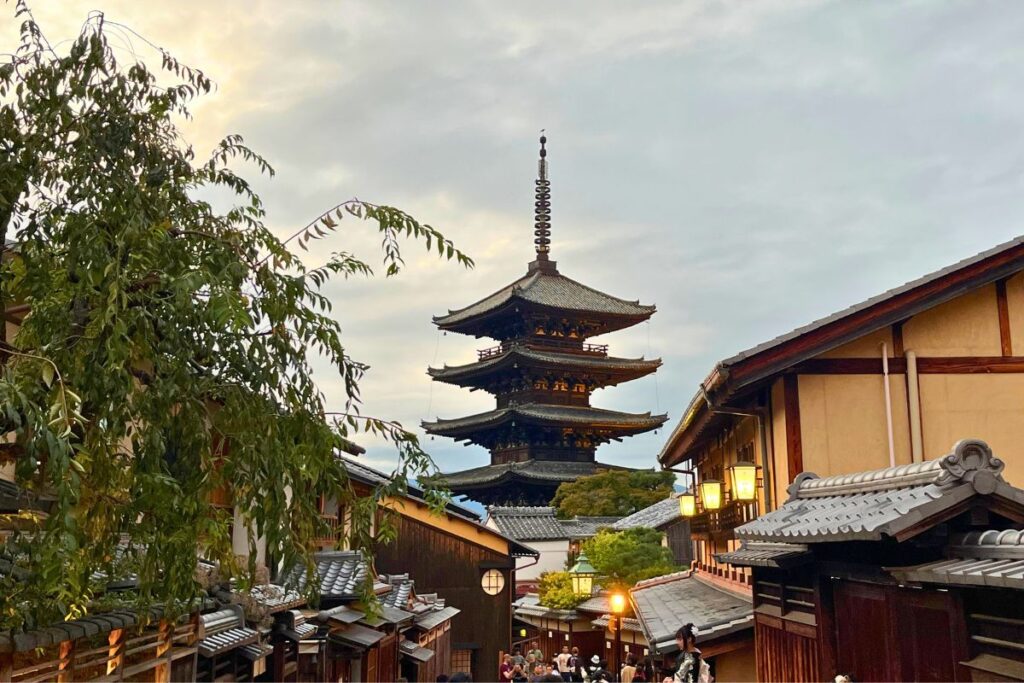
Yasaka Pagoda is easily one of Kyoto’s most iconic (and photographed) landmarks.
Originally built in the 6th century, this historic five-story structure stands 46 meters high, rising dramatically above the old city.
While the temple is only open on weekends, you can still get up close to appreciate the pagoda’s architecture at any time.
Pro Tip: The area around the pagoda tends to get crowded, so I recommend coming here right after Kiyomizu-dera. Following this, you can then wander around and explore the rest of Gion.
Stroll Through the Gion District
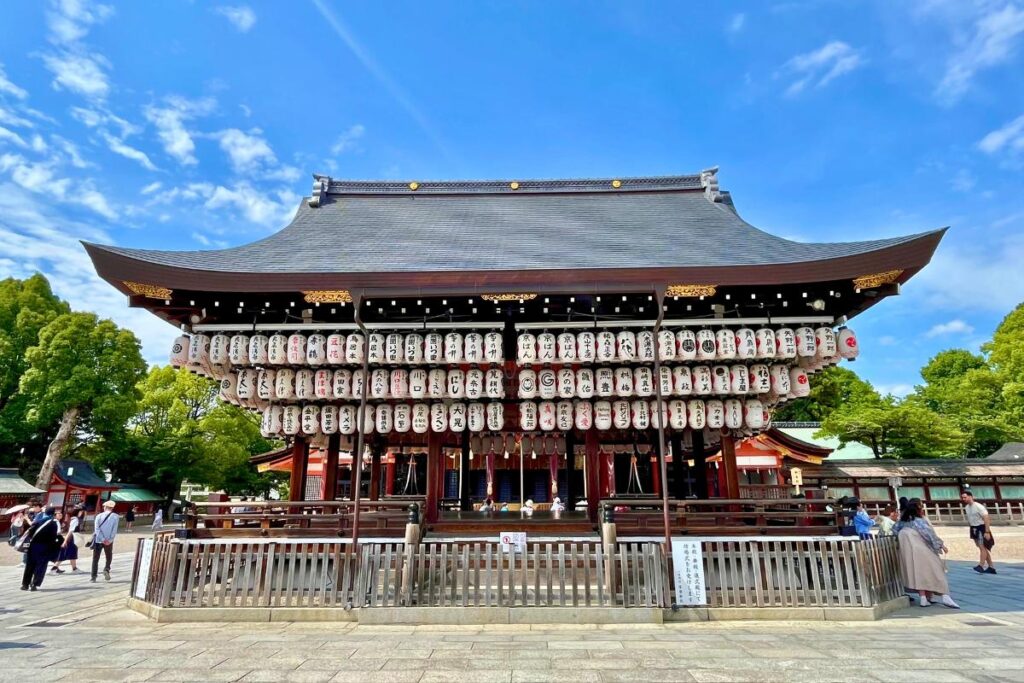
Yasaka Shrine in Gion.
Known for its traditional wooden houses, lantern-lit streets, and geisha sightings, Gion is Kyoto’s most famous historic district.
Here, you can wander through the narrow alleyways, soak in the city’s quaint charm, and discover hidden shops, cafes, and teahouses.
The area is also home to a number of lesser-known shrines and temples that are worth exploring.
A few of note include: Kodai-ji Temple (with its small bamboo forest), Chionin Temple (home to Japan’s largest bell), and Yasaka Shrine (not to be confused with Yasaka Pagoda).
A Note on Gion’s Geisha
As mentioned above, Geisha (aka traditional Japanese entertainers) can often be found walking around Gion. While it’s always exciting to see them in person, it’s important to remember that they are professionals at work, not tourist attractions. Be sure to respect their personal space and avoid taking photos of them without permission. If you’d like a closer look into their world, I recommend booking a geisha experience. It’s a fun and respectful way to interact and learn more about Japan’s geisha culture!
Wander Along the Philosopher’s Path
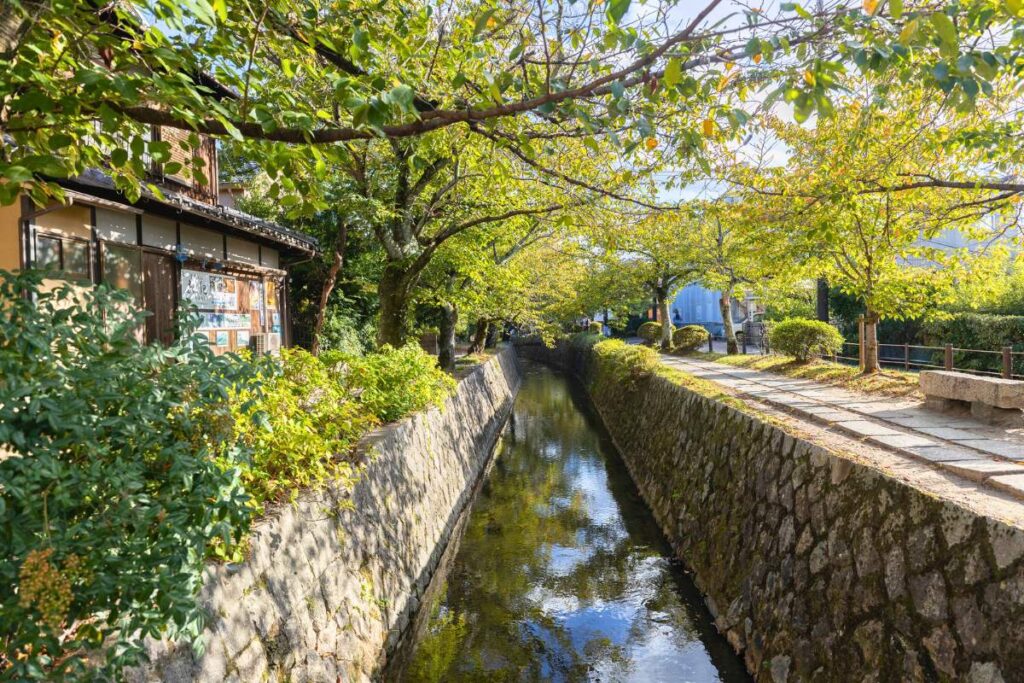
Winding through northern Higashiyama, the Philosopher’s Path is a peaceful stone walkway set along the banks of a picturesque canal.
Spanning 2 kilometers, the path begins in the neighborhood of Nanzenji (just north of Gion) and travels up to the Silver Pavilion.
The route is especially beautiful in the spring, when all of the cherry trees bloom, creating an unforgettable sakura-line corridor.
Along the way, you’ll find a mix of cozy cafes, quaint eateries, and a handful of small temples – all waiting to be discovered.
Marvel at the Silver Pavilion
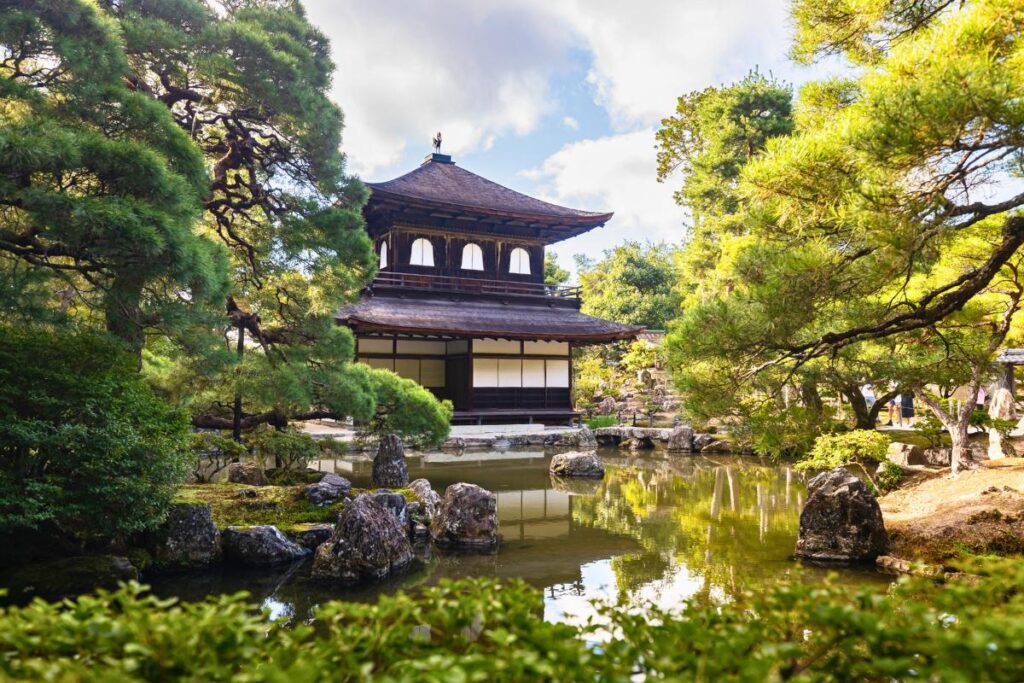
Once the home of a powerful shogun, the Silver Pavilion (also known as Ginkaku-ji) was converted into a Zen Buddhist temple in the late 1400s.
Today, it’s recognized as a UNESCO World Heritage Site and is celebrated for its understated elegance, serene atmosphere, and natural beauty.
Among its many features, you’ll find a tranquil moss courtyard, a carefully maintained sand garden, several walking paths, and, of course, the Silver Pavilion itself.
The temple grounds even extend up onto a hillside, where you can take in beautiful panoramic views of Kyoto and the surrounding landscape.
Side Note: The Silver Pavilion is modeled after the Golden Pavilion (which we’ll visit later on). The famous shogun, Ashikaga Yoshimitsu, built the Golden Pavilion, and decades later, his grandson, Ashikaga Yoshimasa, built the Silver Pavilion.
Day 2: Fushimi Inari & Central Kyoto
On day 2 of your 3 day Kyoto itinerary, we’ll head to the world-famous Fushimini Inari Shrine before exploring the highlights of Central Kyoto. Again, I recommend beginning your day as early as possible. Fushimi Inari is one of, if not the most popular attraction in Kyoto. So, it gets very crowded, very quickly. That said, it’s absolutely worth the visit and shouldn’t be missed!
Explore Fushimi Inari Taisha Shrine
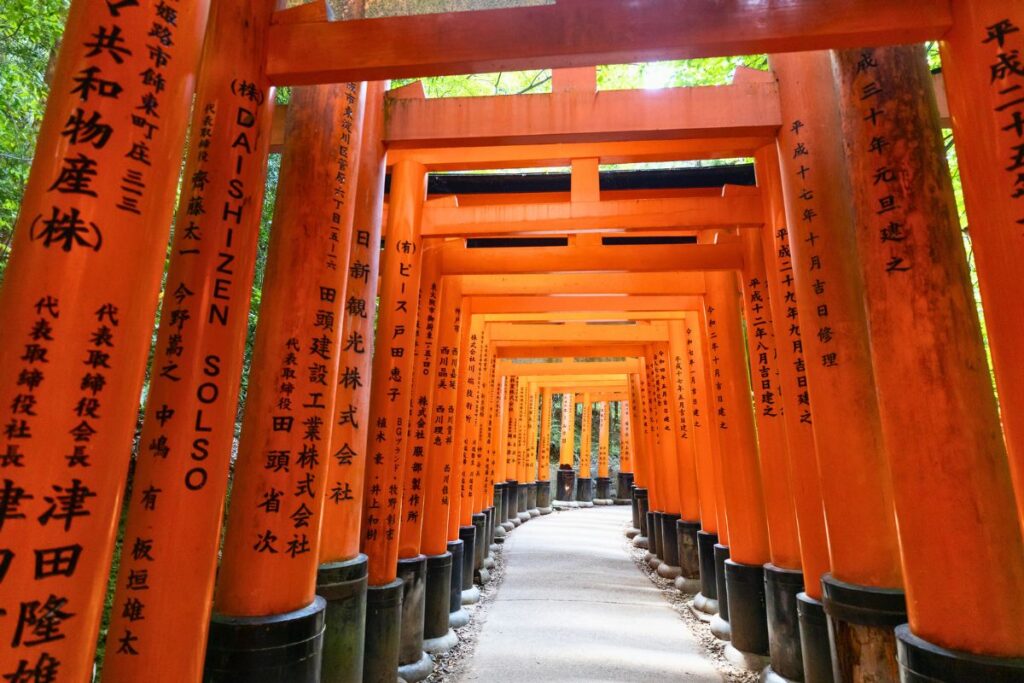
Dating back more than 1300 years, Fushimi Inari Taisha is one of Japan’s most famous and iconic landmarks.
Built at the base of Mount Inari, it’s home to an estimated 10,000 vermilion torii gates that wind and weave their way up to the mountain’s summit.
To reach the top, you’ll need to hike through the gates, a journey that takes about 1-1.5 hours – depending upon how many photo stops you make along the way!
Of course, you can stop and turn around at any point! Many visitors choose to hike to the halfway point, Yotsutsuji intersection, which offers stunning views overlooking Kyoto.
There are also plenty of smaller shrines and quiet corners to explore along the lower paths.
Pro Tip: Fushimi Inari is open 24/7! So, you can come as early as you want or as late as you want! I haven’t yet had the chance to experience it after dark, but I’ve heard that the shrine is especially beautiful at night! Just be sure to keep a lookout for wildlife if you do visit in the evening!
Sample Local Delicacies at the Nishiki Market
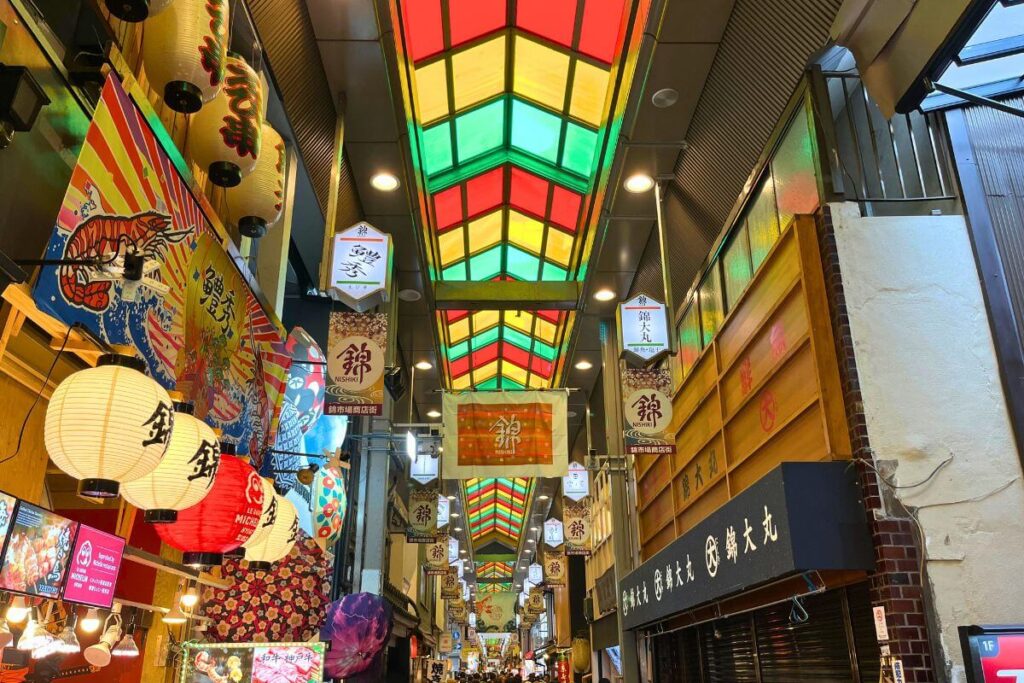
Dubbed “Kyoto’s Kitchen,” the Nishiki Market is a historic shopping street that dates back more than 400 years.
Spanning 5 blocks (390 meters), the market is home to more than 100 vendors selling everything from fresh produce and seafood to street food and specialty products.
It’s a great place to grab a bite to eat and maybe even pick up a souvenir or two.
The market is especially known for its cookware, offering some of the best Japanese knives and ceramics in the city.
Visit Kyoto’s Imperial Palace & Gardens
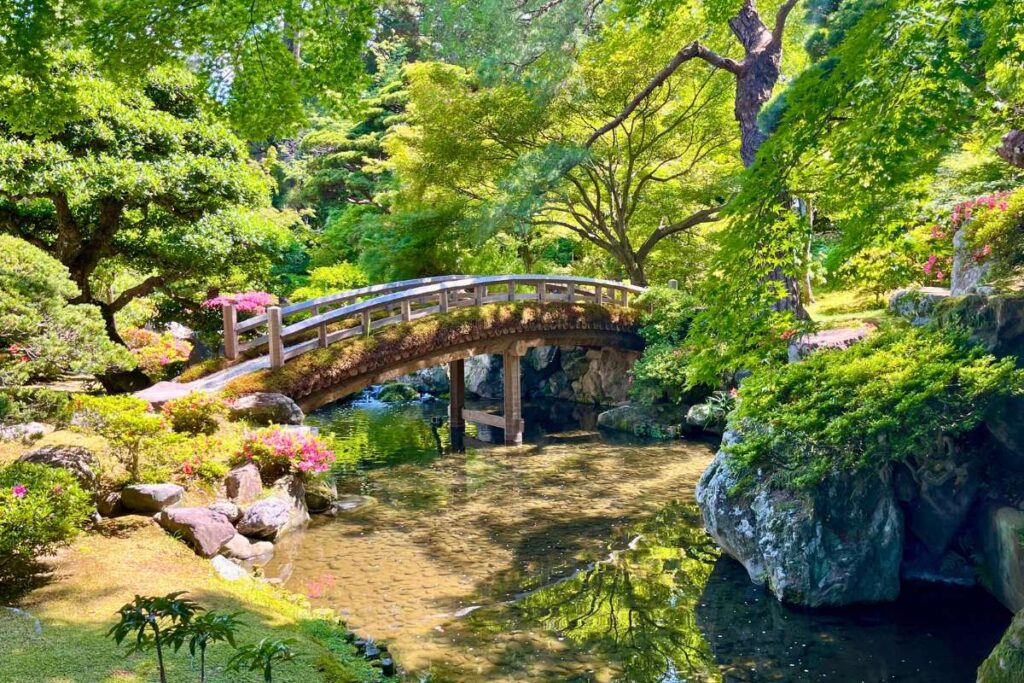
For approximately 500 years, Kyoto’s Imperial Palace served as the official residence for Japan’s royal family.
That is, until 1868, when the capital (and the Imperial Family) moved to Tokyo.
Today, the palace is used by the Emperor on special occasions, and remains open to the public for the rest of the year.
While visitors aren’t allowed to enter any of the buildings, you’re welcome to stroll around the palace grounds, exploring the gardens and historic architecture.
Discover Nijo Castle
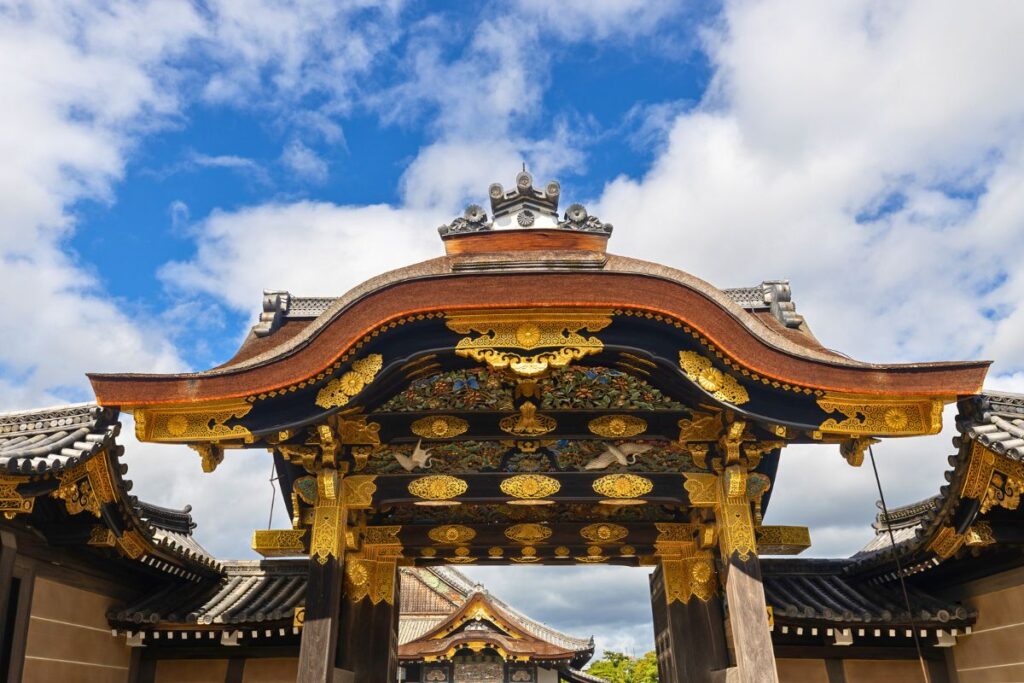
Completed in 1603, Nijo Castle originally served as the home of Tokugawa Ieyasu, the first shogun of the Edo Period.
From there, it was passed along to the Imperial Family before it was opened up to the public as a historic site.
It has since been declared a UNESCO World Heritage Site and is said to be one of the best surviving examples of feudal-era architecture.
Visitors to the castle are allowed to explore the grounds in full. You can even enter many of the buildings, where you’ll find beautifully preserved artwork, intricate wood carvings, and historic interiors on display.
End the Night in Kawaramachi
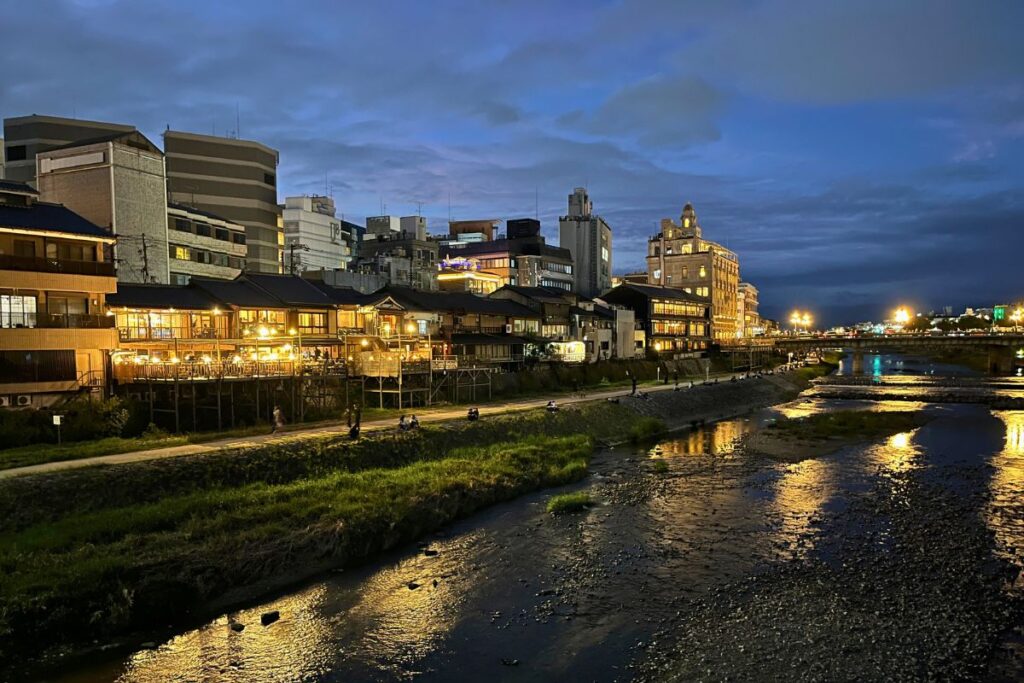
As the main shopping street in Kyoto, Kawaramachi is a must-visit, especially in the evening when everything lights up and comes alive.
But the area isn’t just known for its shopping. You’ll also find a plethora of bars, restaurants, and karaoke spots to explore!
While you’re here, be sure to also check out Pontocho Alleyway! This narrow street is lined with traditional restaurants that overlook Kamo River!
Day 3: Arashiyama & The Golden Pavilion
For your final day, we’ll head over to Western Kyoto, where you can explore the scenic district of Arashiyama, as well as the iconic Golden Pavilion. As previously mentioned, an early start is best! Some of the destinations mentioned below (like the bamboo grove!) can get quite crowded.
Explore Arashiyama Bamboo Grove
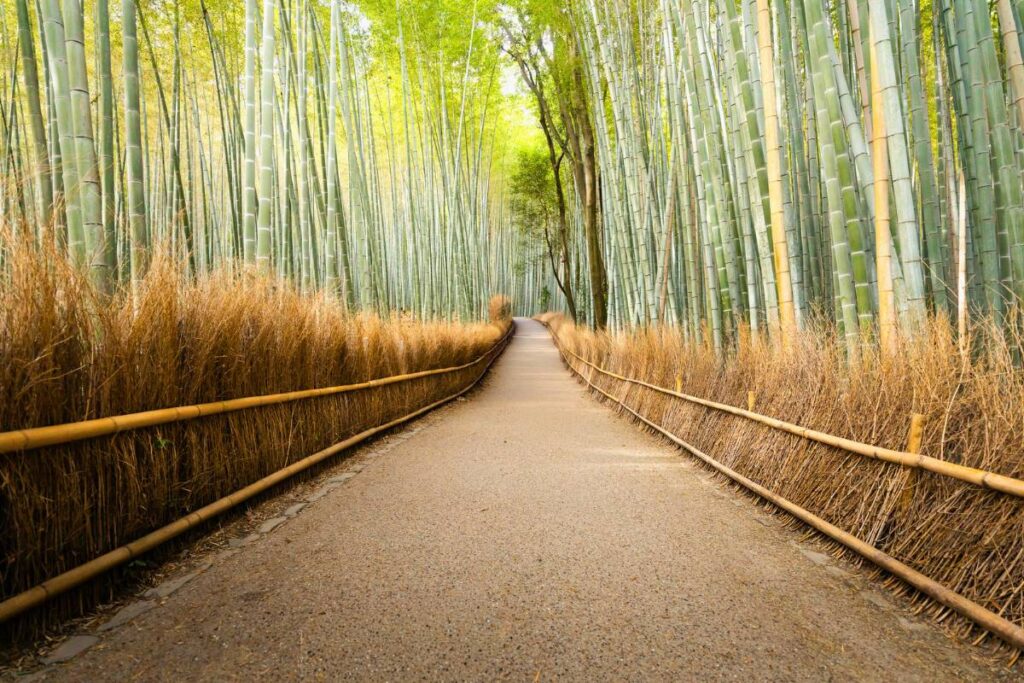
Arashiyama’s main claim to fame is its iconic bamboo grove, which is quite beautiful, might I add.
Spanning 400 meters, the grove winds through the village of Sagano, offering a somewhat peaceful escape from the city.
I say “somewhat peaceful” because, unfortunately, it is very popular and gets very crowded, very quickly. Again, your best bet is to visit during the week and arrive as early as possible.
That said, even with the crowds, I’d still recommend visiting at least once – to soak in the incredible scenery and the unique atmosphere.
🔀 Alternative Destination: Not an early riser? Or maybe you’d just prefer something a bit off the beaten path? Consider visiting Adashino Nenbutsu-ji Temple! This lesser-known temple isn’t the easiest to get to, but it’s quiet, peaceful, and has its own bamboo grove!
Discover Tenryu-ji Temple
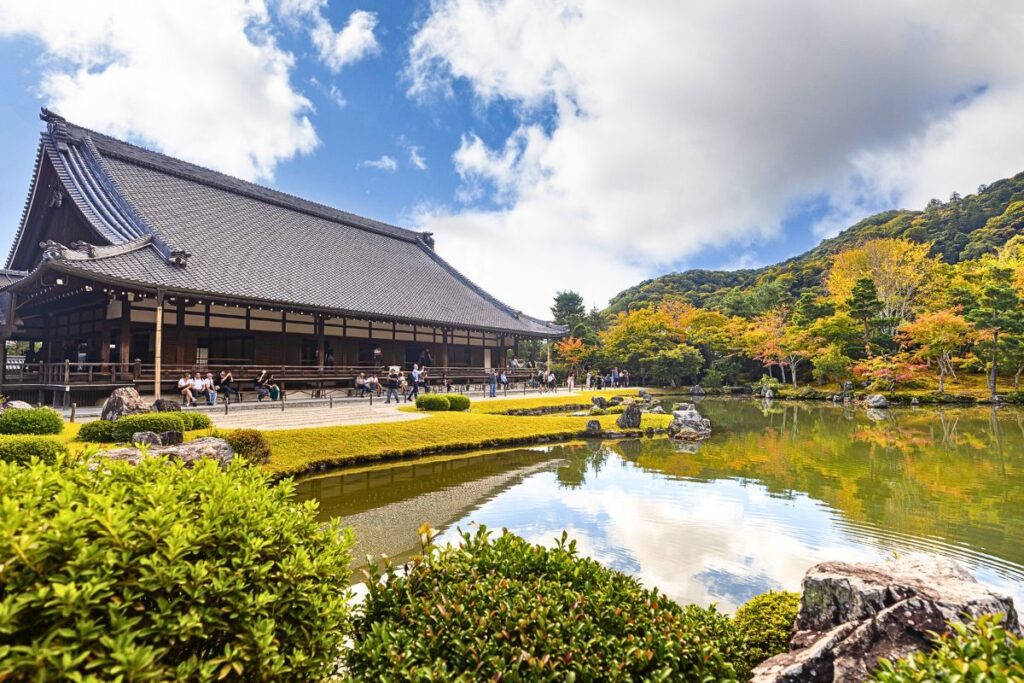
Situated right next to Arashiyama’s Bamboo Forest, you’ll find Tenryu-ji Temple – another remarkable UNESCO World Heritage Site.
Established in the 1300s, it is widely regarded as the most important Zen temple in Kyoto.
While the entire property is quite stunning, the garden here is particularly beautiful – especially in the fall when the autumn foliage is on full display.
The temple also happens to be home to an impressive dragon painting depicted on the ceiling of its main prayer hall.
Meet Kyoto’s Playful Monkeys
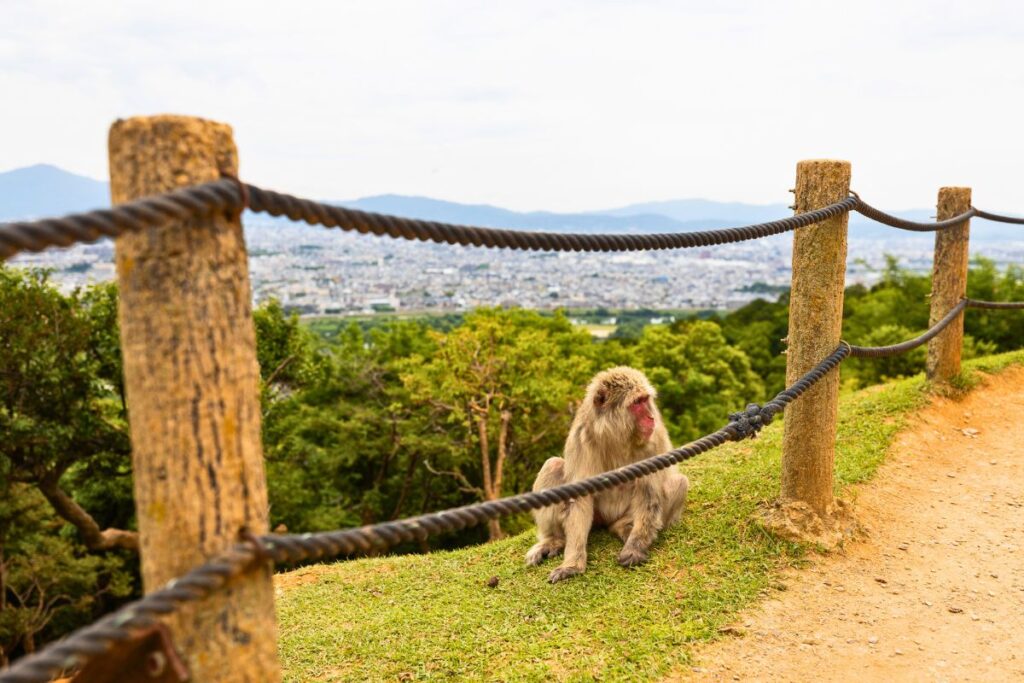
Perched atop a hill overlooking Arashiyama, Monkey Park Iwatayama is home to approximately 120 wild Japanese macaque monkeys.
While these monkeys live in the surrounding mountains of Arashiyama, they come down to the park pretty much every day in search of food.
Here, you can observe them up close and even feed them from the designated mountain hut. Just be sure to keep your distance and respect their space!
The monkeys are wild after all – and can be unpredictable. As such, the park advises against touching or staring directly at them.
Pro Tip: Be prepared for a bit of a hike! The walk up to the park takes about 20-30 minutes and involves upwards of 100 steps. Don’t worry, though, the climb is well worth it! The monkeys are absolutely adorable, and the view from the summit are stunning!
Experience Arashiyama By Boat
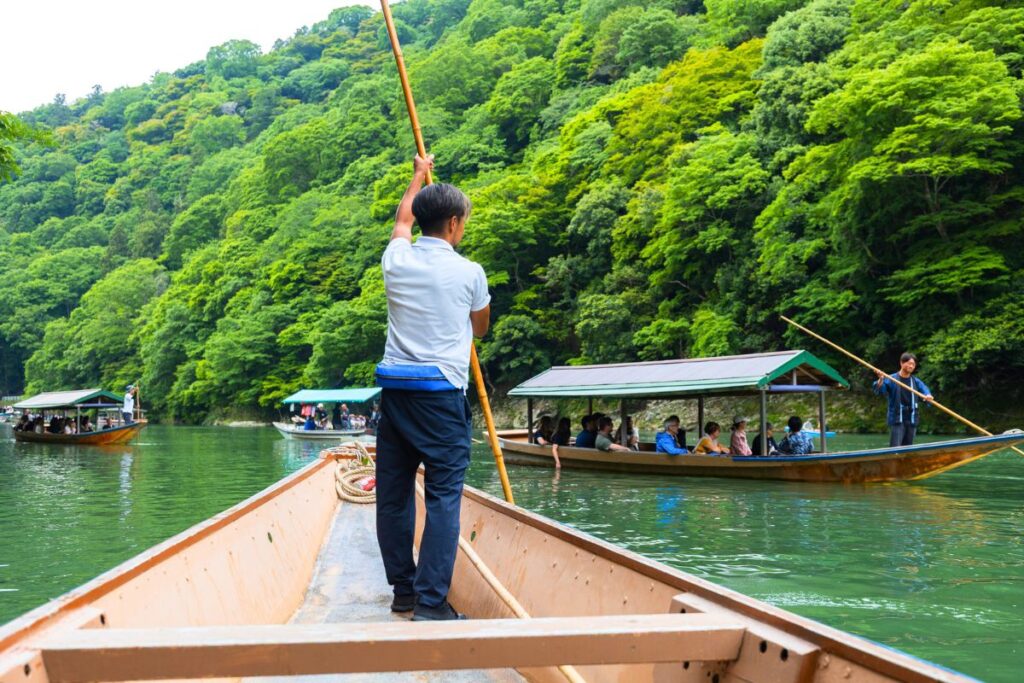
Winding through Arashiyama, you’ll find the Hozugawa River, a stunning, peaceful destination surrounded by lush vegetation, dramatic cliffs, and traditional riverside homes.
While views of the river are stunning from land, one of the best ways to take in the sights is on a guided boat cruise!
Thankfully, there are several river experiences for you to choose from:
- 2-Hour Hozugawa Cruise: The most famous boat ride (especially on social media!), the Hozugawa River Cruise begins in the nearby town of Kameoka, winds through the mountains, and ends in Arashiyama. It’s a scenic and adventurous option – perfect if you’re hoping to see as much of the landscape as possible!
- Private Boat Ride: For a more intimate experience, there are also private cruises available for small groups (this is what we did!). You can set out on a traditional Yakatabune boat and take in the scenery at a more laid-back pace. Some options even include a maiko experience, complete with live music and cultural insights.
- Rafting Adventure: If you’re looking for a bit more excitement, a guided rafting trip just might be the way to go! These tours offer the perfect combination of thrilling adventure and beautiful natural scenery.
- Rent Your Own Boat: For a more hands-on experience, there are also places where you can rent a paddle boat and explore the river at your own pace. Advanced reservations are not required for this; you can simply show up and rent a boat upon arrival.
Pro Tip: Depending on how you’re doing for time, grab lunch in the surrounding area – either before or after your river cruise. Arashiyama is full of cute little cafes and restaurants!
Appreciate the Golden Pavilion
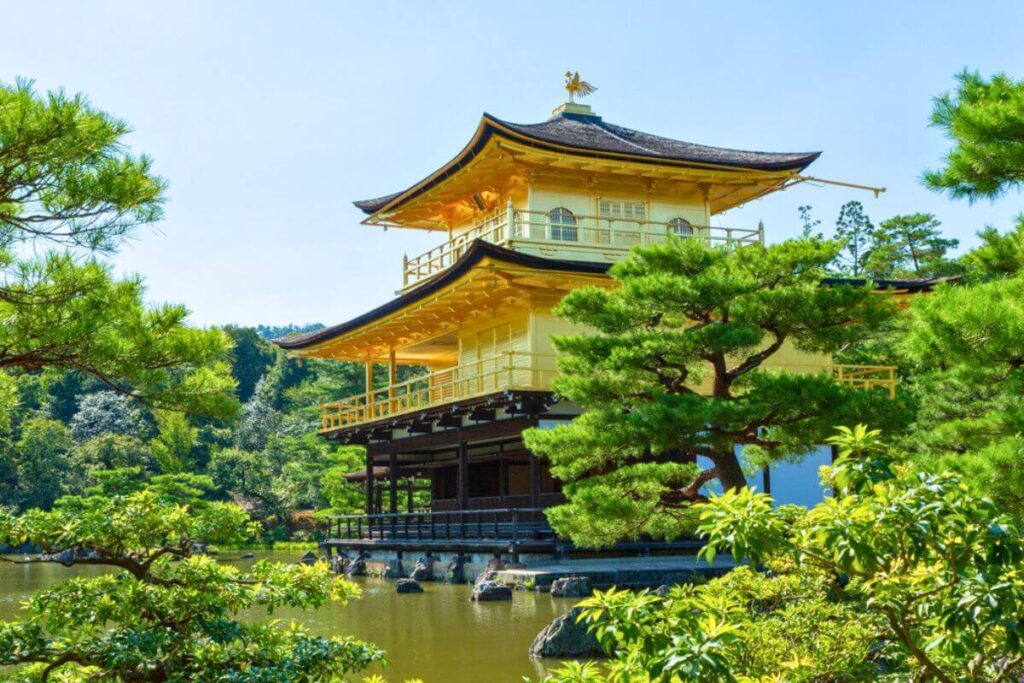
Dating back to the late 1300s, the Golden Pavilion (also known as Kinkaku-ji) is a famous UNESCO World Heritage Site renowned for its striking architecture and iconic gold leaf exterior.
In fact, the top two floors of the pavilion are covered entirely in real gold – which is quite a sight to behold!
Similar to its counterpart (the Silver Pavilion), Kinkaku-ji was also originally built as a retirement villa for a powerful shogun.
However, upon his death in the 1400s, it was converted into a Buddhist temple, which it remains to this day.
Pro Tip: Be aware of time! The Golden Pavilion closes at 5:00 pm and is about 45 minutes away from Arashiyama by bus (or 20 minutes by car). Thankfully, you don’t need much time to explore here. As long as you arrive around 4:00/4:30 pm, you should be good to go!
Other Things to Do in Kyoto
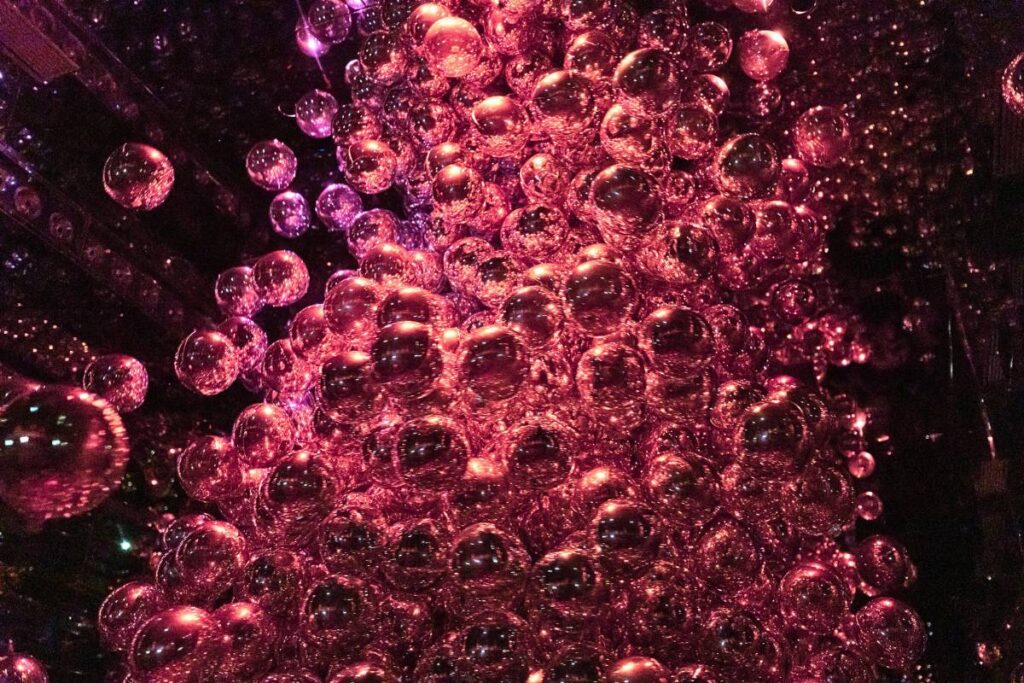
An interactive exhibit at teamLab Biovortex Kyoto.
Interested in adjusting this 3 day Kyoto itinerary? Or maybe you’re contemplating a longer stay? If so, consider visiting some of these other popular destinations as well!
- teamLab Biovortex Kyoto: Japan’s newest and largest teamLab experience, Biovortex Kyoto is an interactive art museum featuring more than 50 exhibits. Here, you can explore a unique compilation of technology, lights, and physical installations, immersing yourself in a sensory experience unlike anything else!
- Kimono Photoshoot: Kyoto is a great place to dress up in traditional attire and take souvenir photos. You can do this on your own – simply rent a kimono and go out into the city to take photos. Or, you can sign up for a studio experience with a professional photographer – I did this at Studio Kokoro Arashiyama and absolutely loved it!
- Cultural Experiences: As the cultural capital of Japan, Kyoto offers a wide variety of unique experiences that visitors can partake in. From traditional tea ceremonies to geisha encounters and samurai shows, the opportunities are endless!
- Smaller Shrines & Temples: Kyoto is home to approximately 1,600 temples and 400 shrines – many of them smaller and lesser-known, but just as magical as their famous counterparts. So, don’t be afraid to wander around and seek them out! A few on my radar (haven’t been but want to go!) include: Tenjuan Temple (which is especially beautiful in the fall), Kennin-Ji Temple (with its incredible dragon artwork), and Otagi Nenbutsuji Temple (known for its countless mini statues).
- Day Trip to Nara or Uji: Kyoto is located just a short train ride away from two incredible destinations – Nara and Uji. While Nara is most famous for its bowing deer, Uji has been dubbed the matcha capital of Japan. Both are well worth visiting, if you have extra time to spare.
🌟 Spending more time in Japan? Be sure to also check out my 10 day Japan itinerary as well as my guide to the best destinations in Japan for first-time visitors!
Where to Stay in Kyoto
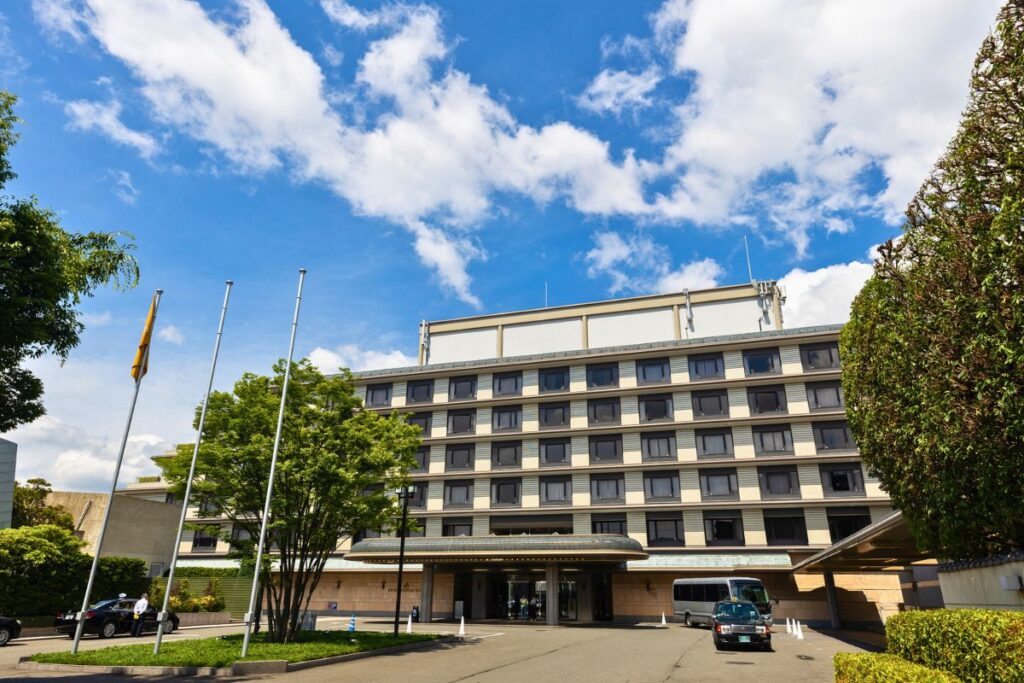
Kyoto Brighton Hotel is a great place to stay!
Kyoto is a large city with plenty of accommodations to choose from. Where you stay will largely depend on your budget, how you structure your itinerary, as well as your personal preferences. That said, I’ve included below some of the most popular places to stay in Kyoto for a 3 day trip!
- Downtown Kyoto: Home to some of the city’s best bars and restaurants, downtown Kyoto is the place to be for all things entertainment. It’s also very easy to navigate, with plenty of public transportation – and several major attractions nearby.
- Kyoto Station: Perfect for those planning to travel beyond the city, the area around Kyoto Station offers a wide range of accommodations. Here, you’ll also find countless restaurants, bars, and shopping centers – all within walking distance.
- Southern Higashiyama: Encompassing Gion and its surrounding neighborhoods, Southern Higashiyama is known for its traditional accommodations and ryokans. It also offers easy access to some of the city’s most historic and picturesque attractions.
- Central Kyoto: Offering a slower, more peaceful setting, Central Kyoto is known for its historic estates, beautifully-kept gardens and traditional streets. Here, you’ll find several noteable attractions and hidden gems, including Nijo Castle and Kyoto Imperial Palace.
🧳 My Experience: I’ve tried out a few hotels in Kyoto, but my favorite has to be Kyoto Brighton Hotel. I stayed here when my mom came to visit, and we absolutely loved it! It’s a bit out of the way, but the rooms are spacious and the service is great. Plus, they have a wonderful lobby lounge – complete with afternoon tea, wine, and pastries!
What to Eat in Kyoto
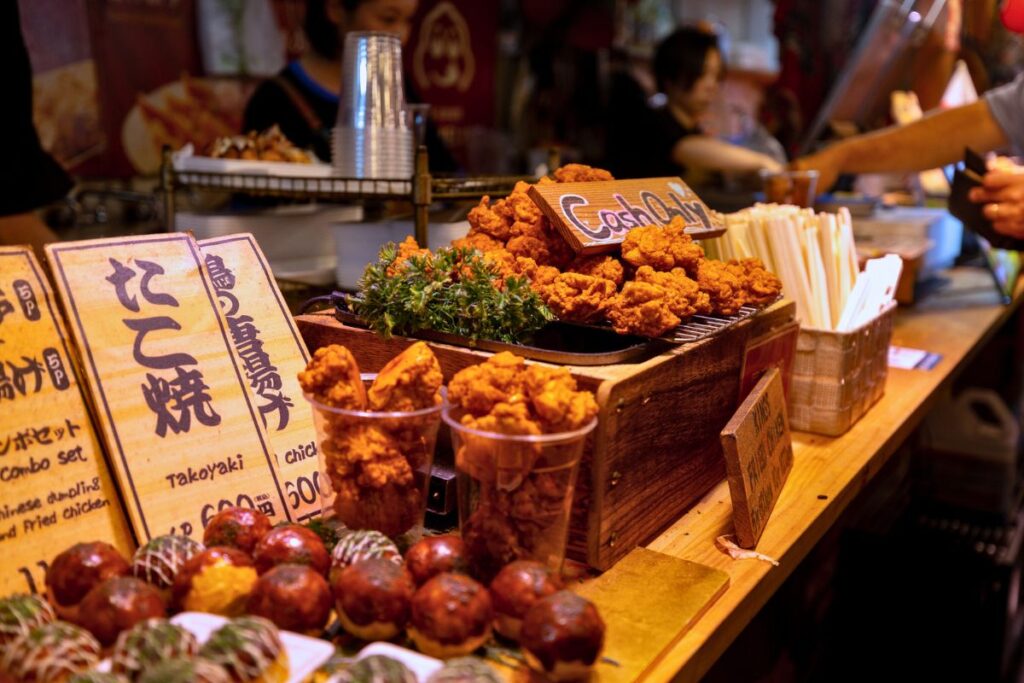
Kyoto is one of Japan’s most iconic foodie destinations – and for good reason! There are so many delicious specialties and local flavors to enjoy! While you won’t be able to sample everything in just one trip, here are a few can’t-miss dishes to look out for.
- Yuba Tofu: Kyoto is said to have some of the best tofu in all of Japan, thanks in part to its natural soft water supply. Yudofu (silken tofu) and yuba (tofu skin) are two particularly popular tofu dishes that can be found in the city.
- Soba Noodles: Soba noodles (aka buckwheat noodles) are popular all across Japan, but in Kyoto, you’ll find a few regional varieties that are worth trying. There’s nishin soba (topped with herring), kamo namba soba (made with duck), and cha soba (green tea soba made with matcha powder).
- Matcha Green Tea Desserts: Given its close proximity to Uji (the matcha capital of Japan!), Kyoto offers a wide variety of delicious green tea treats. Think matcha ice cream, cakes, tiramisu, and even matcha fondue. The options are endless!
- Kaiseki: Kaiseki isn’t one particular dish, but rather a traditional multi-course dining experience that features seasonal ingredients, with a focus on visual presentation. Kyoto is actually the birthplace of Kaiseki, so it’s a great place to give it a try!
- Shojin Ryori: Shojin Ryori is another multi-course style of cuisine that was brought over from China. Originally served in Buddhist temples, this style of dining features an entirely vegetarian menu, one that focuses on simple, thoughtful flavors.
Frequently Asked Questions About Planning a 3 Day Kyoto Itinerary

From my photoshoot at Studio Kokoro Arashiyama!
Here are my thoughts on some commonly asked questions about visiting Kyoto.
Is Kyoto Worth Visiting?
Yes – Kyoto is absolutely worth visiting! It’s one of my favorite cities in all of Japan. The history and the culture here are incredible. As the former capital of Japan, Kyoto is home to some of the country’s oldest and most historic landmarks. On top of that, the city is beautiful year-round, offering cherry blossoms in the spring and stunning autumn foliage in the fall!
Are 3 Days Enough for Kyoto?
While you could easily spend weeks exploring all that Kyoto has to offer, 3 days is still a decent amount of time. With this timeframe, you can visit the city’s most popular sites while sneaking in a few hidden gems along the way. That said, if you can swing it, 4 days is even better. You’ll be able to add on a day trip to Nara or a day trip to Uji, two of my favorite nearby cities.
Is It Better to Go to Osaka or Kyoto First?
This really depends on your itinerary and what makes the most sense for your trip. If you’re flying into Tokyo, it would probably be easier to visit Kyoto first, because it’s closer. But, on the flip side of that, if you’re flying into Osaka, I’d recommend visiting Osaka City first, since you are already there. That said, it really just comes down to your personal preferences and how you want to structure your itinerary.
Is Kyoto a Walkable City?
I wouldn’t necessarily say that Kyoto is fully walkable. The city is very spread out, and many attractions are quite far apart. However, some areas are more pedestrian-friendly than others. For example, the Gion District is best explored on foot. And neighborhoods like Higashiyama and Arashiyama have walkable zones once you’re there. So, in short, parts of Kyoto are very walkable, while others require the use of public transportation or taxis.
What is the Dress Code for Kyoto’s Temples & Shrines?
It’s best to dress modestly when visiting temples and shrines – not just in Kyoto, but in all of Japan. As a general rule, you’ll want to keep your shoulders, cleavage, and knees covered. I usually carry a shawl or long cardigan around with me during the summer, specifically for this reason. You’ll also want to pay attention to footwear. Many temples and shrines require visitors to remove their shoes before entering prayer halls. So, it’s a good idea to wear or pack socks – unless you’re comfortable going barefoot, that is.
Final Thoughts: 3 Days in Kyoto Itinerary
So, there you have it – my complete guide to 3 days in Kyoto! Hopefully, this article is helpful in planning your own trip to the cultural capital of Japan!
No matter what you decide to do here, you’re bound to have a wonderful time! After all, there’s nothing else quite like the vibrant culture and historic atmosphere of Kyoto!
Planning your own Kyoto itinerary for 3 days? What are you most excited to do? Let me know in the comments below!
Love this Kyoto 3 day itinerary? Pin it now for later!

KRYSTI ATKINSON
Krysti is a travel writer currently based in Okinawa, Japan. Over the past 3+ years, she has explored Japan extensively while traveling throughout Asia – from iconic cities to quiet, off-the-beaten-path destinations. Through Wanderful Horizons, Krysti shares detailed itineraries, practical travel tips, and firsthand recommendations to help travelers plan unforgettable adventures.


